Implementation, Adoption, and Perceptions of Telemental Health During the COVID-19 Pandemic: Systematic Review
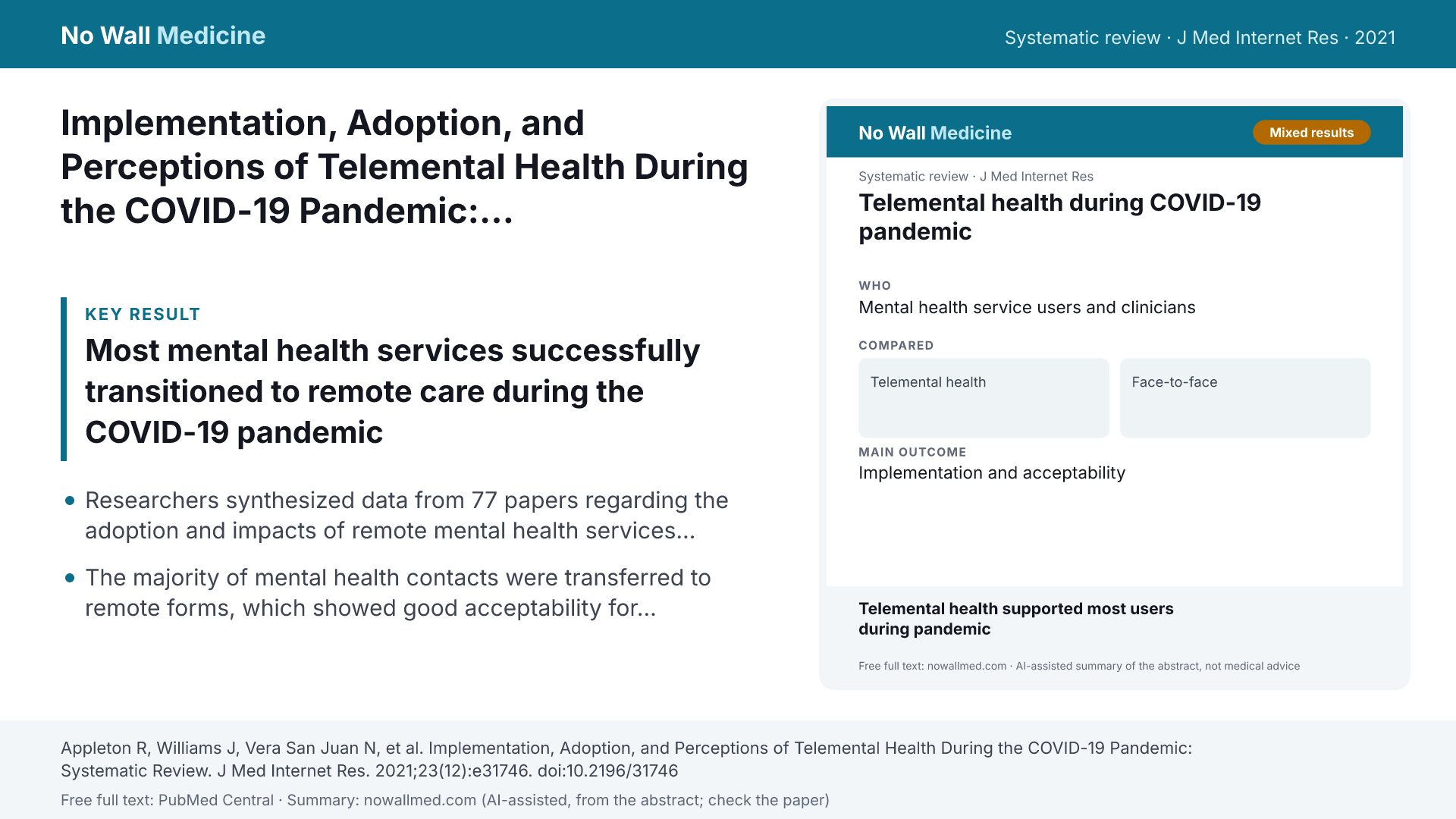
Key result: Most mental health services successfully transitioned to remote care during the COVID-19 pandemic
Systematic reviewMixed results
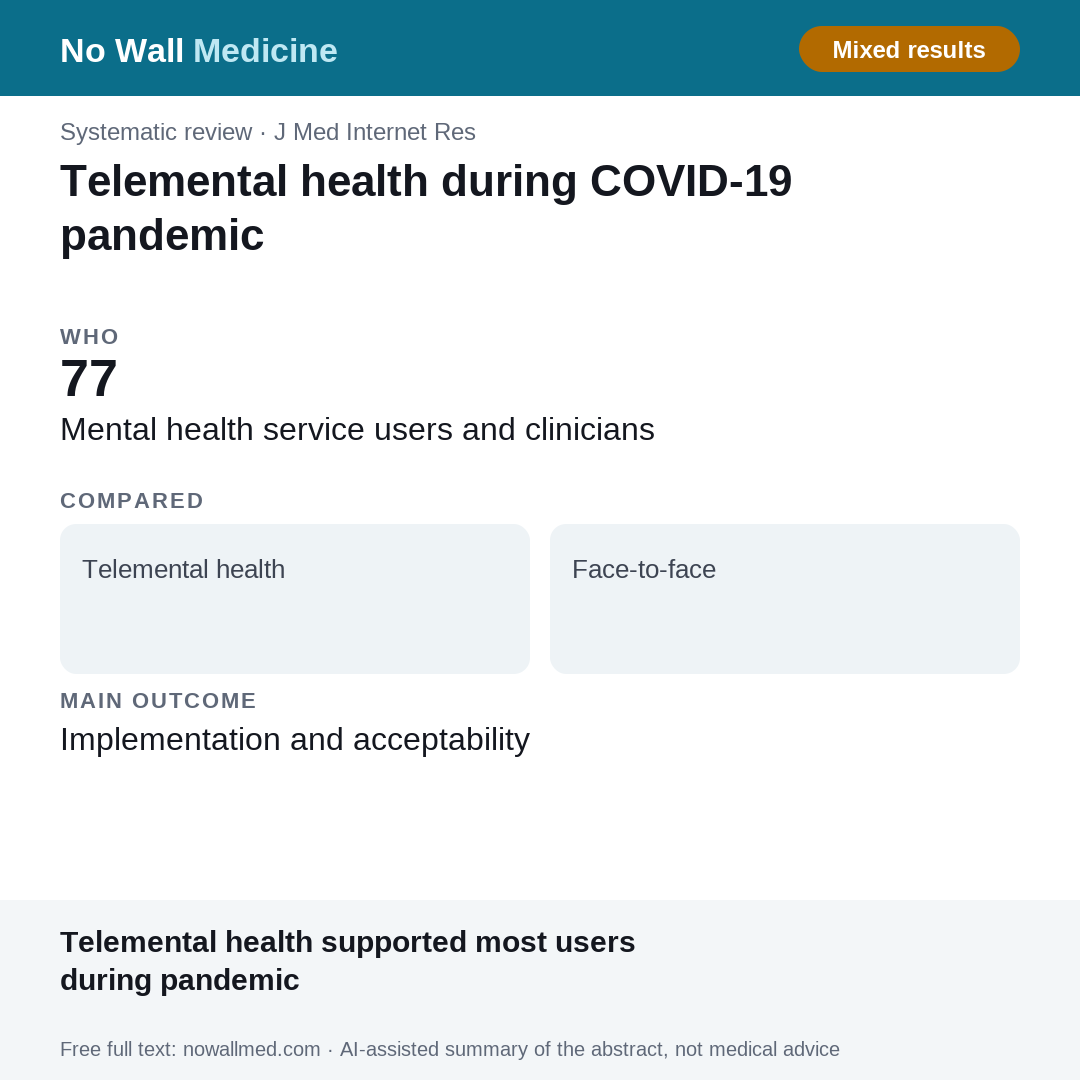
Telemental health during COVID-19 pandemic
Who
77
Mental health service users and clinicians
Compared
Telemental health
Face-to-face
Main outcome
Implementation and acceptability
Bottom line: Telemental health supported most users during pandemic
Limitation: Need for better evidence on long-term impacts
J Med Internet Res · 2021-12-09Download image
Key points
- Researchers synthesized data from 77 papers regarding the adoption and impacts of remote mental health services during the pandemic.
- The majority of mental health contacts were transferred to remote forms, which showed good acceptability for both clinicians and patients.
- Barriers to optimal care were identified, and not all service users could be reached through remote methods.
Why it matters: It was unknown how telemental health, or remote mental health care, was implemented and what barriers or facilitators affected its use during the pandemic.
Discussion prompts
- Would these patients look like yours? Who was left out?
- Is the main outcome one that matters to patients?
- Is the difference large enough to change what you do?
Cite: Appleton R, Williams J, Vera San Juan N, Needle JJ, Schlief M, Jordan H. Implementation, Adoption, and Perceptions of Telemental Health During the COVID-19 Pandemic: Systematic Review. J Med Internet Res. 2021. doi:10.2196/31746
Free full text: PubMed Central · Summary and visual abstract: nowallmed.com/a/implementation-adoption-and-perceptions-of-telemental-health-during-bmaew8/ (AI-assisted from the abstract; check the paper before relying on it).