Improved coping and self-efficacy explain better mood in caregivers of brain tumor patients
Improved coping and self-efficacy drive improvements in mood among caregivers of patients with primary malignant brain tumors: Results from a randomized controlled trial
Randomized controlled trialBenefit found
Do improved coping and self-efficacy mediate NeuroCARE effects on caregiver anxiety and depression?
Who
120
Caregivers of patients with primary malignant brain tumors
Compared
NeuroCARE
Usual care
Main outcome
Anxiety and depression symptoms
Bottom line: NeuroCARE improves mood by enhancing coping skills and improving caregivers' self-efficacy.
Neuro Oncol · 2026-04-21Download image
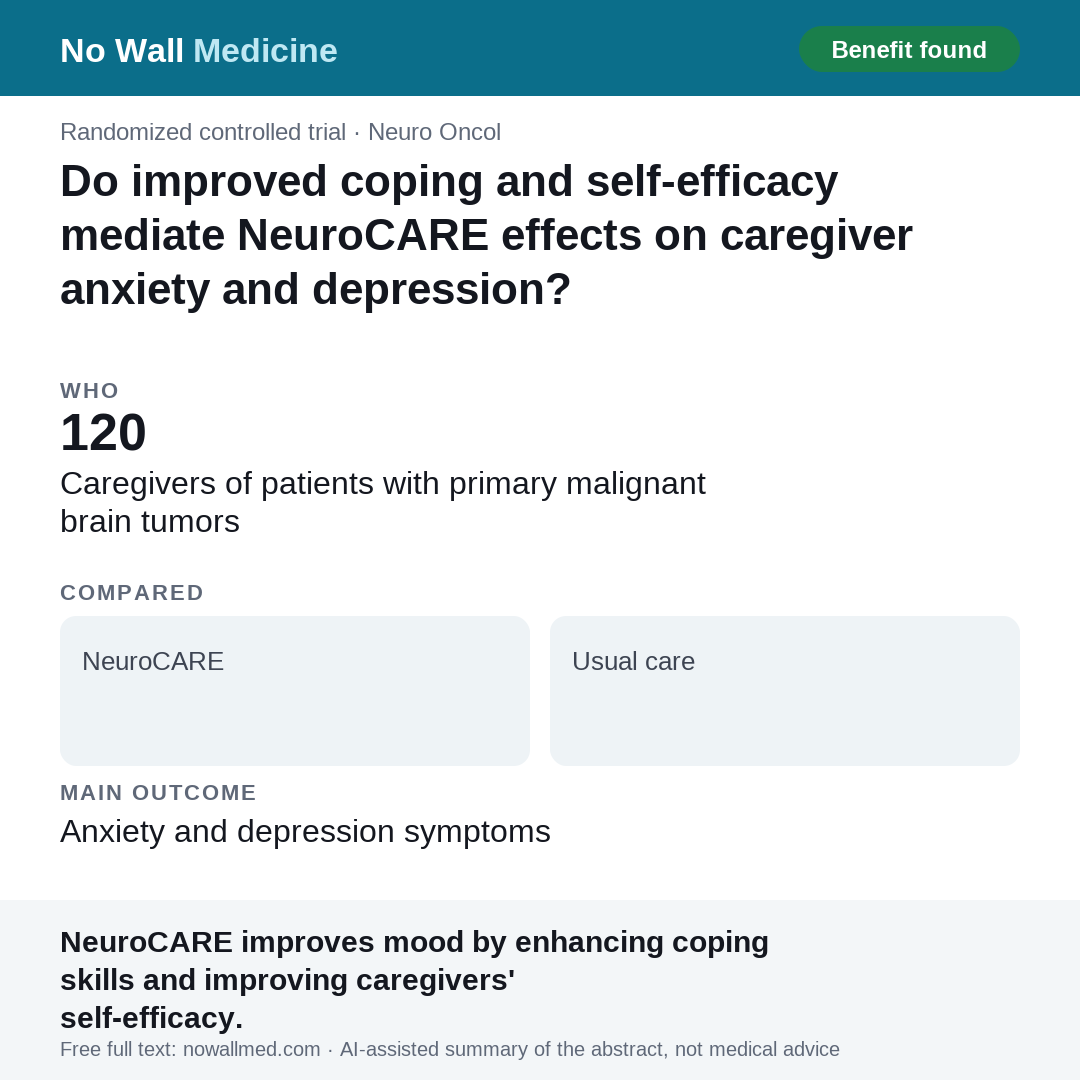
Clinical question: Do improved coping and self-efficacy mediate NeuroCARE effects on caregiver anxiety and depression?
Why it matters: Researchers wanted to explore whether the effects of a telehealth intervention on anxiety and depression were driven by changes in coping and self-efficacy.
Key points
- Researchers studied 120 caregivers of patients with primary malignant brain tumors to see if a six-session telehealth cognitive-behavioral intervention improved mood through coping and self-efficacy.
- Improvements in 11-week anxiety symptoms were mediated by improved coping (indirect effect = -1.44) and self-efficacy (indirect effect = -1.29) in the intervention group.
- Improvements in 11-week depression symptoms were also mediated by improved coping (indirect effect = -1.43) and self-efficacy (indirect effect = -0.95).
Headline and key points written with AI from the paper’s abstract, with every number checked against it. Read the paper before relying on them.
Topics
Spotted a mistake? Suggest a correction