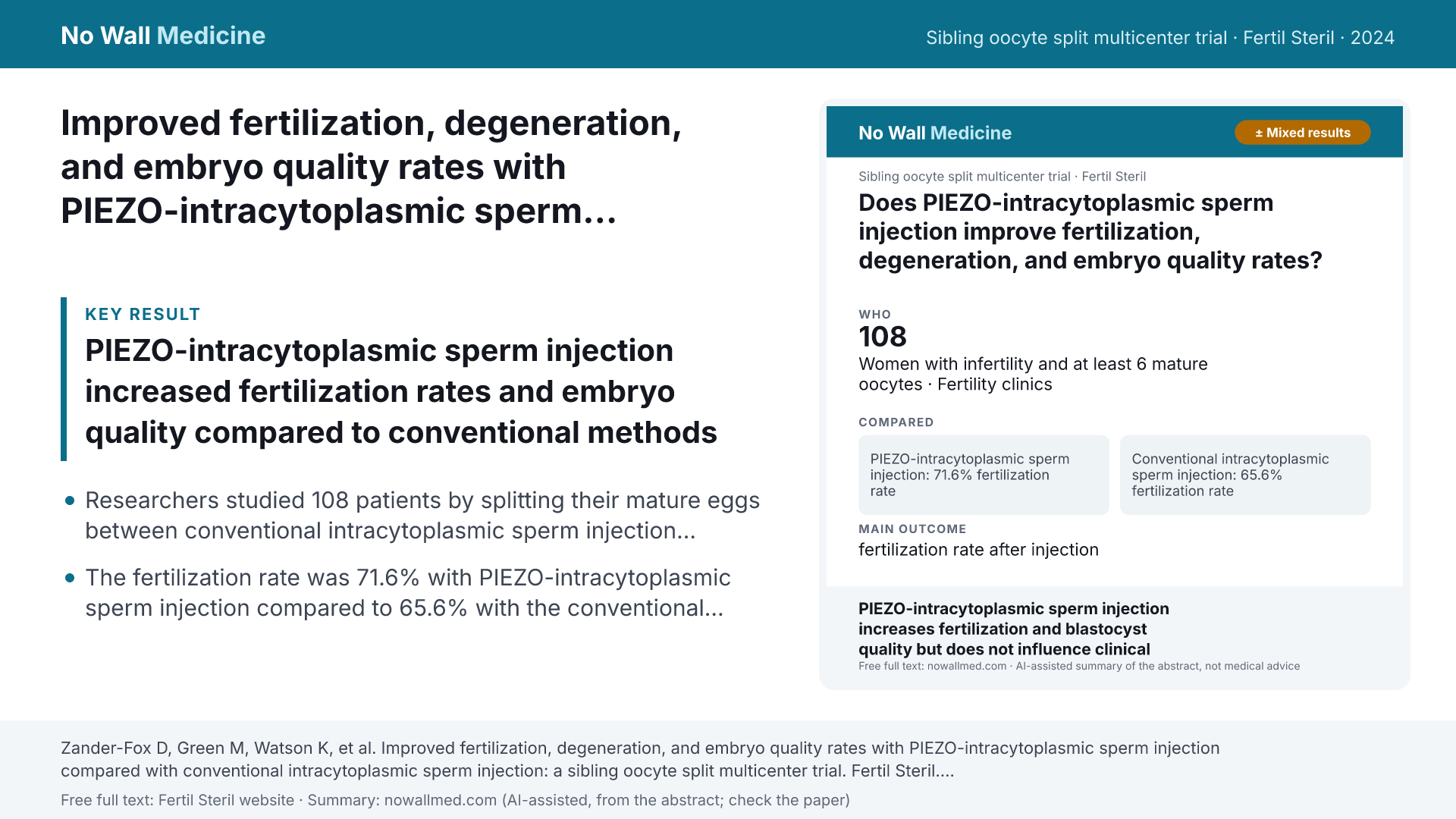
PIEZO-intracytoplasmic sperm injection increased fertilization rates and embryo quality compared to conventional methods
Improved fertilization, degeneration, and embryo quality rates with PIEZO-intracytoplasmic sperm injection compared with conventional intracytoplasmic sperm injection: a sibling oocyte split multicenter trial
Sibling oocyte split multicenter trialMixed results
Does PIEZO-intracytoplasmic sperm injection improve fertilization, degeneration, and embryo quality rates?
Who
108
Women with infertility and at least 6 mature oocytes · Fertility clinics
Compared
PIEZO-intracytoplasmic sperm injection: 71.6% fertilization rate
Conventional intracytoplasmic sperm injection: 65.6% fertilization rate
Main outcome
fertilization rate after injection
Bottom line: PIEZO-intracytoplasmic sperm injection increases fertilization and blastocyst quality but does not influence clinical pregnancy or live birth rates.
Fertil Steril · 2024-01-23Download image
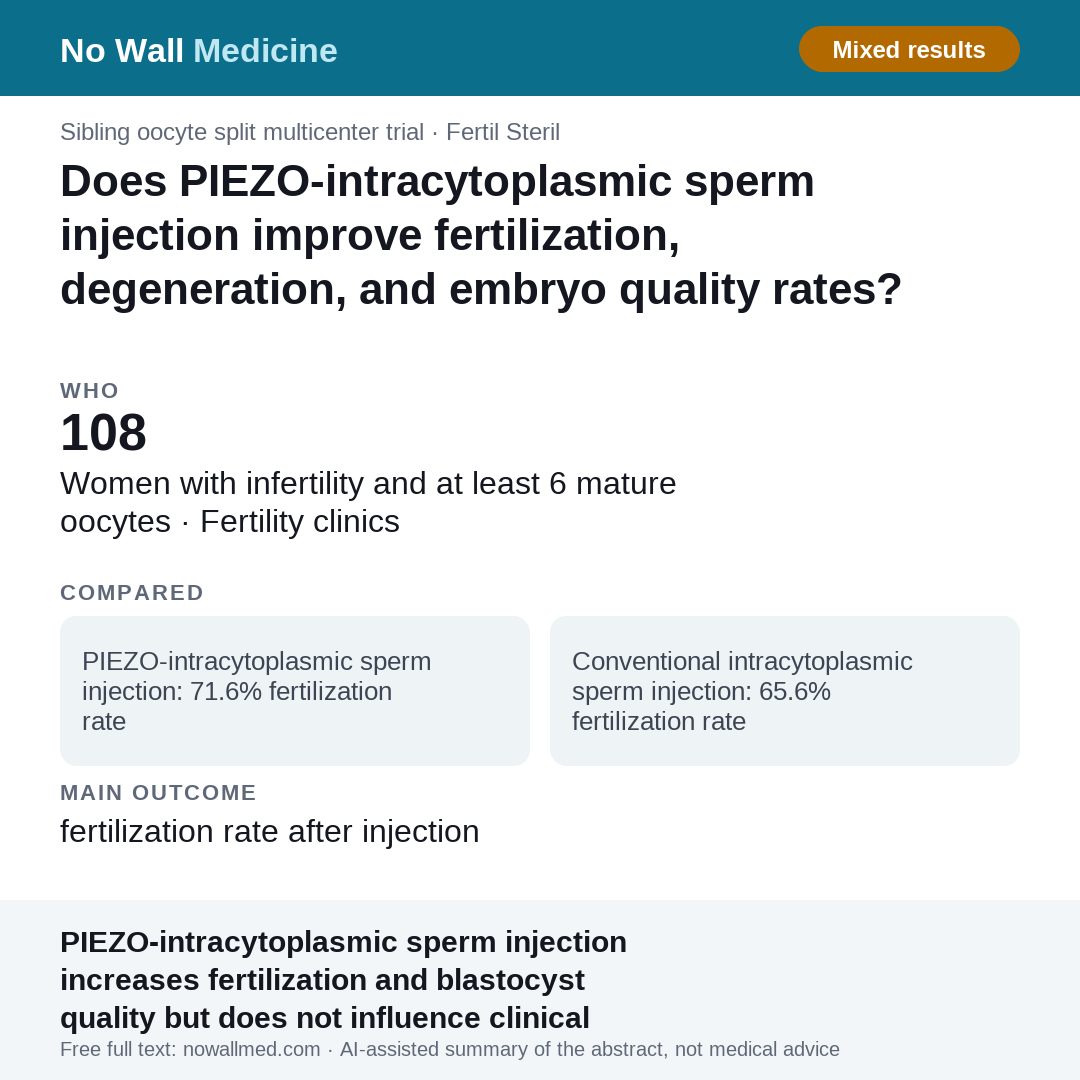
Clinical question: Does PIEZO-intracytoplasmic sperm injection improve fertilization, degeneration, and embryo quality rates?
Why it matters: It was unknown if using the PIEZO-intracytoplasmic sperm injection technique would improve fertilization, reduce egg degeneration, or increase embryo quality compared to conventional intracytoplasmic sperm injection.
Key points
- Researchers studied 108 patients by splitting their mature eggs between conventional intracytoplasmic sperm injection and PIEZO-intracytoplasmic sperm injection, a specialized method of injecting sperm into an egg.
- The fertilization rate was 71.6% with PIEZO-intracytoplasmic sperm injection compared to 65.6% with the conventional method, and egg degeneration was 6.3% versus 12.1%.
- The number of high-quality blastocysts on day 5 was 33.3% for the PIEZO method versus 27.5% for the conventional method, though pregnancy and live birth rates showed no significant difference.
Headline and key points written with AI from the paper’s abstract, with every number checked against it. Read the paper before relying on them.
Was this summary helpful?
Subject terms
Cite this article
Zander-Fox D, Green M, Watson K, Turner R, Bakos HW, Foo J. Improved fertilization, degeneration, and embryo quality rates with PIEZO-intracytoplasmic sperm injection compared with conventional intracytoplasmic sperm injection: a sibling oocyte split multicenter trial. Fertil Steril. 2024. doi:10.1016/j.fertnstert.2024.01.028
Spotted a mistake? Suggest a correction