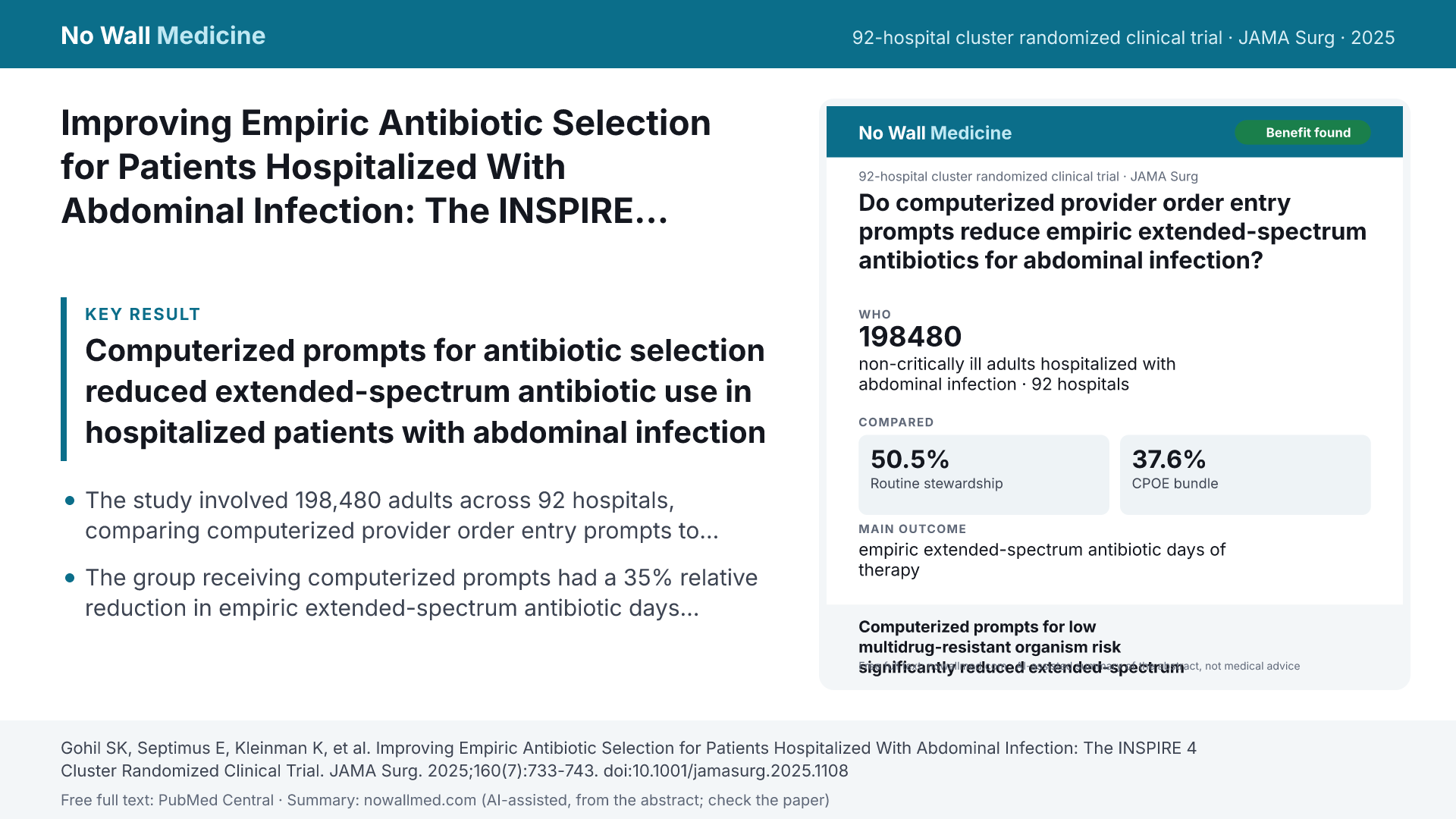
Improving Empiric Antibiotic Selection for Patients Hospitalized With Abdominal Infection: The INSPIRE 4 Cluster Randomized Clinical Trial
Key result: Computerized prompts for antibiotic selection reduced extended-spectrum antibiotic use in hospitalized patients with abdominal infection
Key points
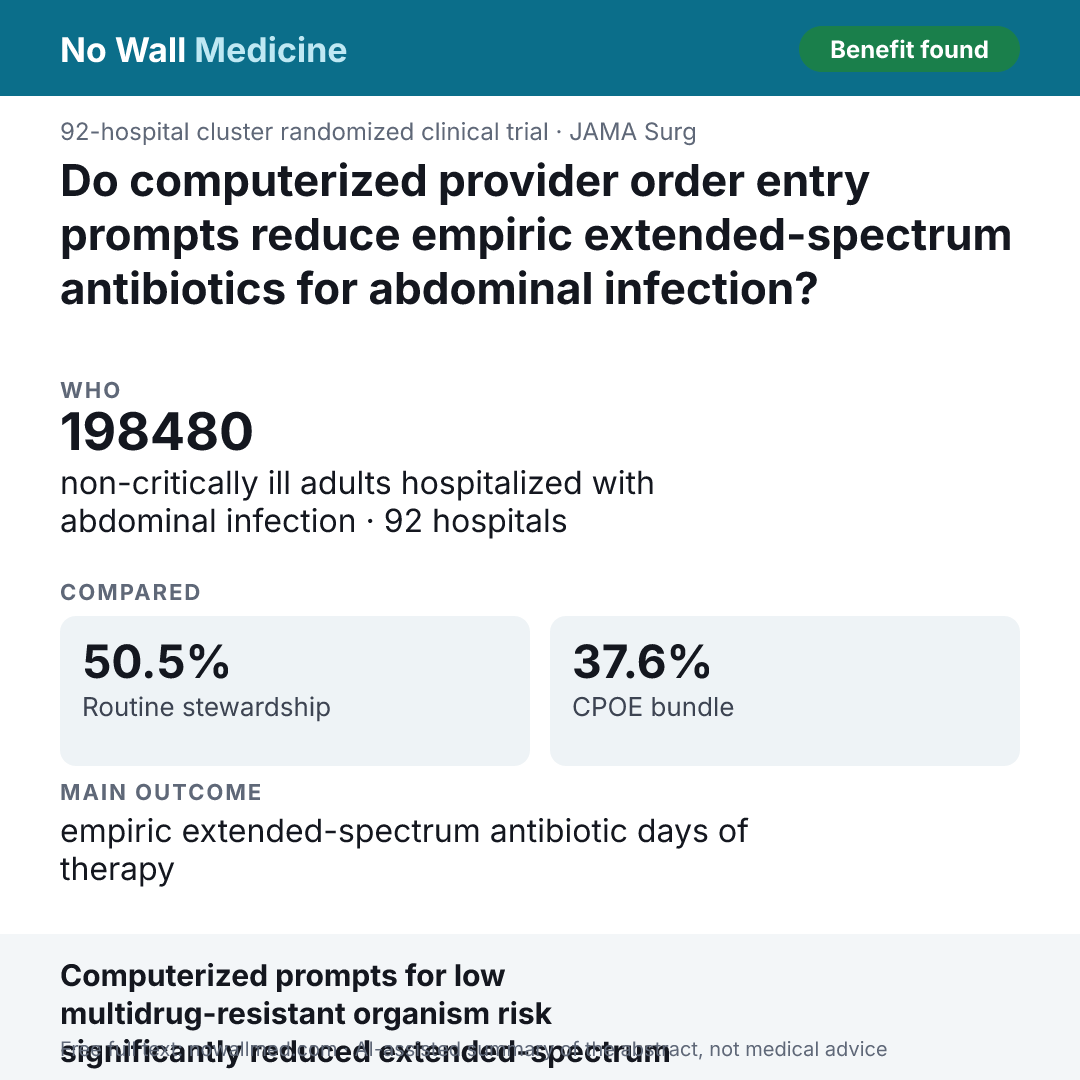
- The study involved 198,480 adults across 92 hospitals, comparing computerized provider order entry prompts to routine stewardship for patients with abdominal infections.
- The group receiving computerized prompts had a 35% relative reduction in empiric extended-spectrum antibiotic days of therapy compared to routine care.
- Hospital length of stay was noninferior between groups, with the intervention group staying 0.1 days longer than the routine care group.
Why it matters: Clinicians routinely prescribe extended-spectrum antibiotics to many patients with abdominal infections despite a low likelihood of infection with multidrug-resistant organisms.
Discussion prompts
- Would these patients look like yours? Who was left out?
- Is the main outcome one that matters to patients?
- Is the difference large enough to change what you do?
Cite: Gohil SK, Septimus E, Kleinman K, et al. Improving Empiric Antibiotic Selection for Patients Hospitalized With Abdominal Infection: The INSPIRE 4 Cluster Randomized Clinical Trial. JAMA Surg. 2025;160(7):733-743. doi:10.1001/jamasurg.2025.1108
Free full text: PubMed Central · Summary and visual abstract: nowallmed.com/a/improving-empiric-antibiotic-selection-for-patients-hospitalized-with-fnxooy/ (AI-assisted from the abstract; check the paper before relying on it).