Capillary blood testing detected more type 2 diabetes than traditional venous blood testing
Improving type 2 diabetes detection among at-risk individuals - comparing the effectiveness of active opportunistic screening using spot capillary-HbA1c testing and venous HbA1c testing: a cluster randomized controlled trial
Cluster randomized controlled trialBenefit found
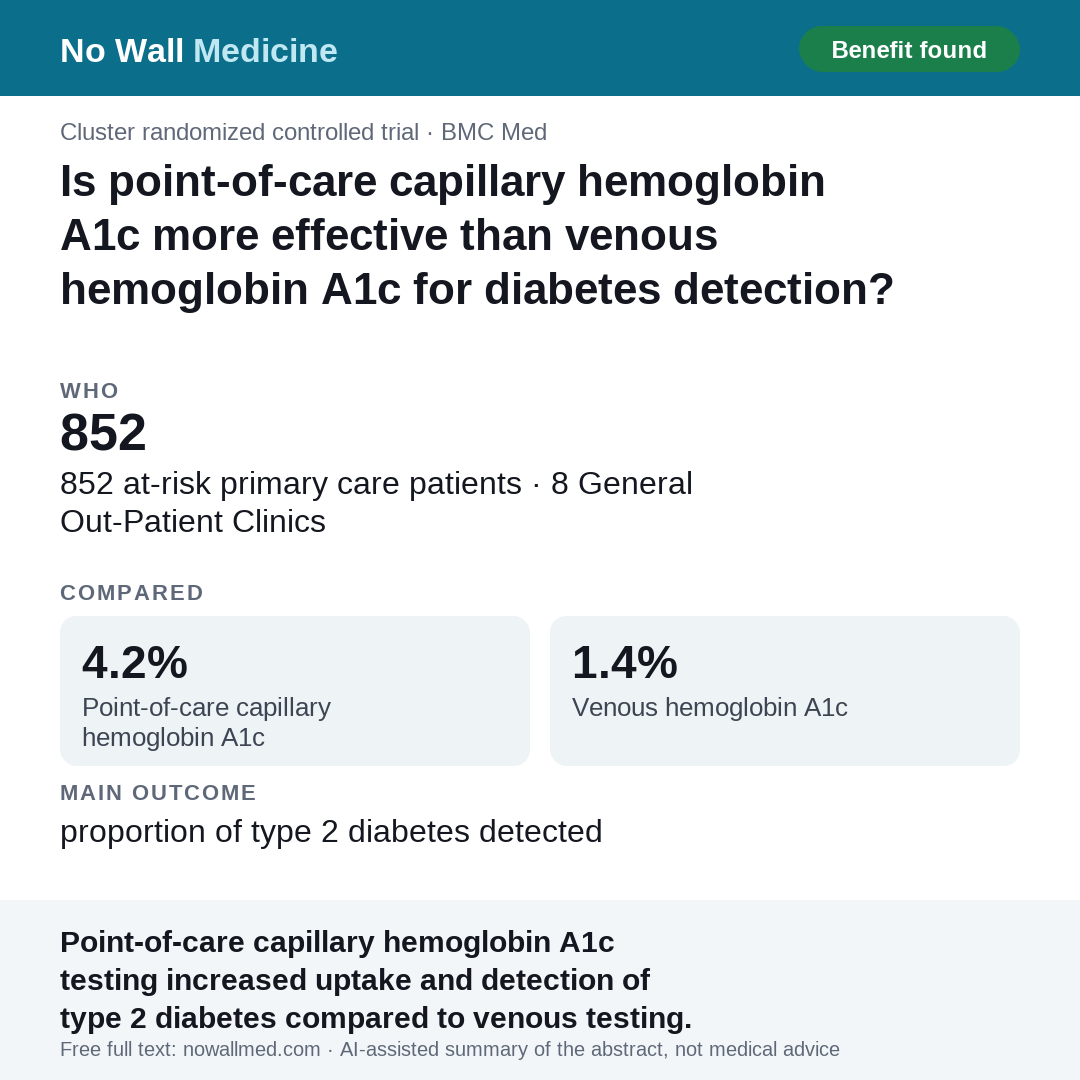
Is point-of-care capillary hemoglobin A1c more effective than venous hemoglobin A1c for diabetes detection?
Who
852
852 at-risk primary care patients · 8 General Out-Patient Clinics
Compared
4.2%Point-of-care capillary hemoglobin A1c
1.4%Venous hemoglobin A1c
Main outcome
proportion of type 2 diabetes detected
Result: OR = 7.06, 95% CI [2.47-20.18] for uptake rate
Bottom line: Point-of-care capillary hemoglobin A1c testing increased uptake and detection of type 2 diabetes compared to venous testing.
BMC Med · 2025-03-31Download image
Clinical question: Is point-of-care capillary hemoglobin A1c more effective than venous hemoglobin A1c for diabetes detection?
Why it matters: It is unknown if point-of-care capillary HbA1c testing is an effective alternative to venous HbA1c testing for detecting type 2 diabetes in at-risk primary care patients.
Key points
- Researchers conducted a cluster randomized controlled trial involving 852 at-risk patients across 8 general outpatient clinics.
- Point-of-care capillary HbA1c testing had a higher uptake rate of 76.0% compared to 37.5% for venous HbA1c testing.
- The capillary testing group had higher detection rates for type 2 diabetes (4.2% vs 1.4%) and pre-diabetes (11.8% vs 6.9%).
Headline and key points written with AI from the paper’s abstract, with every number checked against it. Read the paper before relying on them.
Was this summary helpful?
Subject terms
Cite this article
Chan L, Yu EYT, Wan EYF, Wong SYS, Chao DVK, Ko WWK. Improving type 2 diabetes detection among at-risk individuals - comparing the effectiveness of active opportunistic screening using spot capillary-HbA1c testing and venous HbA1c testing: a cluster randomized controlled trial. BMC Med. 2025. doi:10.1186/s12916-025-04007-z
Spotted a mistake? Suggest a correction
Top studies every Monday
The week’s key trials and guidelines in your specialties, plus any topics you follow. By email, free.
Get the weekly digest