In situ simulation for cardiopulmonary resuscitation training shows uncertain effects on clinical and educational outcomes
In situ simulation for cardiopulmonary resuscitation training: A systematic review
Systematic review of 10 studiesMixed results
Is in situ simulation effective for cardiopulmonary resuscitation training?
Who
Healthcare workers
Compared
In situ simulation
Traditional training
Main outcome
Clinical and educational outcomes
Bottom line: In situ simulation may improve clinical performance and teamwork, but evidence certainty is very low.
Limitation: Very low certainty of evidence due to risk of bias, inconsistency, and imprecision.
Resusc Plus · 2025-01-03Download image
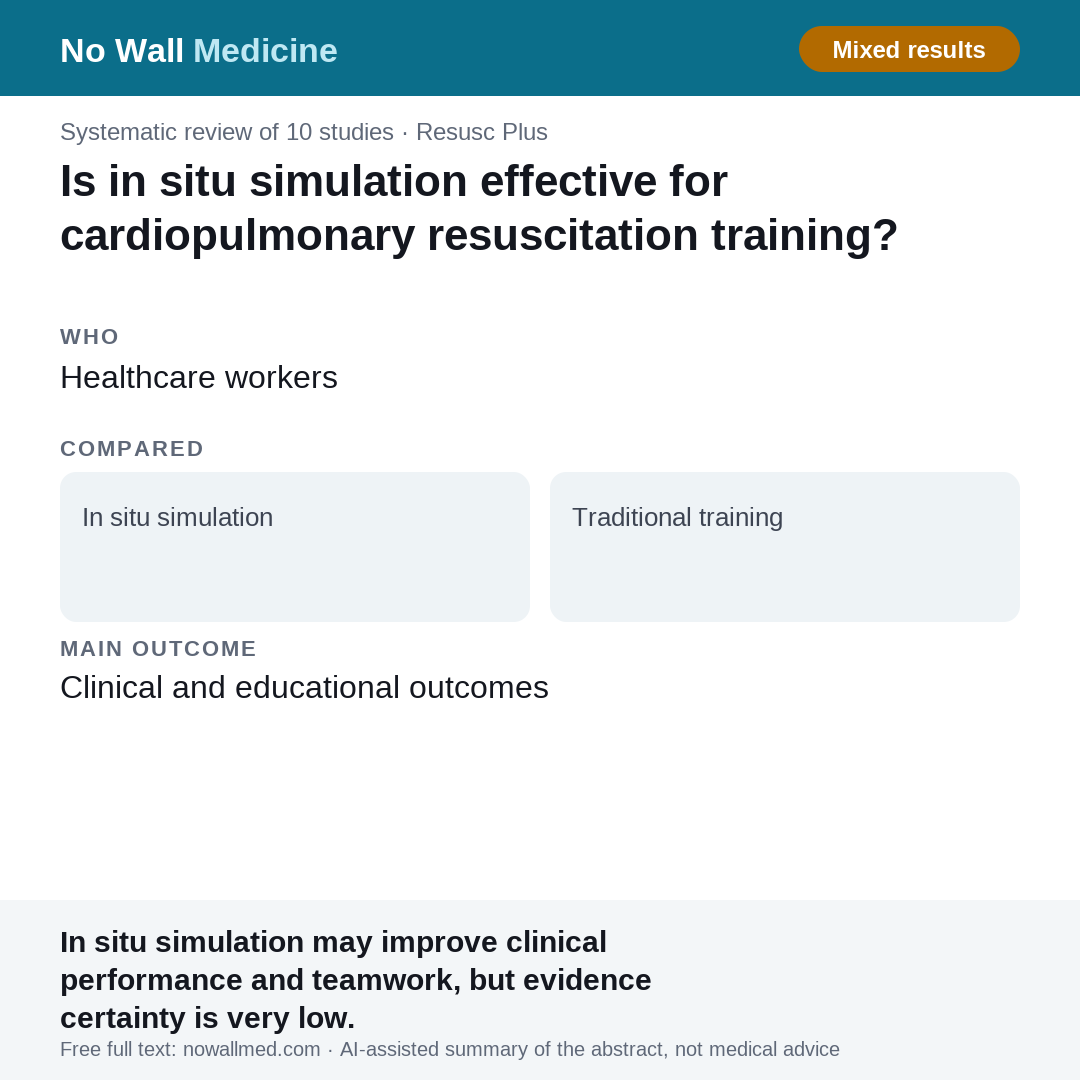
Clinical question: Is in situ simulation effective for cardiopulmonary resuscitation training?
Why it matters: It is unknown how in situ simulation for cardiopulmonary resuscitation training affects patient survival, clinical performance, and teamwork compared to traditional training methods.
Key points
- Researchers reviewed 10 studies, including 4 randomized controlled trials and 6 non-randomized studies, comparing in situ simulation to traditional cardiopulmonary resuscitation training.
- Most studies reported improved clinical performance, teamwork, and cardiopulmonary resuscitation skills in simulated settings, but evidence for actual patient survival or outcomes was inconsistent.
- The certainty of evidence for all evaluated outcomes was very low due to risk of bias, inconsistency, and imprecision.
Limitation the authors note: The certainty of evidence was very low due to high risk of bias, inconsistency, and imprecision, and no study evaluated the resources needed.
Headline and key points written with AI from the paper’s abstract, with every number checked against it. Read the paper before relying on them.
Was this summary helpful?
Cite this article
Cortegiani A, Ippolito M, Abelairas-Gómez C, Nabecker S, Olaussen A, Lauridsen KG. In situ simulation for cardiopulmonary resuscitation training: A systematic review. Resusc Plus. 2025. doi:10.1016/j.resplu.2024.100863
Spotted a mistake? Suggest a correction
Top studies every Monday
The week’s key trials and guidelines in your specialties, plus any topics you follow. By email, free.
Get the weekly digest