In-water resuscitation during surf rescues takes 61 seconds longer than conventional rescue methods
In-water resuscitation during a surf rescue: Time lost or breaths gained? A pilot study
Randomized crossover pilot testMixed results
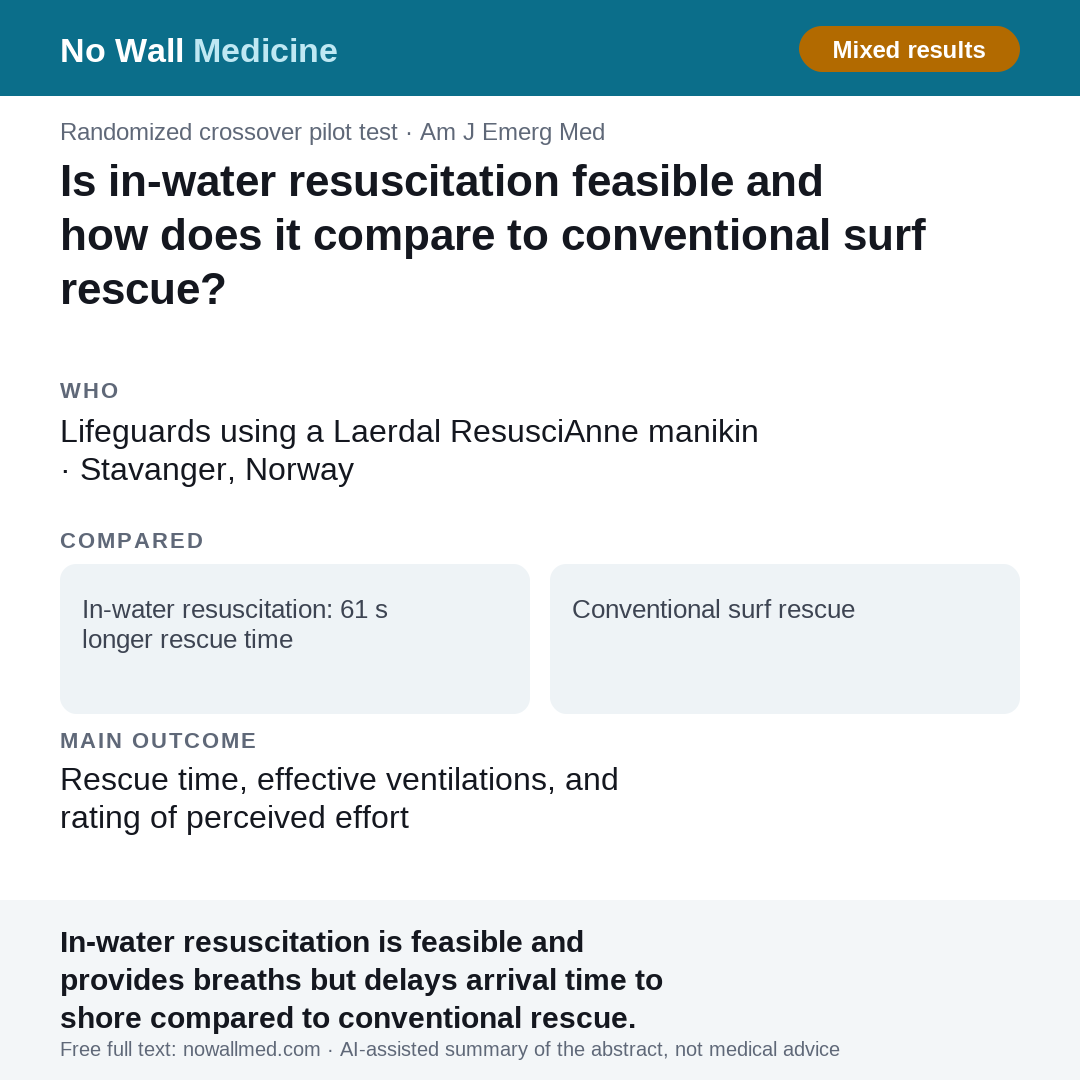
Is in-water resuscitation feasible and how does it compare to conventional surf rescue?
Who
Lifeguards using a Laerdal ResusciAnne manikin · Stavanger, Norway
Compared
In-water resuscitation: 61 s longer rescue time
Conventional surf rescue
Main outcome
Rescue time, effective ventilations, and rating of perceived effort
Bottom line: In-water resuscitation is feasible and provides breaths but delays arrival time to shore compared to conventional rescue.
Am J Emerg Med · 2024-02-07Download image
Clinical question: Is in-water resuscitation feasible and how does it compare to conventional surf rescue?
Why it matters: Uncertainties exist regarding whether performing rescue breaths while in the water is feasible or how it affects rescue timing and rescuer fatigue.
Key points
- Lifeguards participated in a randomized crossover pilot test comparing in-water resuscitation using a pocket mask to conventional surf rescue methods.
- The conventional rescue was significantly faster, while the in-water resuscitation method resulted in an average of 27 ± 12 rescue breaths.
- There were no significant differences found between the two techniques regarding the rating of perceived effort or fatigue levels.
Headline and key points written with AI from the paper’s abstract, with every number checked against it. Read the paper before relying on them.
Topics
Cite this article
Barcala-Furelos R, de Oliveira J, Duro-Pichel P, Colón-Leira S, Sanmartín-Montes M, Aranda-García S. In-water resuscitation during a surf rescue: Time lost or breaths gained? A pilot study. Am J Emerg Med. 2024. doi:10.1016/j.ajem.2024.02.010
Spotted a mistake? Suggest a correction
Top studies every Monday
The week’s key trials and guidelines in your specialties, by email. Free.
Get the weekly digest