Systematic reviews often overlook methodological gaps when combining randomized and non-randomized studies of harms
Including randomized and non-randomized studies of interventions in evidence synthesis for harms: a meta-epidemiological study
Meta-epidemiological studyHarm found
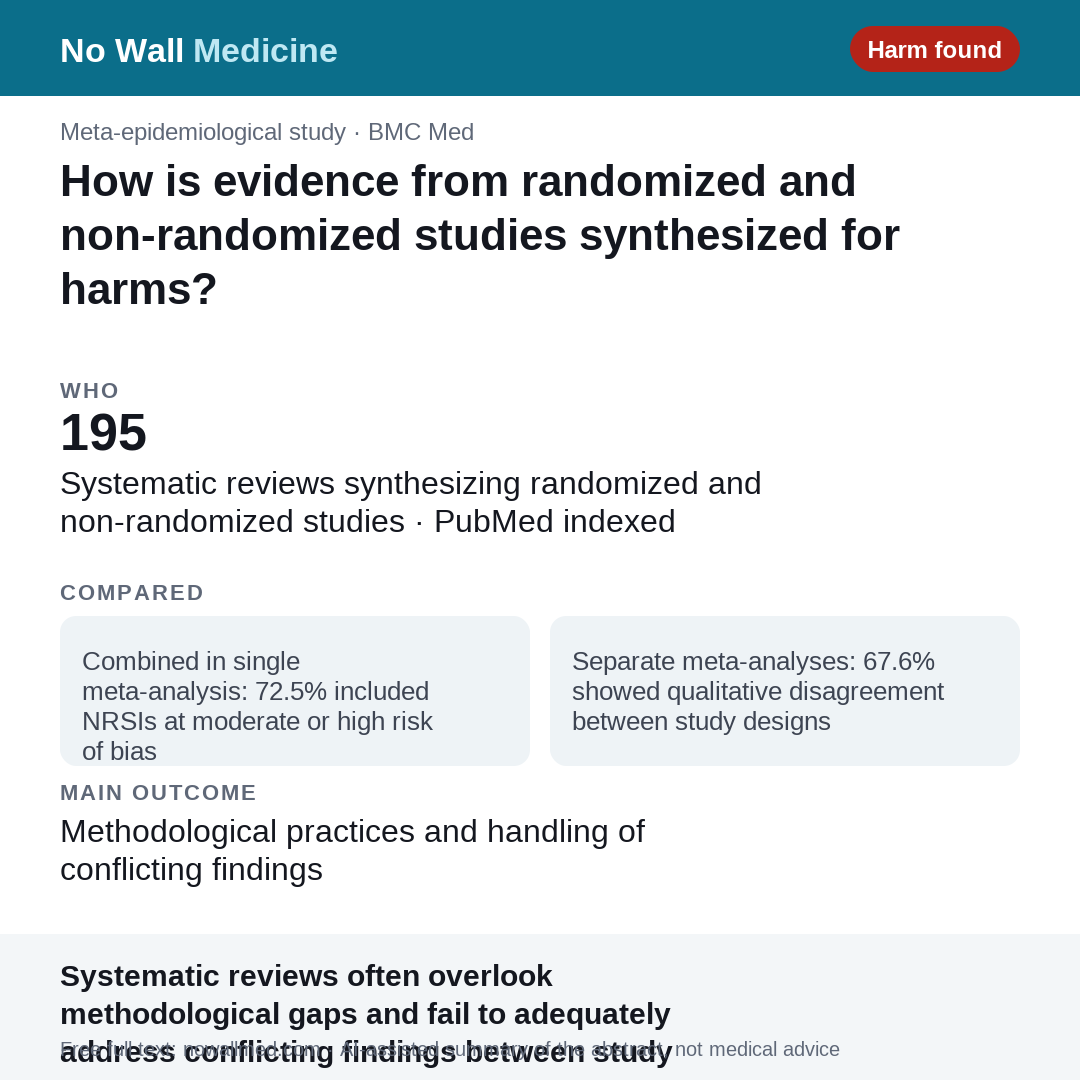
How is evidence from randomized and non-randomized studies synthesized for harms?
Who
195
Systematic reviews synthesizing randomized and non-randomized studies · PubMed indexed reviews
Compared
Combined in single meta-analysis: 72.5% included NRSIs at moderate or high risk of bias
Separate meta-analyses: 67.6% showed qualitative disagreement between study designs
Main outcome
Methodological practices and handling of conflicting findings
Bottom line: Systematic reviews often overlook methodological gaps and fail to adequately address conflicting findings between study designs when assessing harms.
BMC Med · 2026-06-29Download image
Clinical question: How is evidence from randomized and non-randomized studies synthesized for harms?
Why it matters: Synthesizing evidence from randomized controlled trials and non-randomized studies of interventions is methodologically challenging when assessing rare adverse events.
Key points
- Researchers analyzed 195 systematic reviews that combined randomized controlled trials and non-randomized studies of interventions to assess how evidence on harms is synthesized.
- Of the 91 reviews that combined both study types in one meta-analysis, 72.5% included non-randomized studies with moderate or high risk of bias.
- In 37 reviews that analyzed the study types separately, 67.6% showed qualitative disagreement between the two designs and 20.0% had inappropriate conclusions.
Headline and key points written with AI from the paper’s abstract, with every number checked against it. Read the paper before relying on them.
Topics
Spotted a mistake? Suggest a correction