Higher levels of butyrate in blood and stool were associated with lower blood pressure
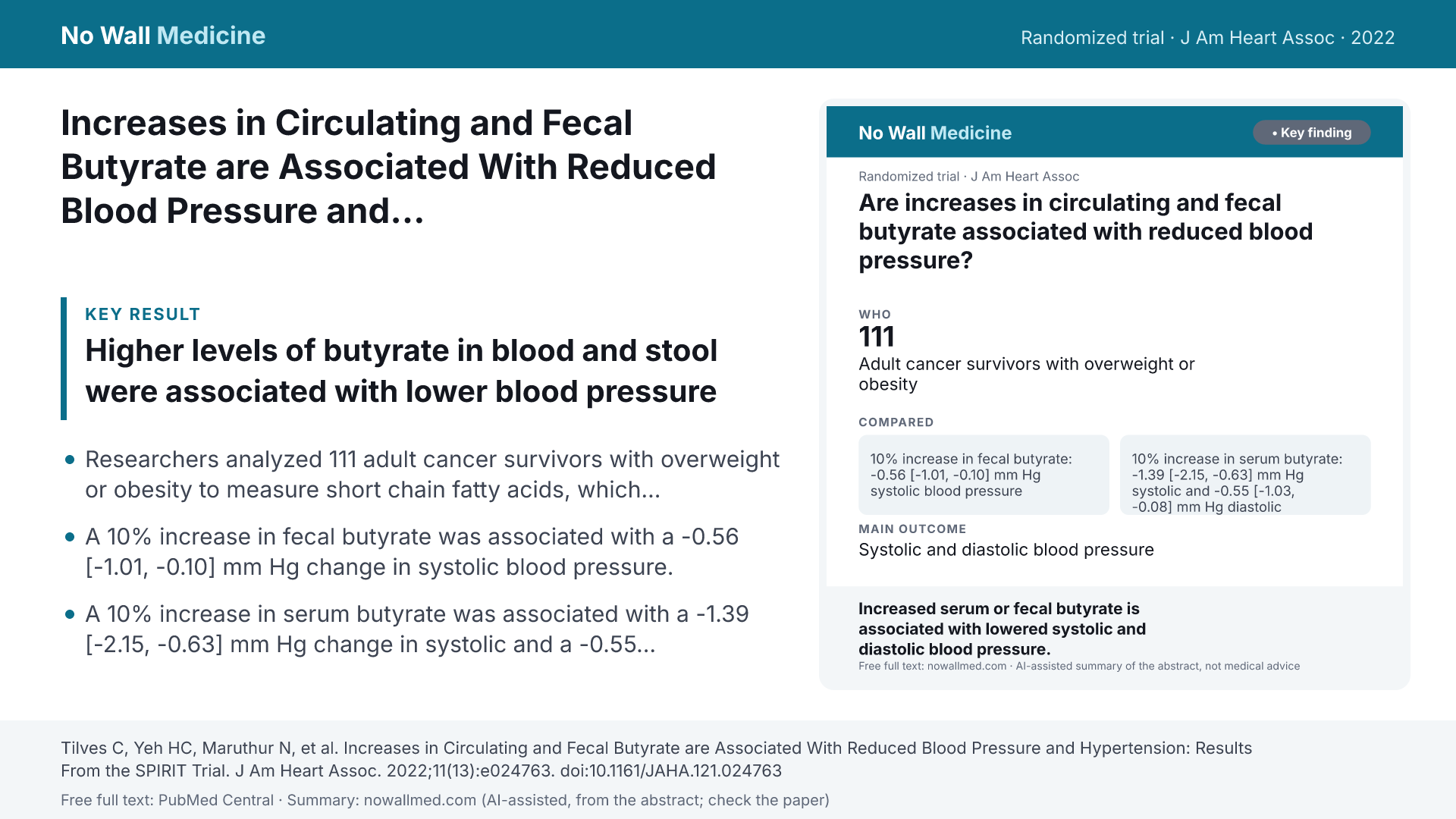
Increases in Circulating and Fecal Butyrate are Associated With Reduced Blood Pressure and Hypertension: Results From the SPIRIT Trial
Randomized trialBenefit found
Are increases in circulating and fecal butyrate associated with reduced blood pressure?
Who
111
Adult cancer survivors with overweight or obesity
Compared
10% increase in fecal butyrate: -0.56 [-1.01, -0.10] mm Hg systolic blood pressure
10% increase in serum butyrate: -1.39 [-2.15, -0.63] mm Hg systolic and -0.55 [-1.03, -0.08] mm Hg diastolic
Main outcome
Systolic and diastolic blood pressure
Bottom line: Increased serum or fecal butyrate is associated with lowered systolic and diastolic blood pressure.
J Am Heart Assoc · 2022-06-22Download image
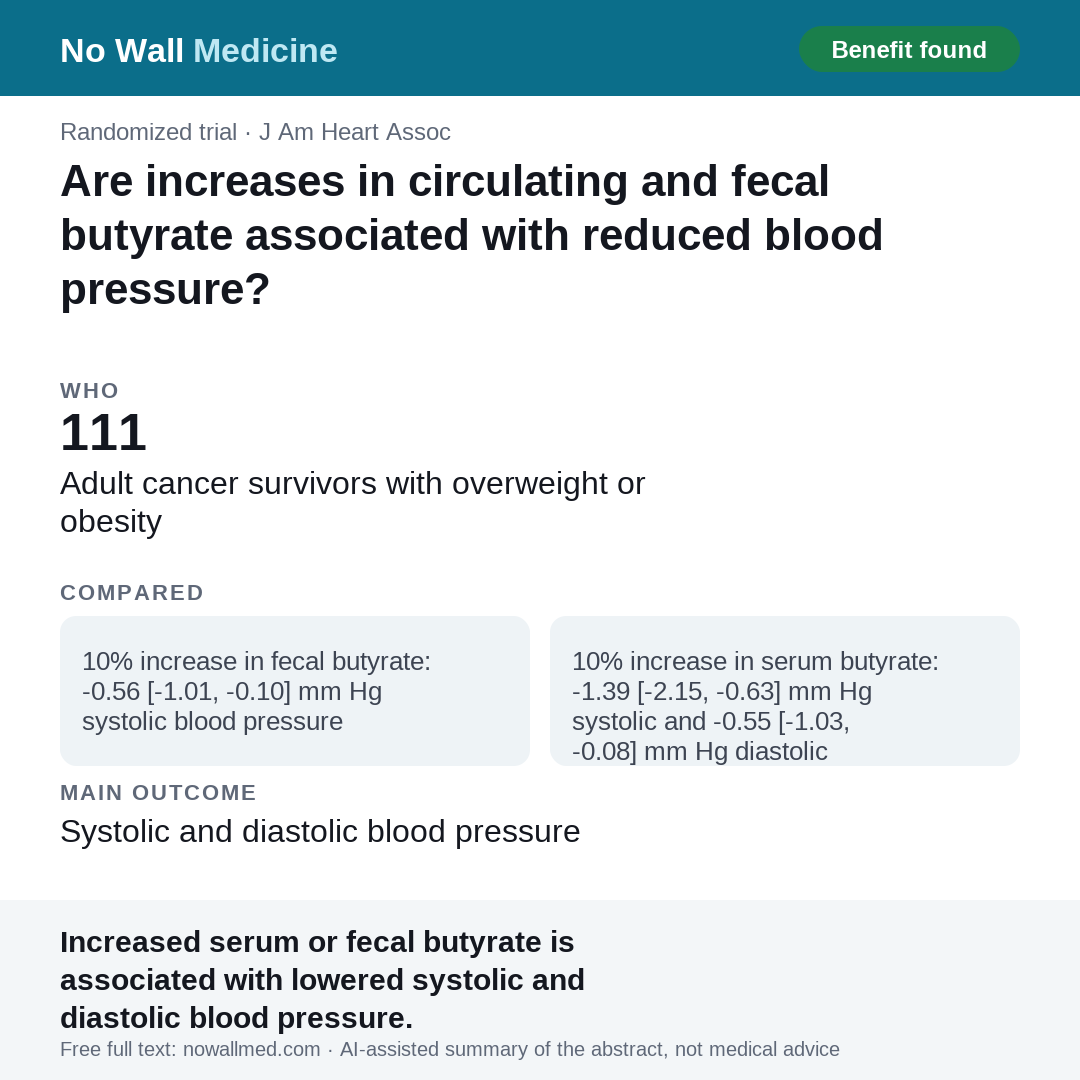
Clinical question: Are increases in circulating and fecal butyrate associated with reduced blood pressure?
Why it matters: The association between short chain fatty acids and blood pressure in humans is unclear because previous research relied on cross-sectional analyses and different types of biological samples.
Key points
- Researchers analyzed 111 adult cancer survivors with overweight or obesity to measure short chain fatty acids, which are products of fiber fermentation by gut bacteria.
- A 10% increase in fecal butyrate was associated with a -0.56 [-1.01, -0.10] mm Hg change in systolic blood pressure.
- A 10% increase in serum butyrate was associated with a -1.39 [-2.15, -0.63] mm Hg change in systolic and a -0.55 [-1.03, -0.08] mm Hg change in diastolic blood pressure.
Headline and key points written with AI from the paper’s abstract, with every number checked against it. Read the paper before relying on them.
Was this summary helpful?
Subject terms
Cite this article
Tilves C, Yeh HC, Maruthur N, Juraschek SP, Miller E, White K. Increases in Circulating and Fecal Butyrate are Associated With Reduced Blood Pressure and Hypertension: Results From the SPIRIT Trial. J Am Heart Assoc. 2022. doi:10.1161/JAHA.121.024763
Spotted a mistake? Suggest a correction
Top studies every Monday
The week’s key trials and guidelines in your specialties, plus any topics you follow. By email, free.
Get the weekly digest