Replacing animal protein with plant protein changes gut bacteria and tryptophan metabolism in men
Increasing plant protein sources in the diet modulates gut microbiota and tryptophan metabolism in men at cardiometabolic risk
Randomized, controlled, crossover feeding trialBenefit found
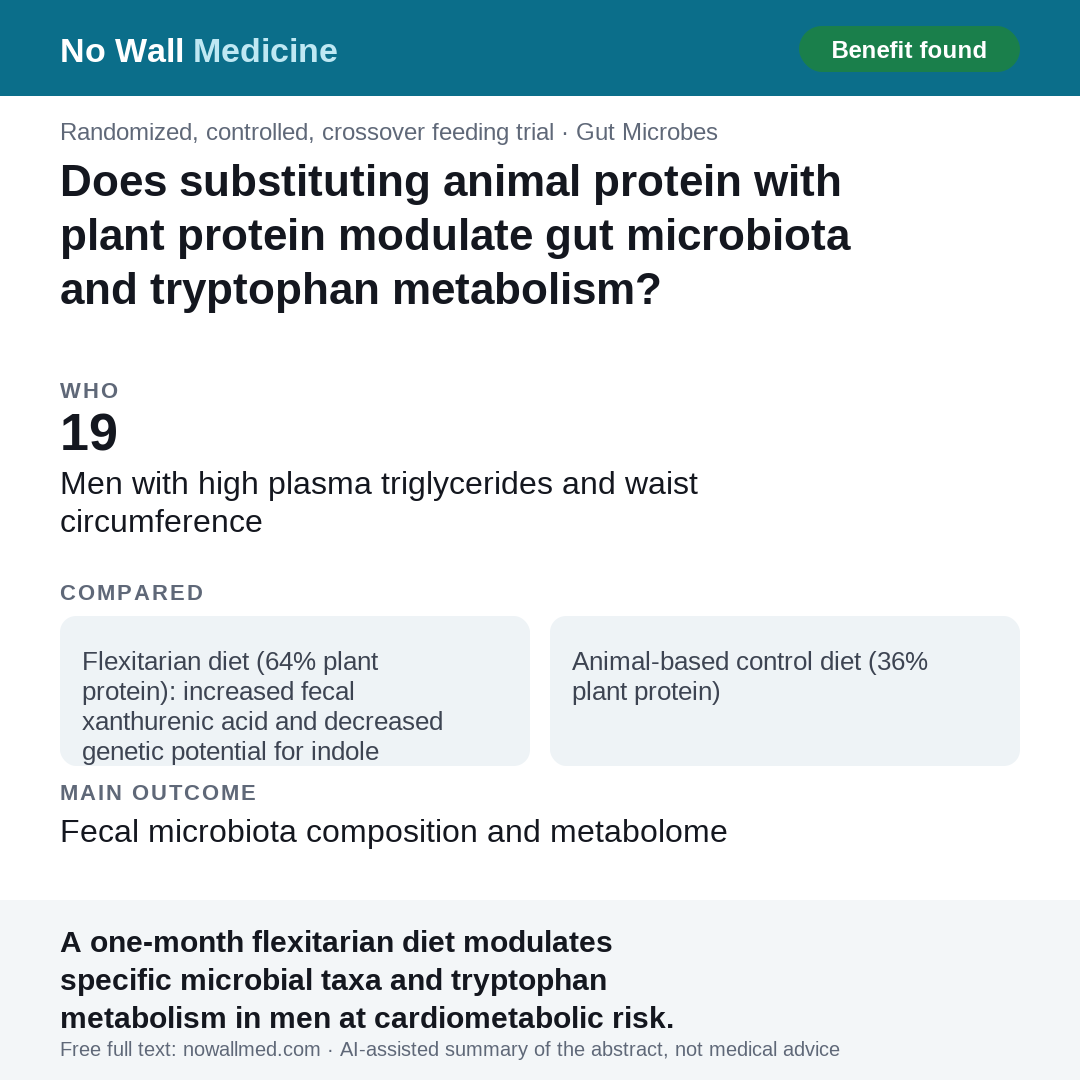
Does substituting animal protein with plant protein modulate gut microbiota and tryptophan metabolism?
Who
19
Men with high plasma triglycerides and waist circumference
Compared
Flexitarian diet (64% plant protein): increased fecal xanthurenic acid and decreased genetic potential for indole production
Animal-based control diet (36% plant protein)
Main outcome
Fecal microbiota composition and metabolome
Bottom line: A one-month flexitarian diet modulates specific microbial taxa and tryptophan metabolism in men at cardiometabolic risk.
Gut Microbes · 2026-05-27Download image
Clinical question: Does substituting animal protein with plant protein modulate gut microbiota and tryptophan metabolism?
Why it matters: It is unclear how substituting animal protein with plant protein sources affects the gut microbiota and metabolism in men at cardiometabolic risk.
Key points
- Researchers studied 19 men with high waist circumference and triglycerides using two 4-week diets: a flexitarian diet with 64% plant protein and a control diet with 36% plant protein.
- The plant protein diet reduced bacteria associated with animal-based diets and increased fecal xanthurenic acid while decreasing the genetic potential for indole production.
- The flexitarian diet also increased plasma indole propionic acid and decreased indoxyl sulfate, suggesting a shift in how the body processes the amino acid tryptophan.
Headline and key points written with AI from the paper’s abstract, with every number checked against it. Read the paper before relying on them.
Topics
Cite this article
Lépine G, Davila AM, Cueff G, Pickering G, Ichou F, Perreau C. Increasing plant protein sources in the diet modulates gut microbiota and tryptophan metabolism in men at cardiometabolic risk. Gut Microbes. 2026. doi:10.1080/19490976.2026.2677951
Spotted a mistake? Suggest a correction