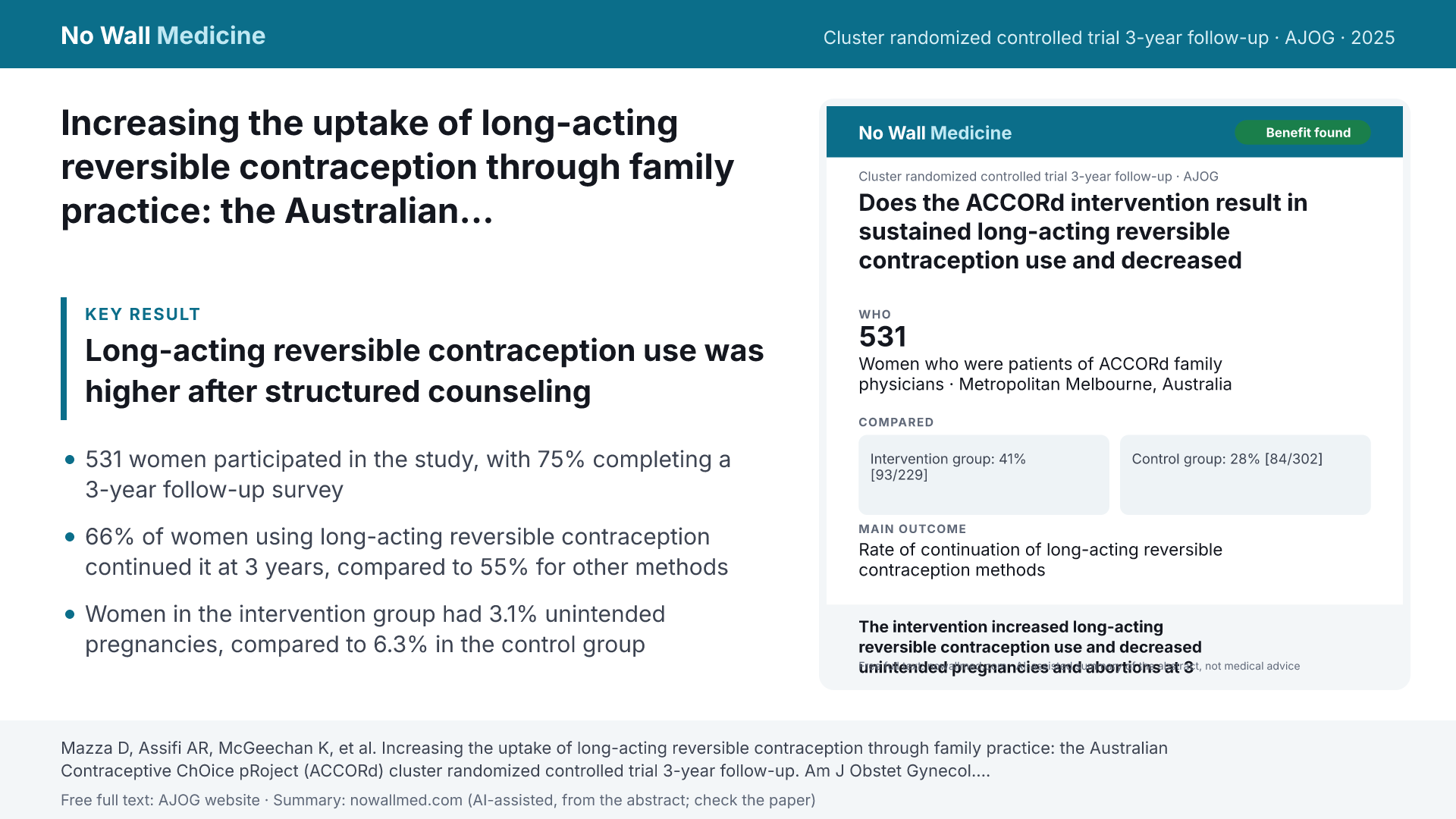
Long-acting reversible contraception use was higher after structured counseling
Increasing the uptake of long-acting reversible contraception through family practice: the Australian Contraceptive ChOice pRoject (ACCORd) cluster randomized controlled trial 3-year follow-up
Cluster randomized controlled trial 3-year follow-upBenefit found
Does the ACCORd intervention result in sustained long-acting reversible contraception use and decreased unplanned pregnancies?
Who
531
Women who were patients of ACCORd family physicians · Metropolitan Melbourne, Australia
Compared
Intervention group: 41% [93/229]
Control group: 28% [84/302]
Main outcome
Rate of continuation of long-acting reversible contraception methods
Result: odds ratio 0.38 [95% confidence interval, 0.16-0.86]
Bottom line: The intervention increased long-acting reversible contraception use and decreased unintended pregnancies and abortions at 3 years.
AJOG · 2025-03-20Download image
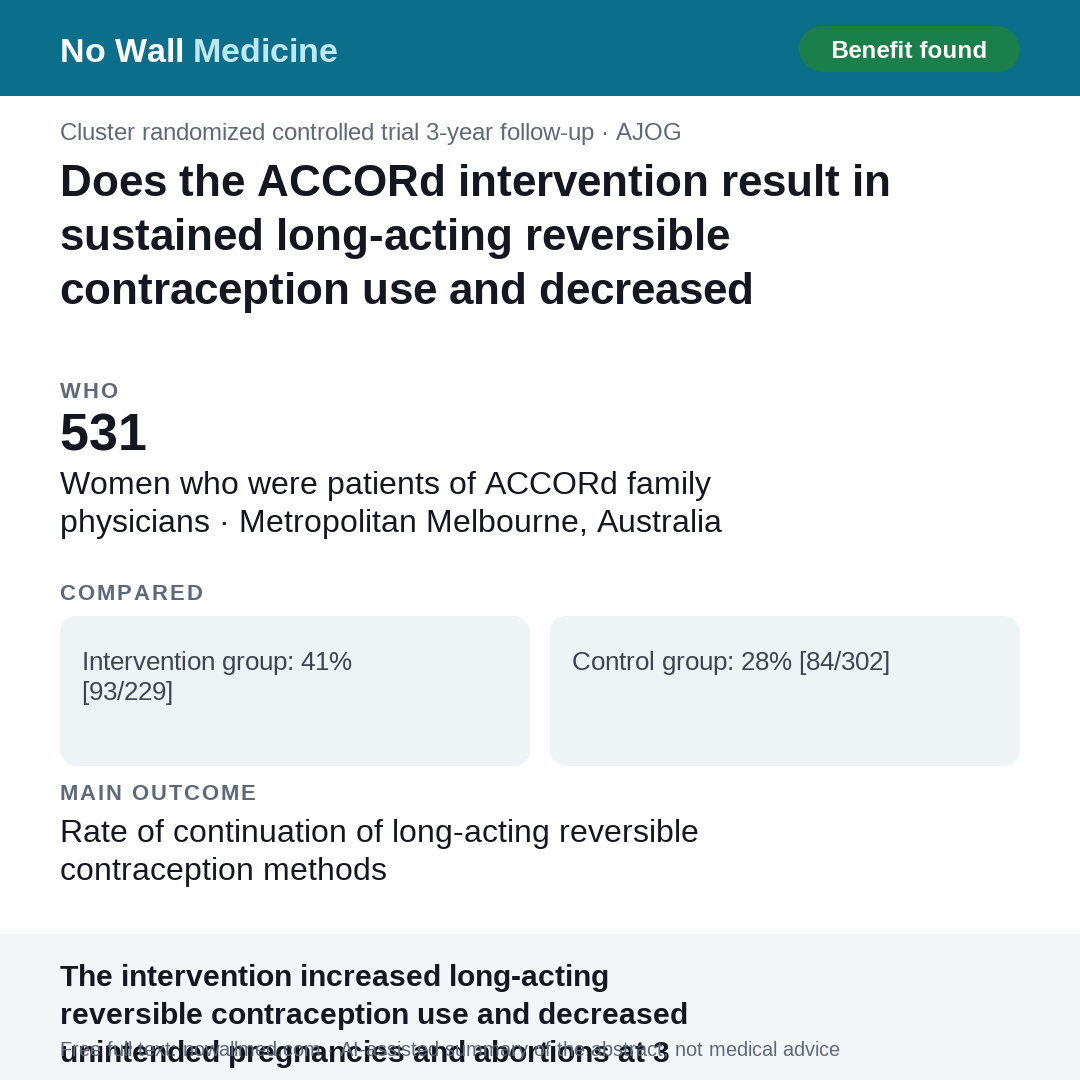
Clinical question: Does the ACCORd intervention result in sustained long-acting reversible contraception use and decreased unplanned pregnancies?
Why it matters: It was unknown whether structured contraceptive counseling could increase long-acting reversible contraception use
In absolute numbers
Intervention group: 41% · Control group: 28% → a difference of 13 percentage points, so about 8 people would need the treatment for 1 more to benefit (number needed to treat) over the trial’s follow-up.
Worked out by us from the two group results above, not reported by the authors. Check the paper for the exact outcome and timing.
Key points
- 531 women participated in the study, with 75% completing a 3-year follow-up survey.
- 66% of women using long-acting reversible contraception continued it at 3 years, compared to 55% for other methods.
- Women in the intervention group had 3.1% unintended pregnancies, compared to 6.3% in the control group.
Headline and key points written with AI from the paper’s abstract, with every number checked against it. Read the paper before relying on them.
Was this summary helpful?
Subject terms
Cite this article
Mazza D, Assifi AR, McGeechan K, Haas M, Peipert JF, Lucke J. Increasing the uptake of long-acting reversible contraception through family practice: the Australian Contraceptive ChOice pRoject (ACCORd) cluster randomized controlled trial 3-year follow-up. AJOG. 2025. doi:10.1016/j.ajog.2025.03.020
Spotted a mistake? Suggest a correction
Top studies every Monday
The week’s key trials and guidelines in your specialties, plus any topics you follow. By email, free.
Get the weekly digest