Individualized antimicrobial dose optimization: a systematic review and meta-analysis of randomized controlled trials
Meta-analysis of trialsMixed results
Does individualized antimicrobial dosing work
Who
1241
Adults receiving antibiotic or antifungal drugs
Compared
Individualized dosing
Control group
Main outcome
Mortality risk
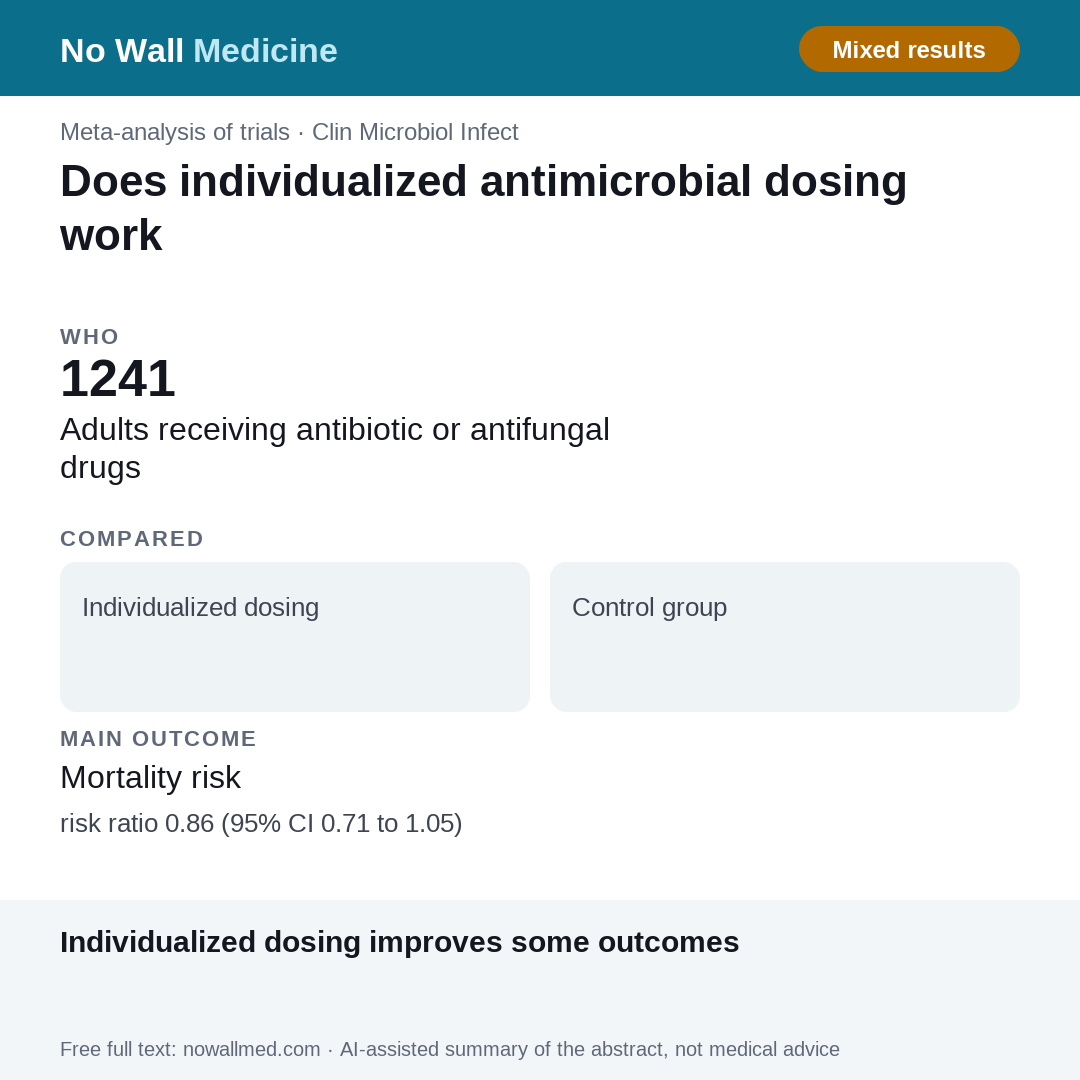
Result: risk ratio 0.86 (95% CI 0.71 to 1.05)
Bottom line: Individualized dosing improves some outcomes
Clin Microbiol Infect · 2023-03-23Download image
Abstract
Background
Therapeutic drug monitoring and Model-informed precision dosing allow dose individualization to increase drug effectivity and reduce toxicity. Objectives
To evaluate the available evidence on the clinical efficacy of individualized antimicrobial dosing optimization. Methods
Data sources: PubMed, Embase, Web of Science, and Cochrane Library databases from database inception to 11 November 2022. Study eligibility criteria
Published peer-reviewed randomized controlled trials. Participants
Human subjects aged ≥18 years receiving an antibiotic or antifungal drug. Interventions
Patients receiving individualized antimicrobial dose adjustment. Assessment of risk of bias
Cochrane risk-of-bias tool for randomized trials. Methods of data synthesis
The primary outcome was the risk of mortality. Secondary outcomes included target attainment, treatment failure, clinical and microbiological cure, length of stay, treatment duration, and adverse events. Effect sizes were pooled using a random-effects model. Statistical heterogeneity was assessed by inconsistency testing (I2). Results
Ten randomized controlled trials were included in the meta-analysis (1241 participants; n = 624 in the individualized antimicrobial dosing group and n = 617 in the control group). Individualized antimicrobial dose optimization was associated with a numerical decrease in mortality (risk ratio [RR] = 0.86; 95% CI, 0.71-1.05), without reaching statistical significance. Moreover, it was associated with significantly higher target attainment rates (RR = 1.41; 95% CI, 1.13-1.76) and a significant decrease in treatment failure (RR = 0.70; 95% CI, 0.54-0.92). Individualized antimicrobial dose optimization was associated with improvement, but not significant in clinical cure (RR = 1.33; 95% CI, 0.94-1.33) and microbiological outcome (RR = 1.25; CI, 1.00-1.57), as well as with a significant decrease in the risk of nephrotoxicity (RR = 0.55; 95% CI, 0.31-0.97). Conclusions
This meta-analysis demonstrated that target attainment, treatment failure, and nephrotoxicity were significantly improved in patients who underwent individualized antimicrobial dose optimization. It showed an improvement in mortality, clinical cure or microbiological outcome, although not significant.
Subject terms
Cite this article
Sanz-Codina M, Bozkir HÖ, Jorda A, Zeitlinger M. Individualized antimicrobial dose optimization: a systematic review and meta-analysis of randomized controlled trials. Clin Microbiol Infect. 2023. doi:10.1016/j.cmi.2023.03.018
Spotted a mistake? Suggest a correction
Top studies every Monday
The week’s key trials and guidelines in your specialties, plus any topics you follow. By email, free.
Get the weekly digest