Individualized blood pressure control during mechanical thrombectomy did not improve functional outcomes for stroke patients
Individualized vs Standard Blood Pressure Control During Thrombectomy for Ischemic Stroke: The DETERMINE Randomized Clinical Trial
Multicenter, open-label, blinded-endpoint, randomized clinical trialNo clear difference
Does individualized blood pressure control during mechanical thrombectomy improve 90-day functional outcome?
Who
433
Adult patients with acute ischemic stroke and anterior large vessel occlusion · 8 academic comprehensive stroke centers in France
Compared
44.2%Individualized blood pressure group
48.8%Control blood pressure group
Main outcome
Favorable functional outcome at 90 days
Result: adjusted odds ratio 0.82 (95% CI 0.54-1.24)
Bottom line: Individualized blood pressure management during mechanical thrombectomy did not improve 90-day functional outcomes compared to standard management.
Neurology · 2026-08-12Download image
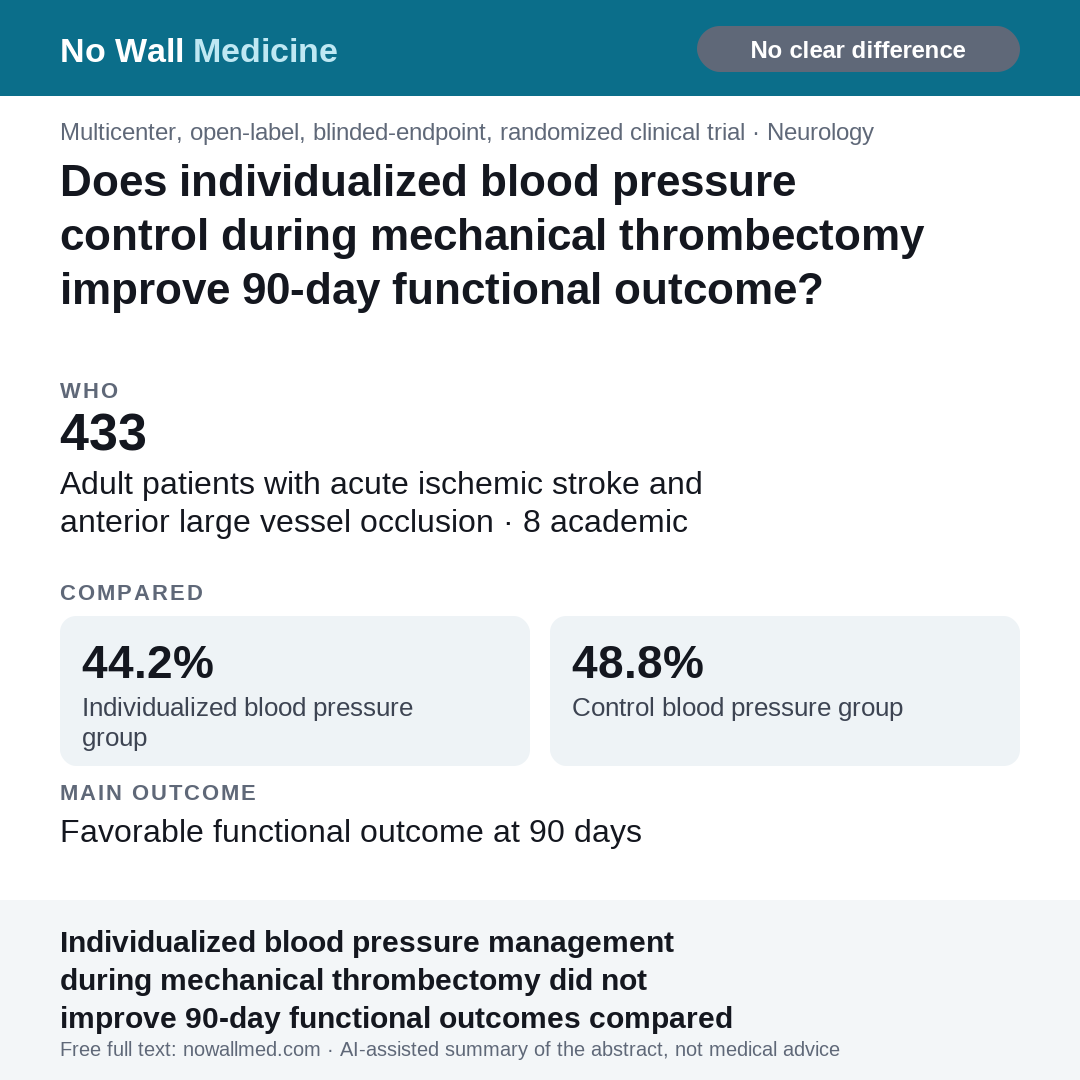
Clinical question: Does individualized blood pressure control during mechanical thrombectomy improve 90-day functional outcome?
Why it matters: Current blood pressure targets during mechanical thrombectomy for ischemic stroke rely on a one-size-fits-all approach rather than individualized management.
Key points
- Researchers studied 433 adult patients undergoing mechanical thrombectomy, comparing individualized mean arterial pressure management to standard systolic blood pressure targets.
- Favorable functional outcome at 90 days occurred in 44.2% of the individualized group and 48.8% of the control group, showing no significant difference.
- There were no significant differences between the groups regarding mortality at 90 days or rates of symptomatic intracranial hemorrhages.
Headline and key points written with AI from the paper’s abstract, with every number checked against it. Read the paper before relying on them.
Topics
Spotted a mistake? Suggest a correction