Ketamine-propofol may reduce hemodynamic instability compared to etomidate or ketamine during intubation
Induction Agents for Tracheal Intubation of Critically Ill Patients: A Systematic Review and Network Meta-Analysis of Randomized Controlled Trials
PulmonologyAdult and pediatric
Network meta-analysis of 21 randomized controlled trialsMixed results
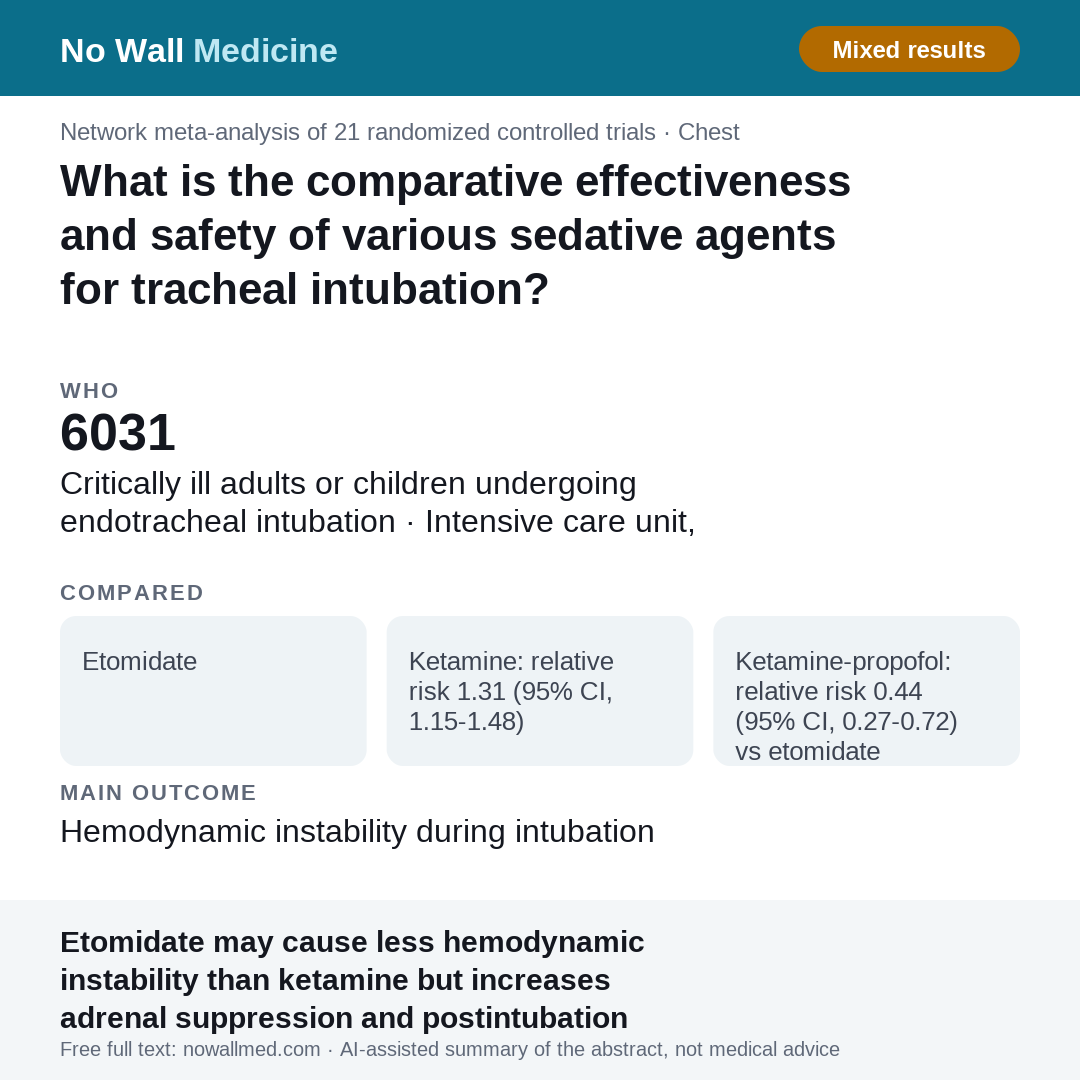
What is the comparative effectiveness and safety of various sedative agents for tracheal intubation?
Who
6031
Critically ill adults or children undergoing endotracheal intubation · Intensive care unit, emergency department, operating room, and prehospital
Compared
Etomidate
Ketamine: relative risk 1.31 (95% CI, 1.15-1.48)
Ketamine-propofol: relative risk 0.44 (95% CI, 0.27-0.72) vs etomidate
Main outcome
Hemodynamic instability during intubation
Result: relative risk 1.31 (95% CI, 1.15-1.48) for ketamine vs etomidate
Bottom line: Etomidate may cause less hemodynamic instability than ketamine but increases adrenal suppression and postintubation vasopressor needs.
Limitation: Evidence for ketamine-propofol is too limited and uncertain to support firm conclusions.
Chest · 2026-08-18Download image
Clinical question: What is the comparative effectiveness and safety of various sedative agents for tracheal intubation?
Why it matters: Clinicians lack clear evidence on the comparative effectiveness and safety of different sedative agents used for tracheal intubation in critically ill patients.
Key points
- Researchers analyzed 21 randomized controlled trials involving 6,031 patients across intensive care, emergency, operating, and prehospital settings.
- Compared to etomidate, ketamine was associated with more hemodynamic instability, while ketamine-propofol may decrease instability compared to both etomidate and ketamine.
- Etomidate was linked to increased adrenal suppression compared to other sedative agents used for intubation.
Limitation the authors note: The available evidence for ketamine-propofol is too limited and uncertain to support firm conclusions.
Headline and key points written with AI from the paper’s abstract, with every number checked against it. Read the paper before relying on them.
Spotted a mistake? Suggest a correction