FLAG-Ida chemotherapy was associated with lower relapse rates in patients with KMT2A-rearranged acute myeloid leukemia
Induction chemotherapy and molecular MRD influence outcomes in KMT2A-rearranged AML
Analysis of 2 large sequential randomized trialsBenefit found
Does induction chemotherapy and molecular measurable residual disease influence outcomes in KMT2A-rearranged acute myeloid leukemia?
Who
217
Patients with KMT2A-rearranged acute myeloid leukemia
Compared
FLAG-Ida: markedly lower rates of relapse
other chemotherapy regimens
Main outcome
relapse and death
Bottom line: FLAG-Ida resulted in lower relapse rates and molecular measurable residual disease predicts relapse and death.
Blood · 2025-08-06Download image
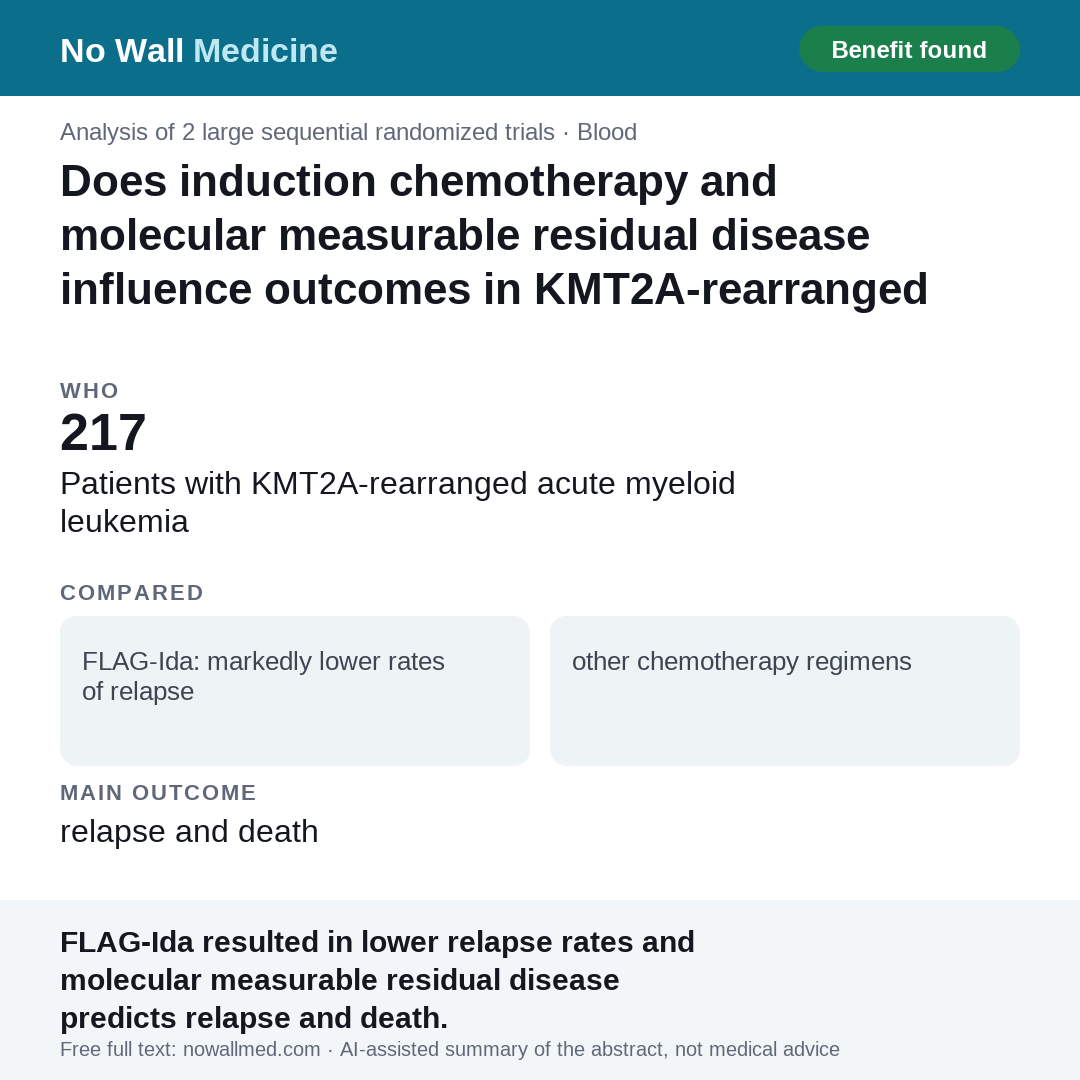
Clinical question: Does induction chemotherapy and molecular measurable residual disease influence outcomes in KMT2A-rearranged acute myeloid leukemia?
Key points
- Researchers analyzed 217 patients with KMT2A-rearranged acute myeloid leukemia from two large sequential randomized trials.
- Patients receiving FLAG-Ida chemotherapy had markedly lower rates of relapse compared to those receiving other chemotherapy regimens.
- The presence of molecular measurable residual disease, which is the detection of tiny amounts of cancer cells, after the second treatment cycle was strongly linked to relapse and death.
Headline and key points written with AI from the paper’s abstract, with every number checked against it. Read the paper before relying on them.
Topics
Cite this article
Othman J, Potter N, Freeman SD, McCarthy N, Jovanovic J, Runglall M. Induction chemotherapy and molecular MRD influence outcomes in KMT2A-rearranged AML. Blood. 2025. doi:10.1182/blood.2025029556
Spotted a mistake? Suggest a correction
Top studies every Monday
The week’s key trials and guidelines in your specialties, plus any topics you follow. By email, free.
Get the weekly digest