Influence of Digital Intervention Messaging on Influenza Vaccination Rates Among Adults With Cardiovascular Disease in the United States: Decentralized Randomized Controlled Trial
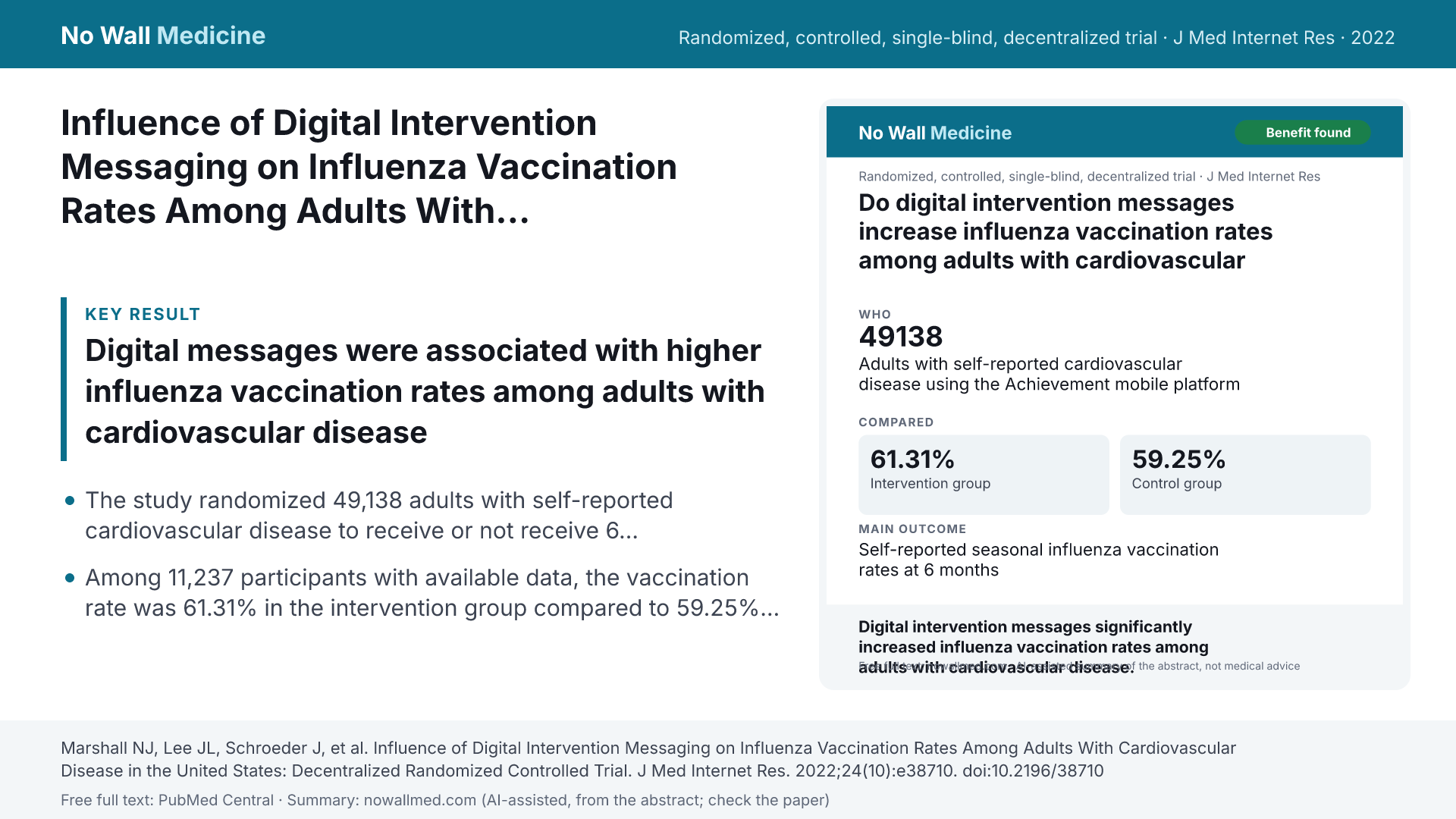
Key result: Digital messages were associated with higher influenza vaccination rates among adults with cardiovascular disease
Key points
- The study randomized 49,138 adults with self-reported cardiovascular disease to receive or not receive 6 digital messages promoting influenza vaccination.
- Among 11,237 participants with available data, the vaccination rate was 61.31% in the intervention group compared to 59.25% in the control group.
- The intervention was effective among White participants but was not effective among people of color.
Limitation the authors note: The study had a low response rate, with primary endpoint data available for only 22.87% of the randomized participants.
Discussion prompts
- Would these patients look like yours? Who was left out?
- Is the main outcome one that matters to patients?
- Is the difference large enough to change what you do?
Cite: Marshall NJ, Lee JL, Schroeder J, et al. Influence of Digital Intervention Messaging on Influenza Vaccination Rates Among Adults With Cardiovascular Disease in the United States: Decentralized Randomized Controlled Trial. J Med Internet Res. 2022;24(10):e38710. doi:10.2196/38710
Free full text: PubMed Central · Summary and visual abstract: nowallmed.com/a/influence-of-digital-intervention-messaging-on-influenza-vaccination-v3jna6/ (AI-assisted from the abstract; check the paper before relying on it).