Spironolactone increased ejection fraction and reduced certain protein levels in people at risk of heart failure
Influence of ejection fraction on biomarker expression and response to spironolactone in people at risk of heart failure: findings from the HOMAGE trial
Randomized trialBenefit found
Does ejection fraction influence biomarker expression and response to spironolactone in high-risk patients?
Who
527
Patients aged >60 years at high risk of heart failure
Compared
Spironolactone: increased LVEF from baseline to month 9 by 1.1%
Standard of care
Main outcome
Circulating protein levels and left ventricular ejection fraction
Bottom line: Spironolactone reduced circulating natriuretic peptides and type 1 collagen and increased left ventricular ejection fraction.
Eur J Heart Fail · 2022-03-05Download image
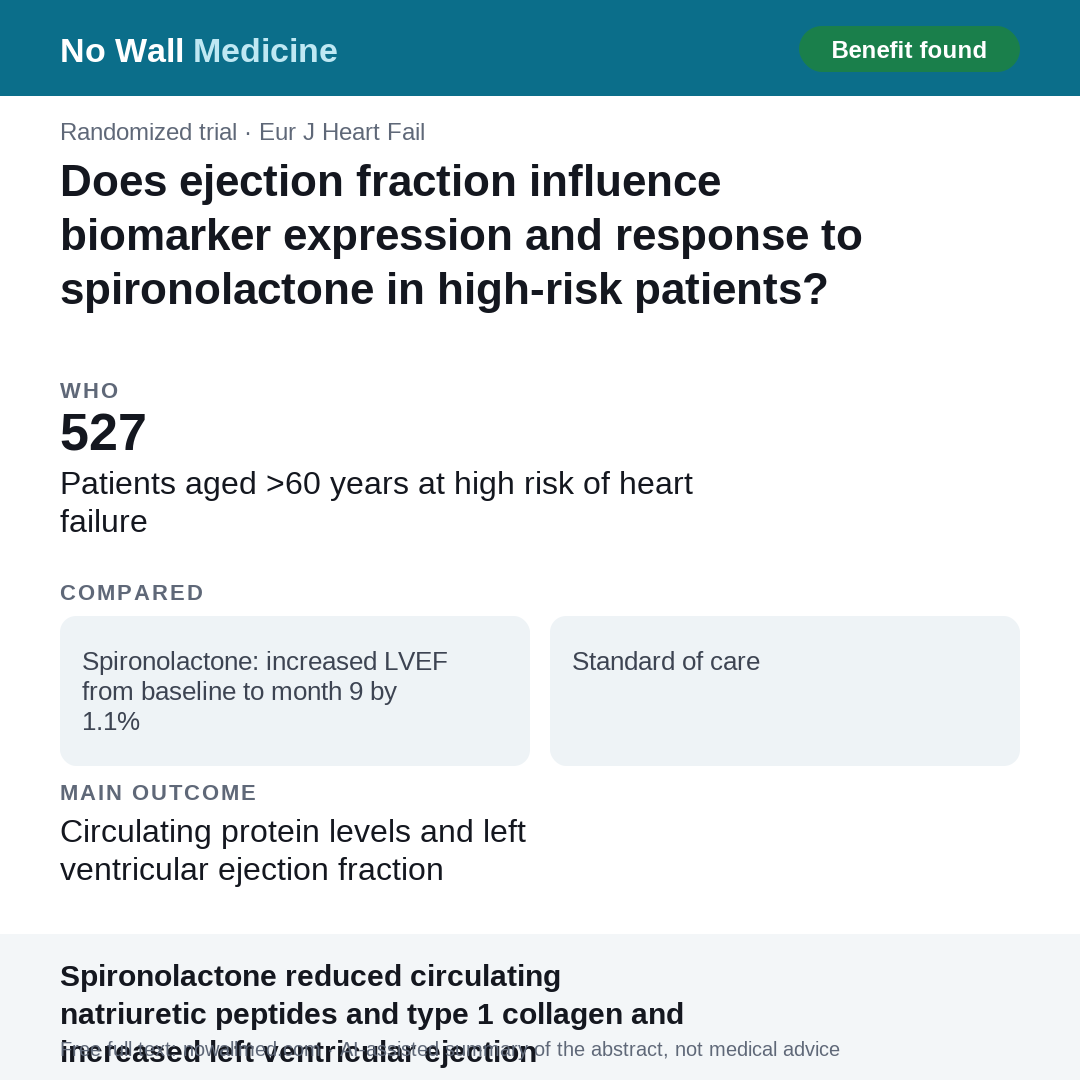
Clinical question: Does ejection fraction influence biomarker expression and response to spironolactone in high-risk patients?
Why it matters: It was unknown how left ventricular ejection fraction influences protein levels and the response to spironolactone in people at risk of heart failure.
Key points
- The HOMAGE trial randomized 527 patients aged >60 years with a left ventricular ejection fraction of ≥45% to receive either spironolactone or standard care.
- Spironolactone increased the left ventricular ejection fraction, a measure of how much blood the heart pumps out, by 1.1% from baseline to month 9.
- Spironolactone significantly reduced circulating levels of brain natriuretic peptide and collagen type I alpha 1 chain without significant differences based on ejection fraction levels.
Headline and key points written with AI from the paper’s abstract, with every number checked against it. Read the paper before relying on them.
Was this summary helpful?
Subject terms
Cite this article
Ferreira JP, Verdonschot JAJ, Girerd N, Bozec E, Pellicori P, Collier T. Influence of ejection fraction on biomarker expression and response to spironolactone in people at risk of heart failure: findings from the HOMAGE trial. Eur J Heart Fail. 2022. doi:10.1002/ejhf.2455
Spotted a mistake? Suggest a correction
Top studies every Monday
The week’s key trials and guidelines in your specialties, plus any topics you follow. By email, free.
Get the weekly digest