Inhaled epoprostenol showed similar right ventricular failure rates compared to nitric oxide after cardiac surgery
Inhaled Epoprostenol Compared With Nitric Oxide for Right Ventricular Support After Major Cardiac Surgery
Double-blind randomized trialNo clear difference
Is inhaled epoprostenol as effective as nitric oxide for right ventricular support?
Who
231
Patients undergoing major cardiac surgery for advanced heart failure
Compared
25.0%Inhaled epoprostenol
22.5%Nitric oxide
Main outcome
Composite right ventricular failure rate
Result: risk difference 2.5 percentage points (90% CI, -6.6% to 11.6%)
Bottom line: Inhaled epoprostenol was associated with similar right ventricular failure risks compared with nitric oxide after major cardiac surgery.
Circulation · 2023-07-04Download image
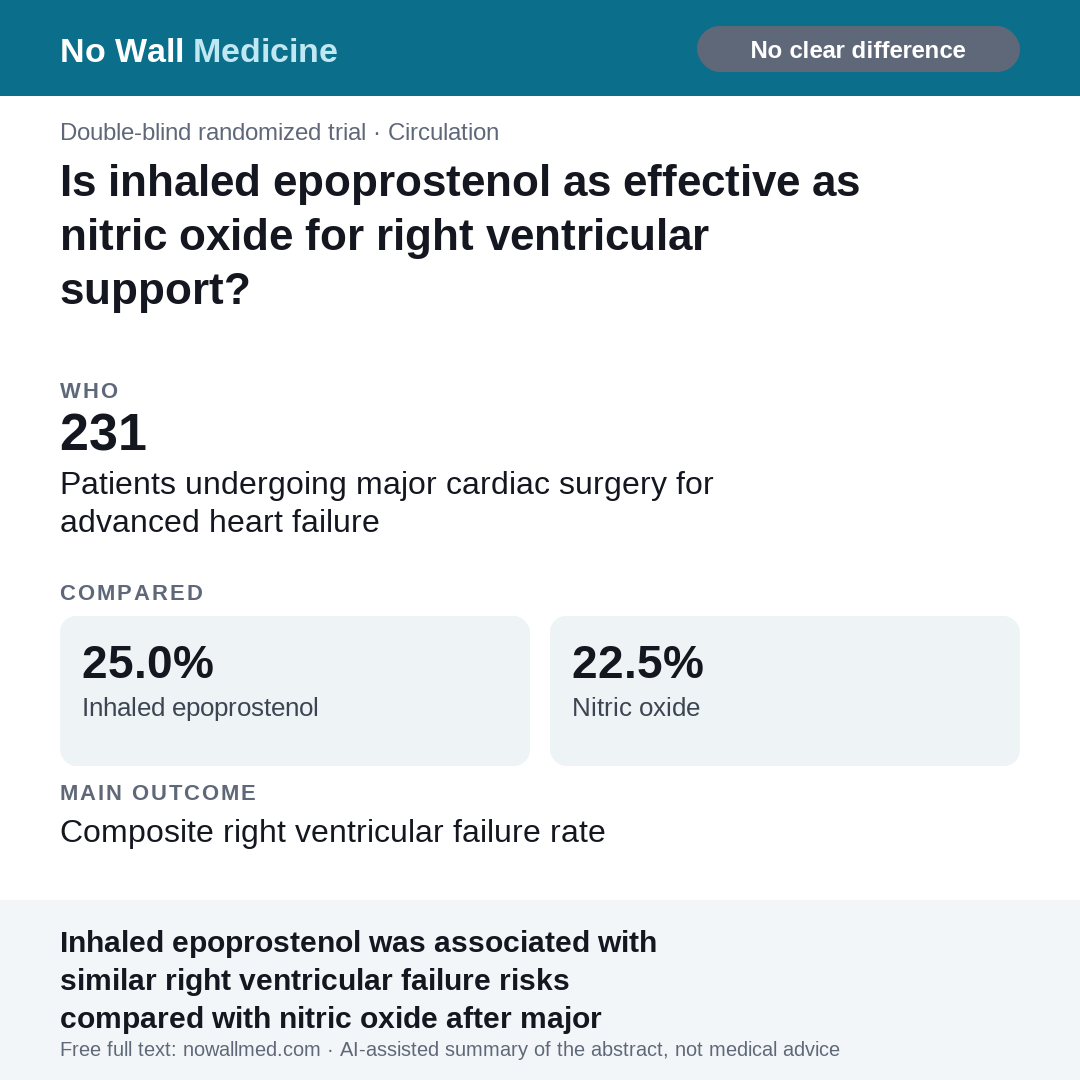
Clinical question: Is inhaled epoprostenol as effective as nitric oxide for right ventricular support?
Why it matters: Clinical evidence is limited to guide the selection between inhaled epoprostenol and nitric oxide despite the high costs associated with nitric oxide therapy.
Key points
- Researchers randomized 231 participants to receive either inhaled epoprostenol or inhaled nitric oxide after major cardiac surgery for advanced heart failure.
- The rate of right ventricular failure, or failure of the heart's right pumping chamber, was 25.0% in the epoprostenol group and 22.5% in the nitric oxide group.
- There were no significant differences between the two treatments for secondary outcomes including mechanical ventilation duration, hospital stay, or death at 30 days, 90 days, and 1 year.
Headline and key points written with AI from the paper’s abstract, with every number checked against it. Read the paper before relying on them.
Was this summary helpful?
Subject terms
Cite this article
Ghadimi K, Cappiello JL, Wright MC, Levy JH, Bryner BS, DeVore AD. Inhaled Epoprostenol Compared With Nitric Oxide for Right Ventricular Support After Major Cardiac Surgery. Circulation. 2023. doi:10.1161/CIRCULATIONAHA.122.062464
Spotted a mistake? Suggest a correction
Top studies every Monday
The week’s key trials and guidelines in your specialties, plus any topics you follow. By email, free.
Get the weekly digest