High-dose inhaled molgramostim showed improved oxygenation and organ failure scores in pneumonia-related respiratory distress
Inhaled granulocyte-macrophage colony-stimulating factor (molgramostim) as host-directed therapy for pneumonia-related acute respiratory distress syndrome: a multicentre, randomised, placebo-controlled phase 2a trial (GI-HOPE)
Randomised, double-blind, placebo-controlled phase 2a trialMixed results
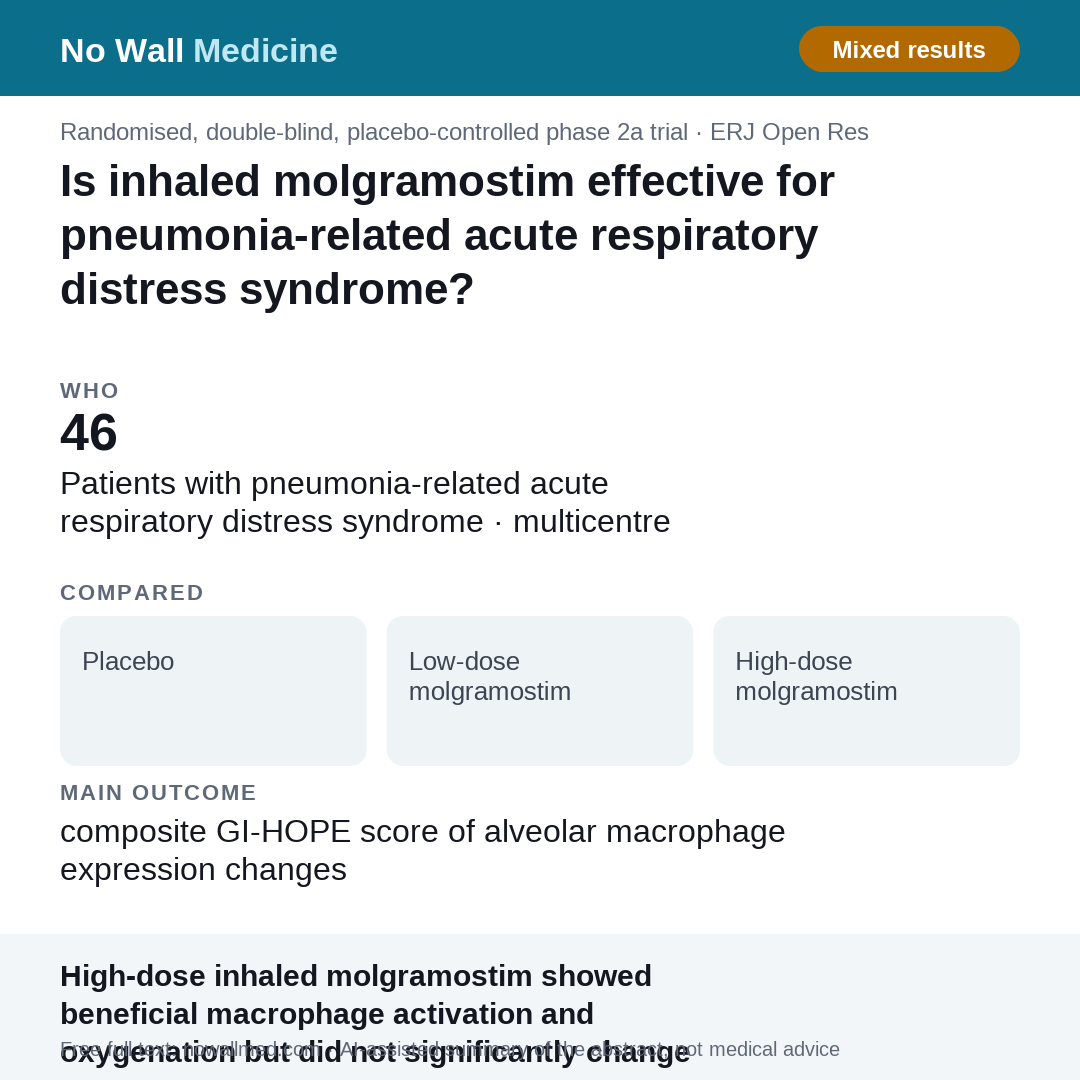
Is inhaled molgramostim effective for pneumonia-related acute respiratory distress syndrome?
Who
46
Patients with pneumonia-related acute respiratory distress syndrome · multicentre
Compared
Placebo
Low-dose molgramostim
High-dose molgramostim
Main outcome
composite GI-HOPE score of alveolar macrophage expression changes
Bottom line: High-dose inhaled molgramostim showed beneficial macrophage activation and oxygenation but did not significantly change the composite GI-HOPE score.
Limitation: The composite biological GI-HOPE score did not reach significance
ERJ Open Res · 2026-09-21Download image
Clinical question: Is inhaled molgramostim effective for pneumonia-related acute respiratory distress syndrome?
Why it matters: It is unclear if inhaled granulocyte-macrophage colony-stimulating factor can safely improve host defense and lung barrier function in patients with pneumonia-related acute respiratory distress syndrome.
Key points
- Researchers studied 46 participants with pneumonia-related acute respiratory distress syndrome, comparing low-dose, high-dose, or placebo inhaled molgramostim for 3 days.
- The primary composite biological GI-HOPE score did not reach statistical significance, though high-dose treatment increased specific markers on alveolar macrophages.
- High-dose treatment was associated with improved oxygenation and decreased Sequential Organ Failure Assessment scores compared to low-dose and placebo groups.
Headline and key points written with AI from the paper’s abstract, with every number checked against it. Read the paper before relying on them.
Cite this article
Herold S, Welte T, Zacharowski K, Meybohm P, Bauer M, Wilhelm J. Inhaled granulocyte-macrophage colony-stimulating factor (molgramostim) as host-directed therapy for pneumonia-related acute respiratory distress syndrome: a multicentre, randomised, placebo-controlled phase 2a trial (GI-HOPE). ERJ Open Res. 2026. doi:10.1183/23120541.01795-2025
Spotted a mistake? Suggest a correction