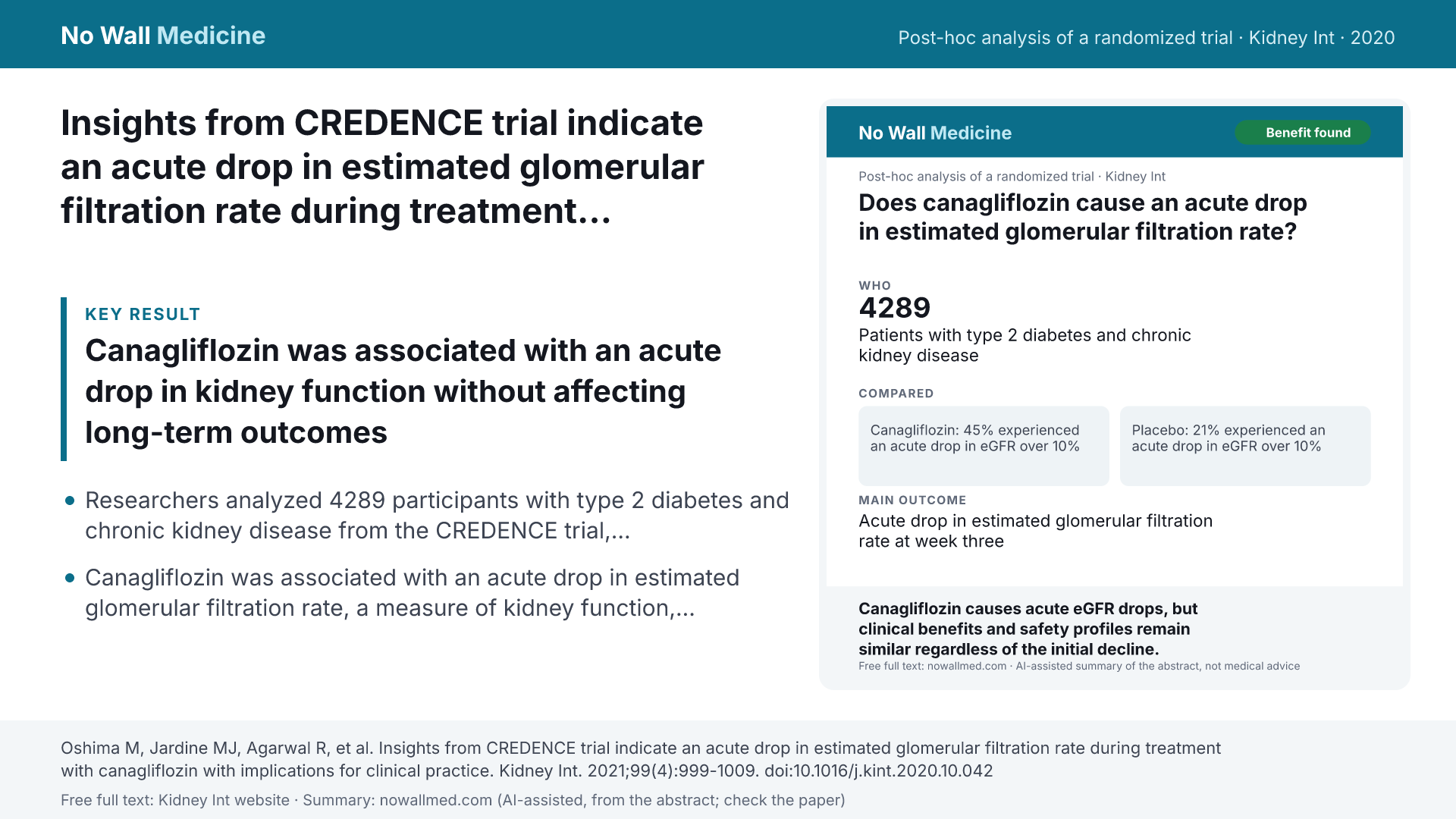
Canagliflozin was associated with an acute drop in kidney function without affecting long-term outcomes
Insights from CREDENCE trial indicate an acute drop in estimated glomerular filtration rate during treatment with canagliflozin with implications for clinical practice
Post-hoc analysis of a randomized trialBenefit found
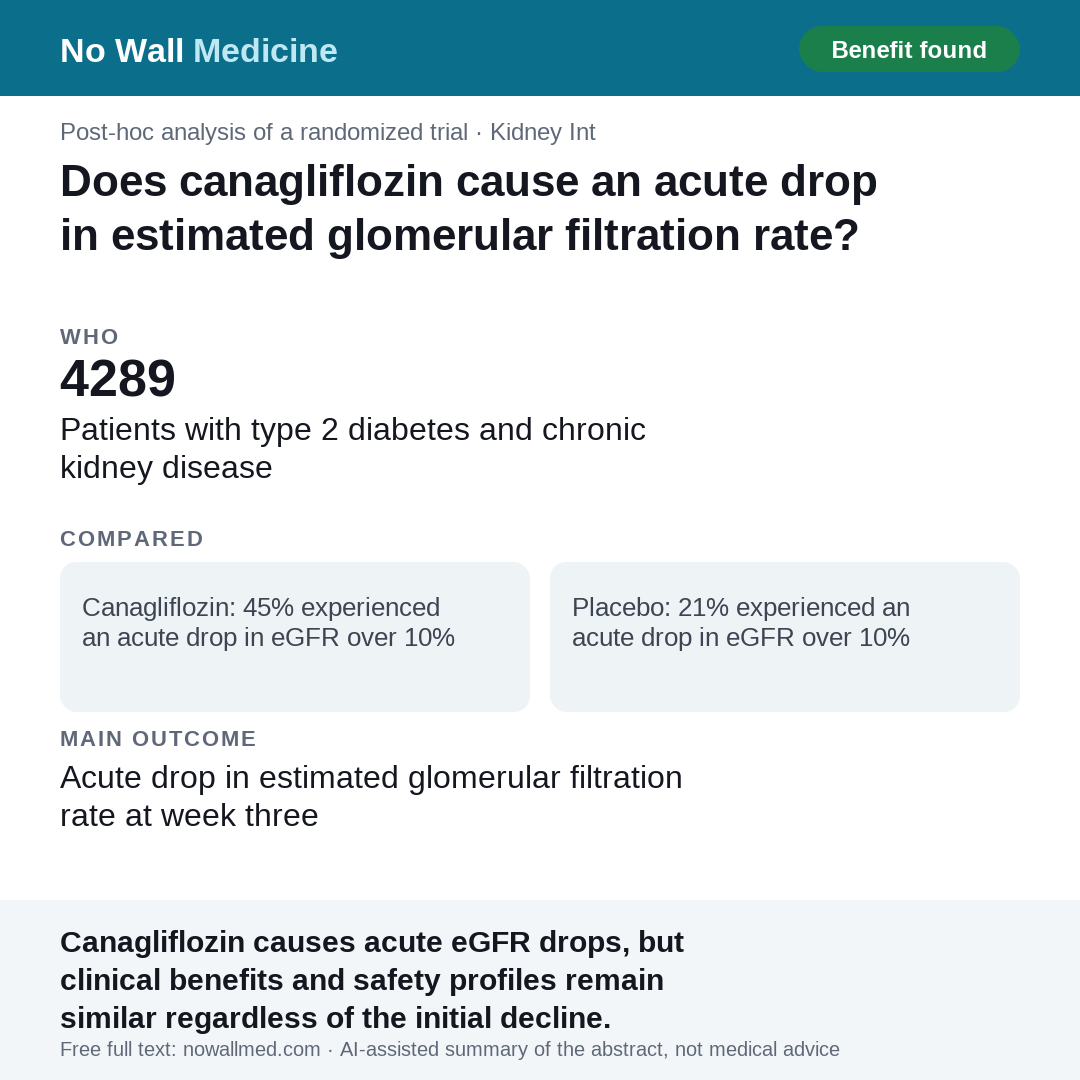
Does canagliflozin cause an acute drop in estimated glomerular filtration rate?
Who
4289
Patients with type 2 diabetes and chronic kidney disease
Compared
Canagliflozin: 45% experienced an acute drop in eGFR over 10%
Placebo: 21% experienced an acute drop in eGFR over 10%
Main outcome
Acute drop in estimated glomerular filtration rate at week three
Result: odds ratio 3.03 (95% confidence interval 2.65, 3.47)
Bottom line: Canagliflozin causes acute eGFR drops, but clinical benefits and safety profiles remain similar regardless of the initial decline.
Kidney Int · 2020-12-11Download image
Clinical question: Does canagliflozin cause an acute drop in estimated glomerular filtration rate?
Why it matters: It was unknown what factors predicted the initial drop in kidney function after starting canagliflozin and how that drop related to long-term kidney health.
In absolute numbers
Canagliflozin: 45% · Placebo: 21% → a difference of 24 percentage points, so about 5 people would need the treatment for 1 more to benefit (number needed to treat) over the trial’s follow-up.
Worked out by us from the two group results above, not reported by the authors. Check the paper for the exact outcome and timing.
Key points
- Researchers analyzed 4289 participants with type 2 diabetes and chronic kidney disease from the CREDENCE trial, comparing canagliflozin to a placebo.
- Canagliflozin was associated with an acute drop in estimated glomerular filtration rate, a measure of kidney function, of over 10% in 45% of participants compared to 21% in the placebo group.
- Long-term kidney function trajectories and safety profiles were similar across different categories of initial kidney function decline in the canagliflozin group.
Headline and key points written with AI from the paper’s abstract, with every number checked against it. Read the paper before relying on them.
Was this summary helpful?
Subject terms
Cite this article
Oshima M, Jardine MJ, Agarwal R, Bakris G, Cannon CP, Charytan DM. Insights from CREDENCE trial indicate an acute drop in estimated glomerular filtration rate during treatment with canagliflozin with implications for clinical practice. Kidney Int. 2020. doi:10.1016/j.kint.2020.10.042
Spotted a mistake? Suggest a correction
Top studies every Monday
The week’s key trials and guidelines in your specialties, plus any topics you follow. By email, free.
Get the weekly digest