Intensive blood pressure treatment was associated with lower dementia risk in patients with high insulin resistance
Insulin Resistance and Blood Pressure Control on Cognitive Outcomes
Post hoc analysis of a randomized trialBenefit found
Does insulin resistance influence cognitive outcomes during intensive systolic blood pressure treatment?
Who
7427
Participants aged 50 years or older with hypertension
Compared
Intensive systolic blood pressure treatment: reduced risk of probable dementia
Standard systolic blood pressure treatment
Main outcome
Probable dementia
Bottom line: In hypertensive patients with high triglyceride-glucose index, intensive blood pressure treatment reduces dementia risk.
Hypertension · 2025-11-26Download image
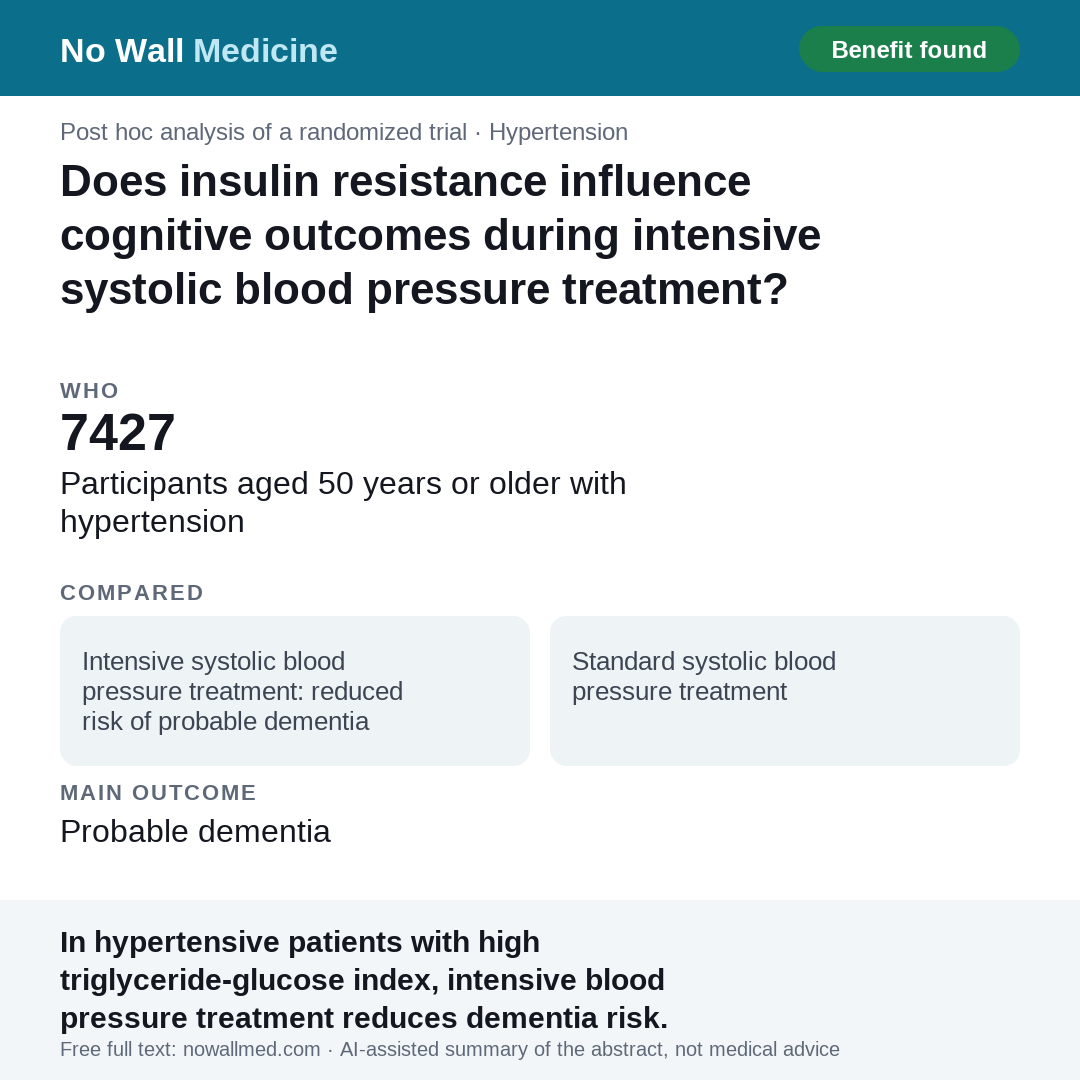
Clinical question: Does insulin resistance influence cognitive outcomes during intensive systolic blood pressure treatment?
Why it matters: It is unclear how insulin resistance influences the cognitive response of hypertensive patients to intensive systolic blood pressure treatment.
Key points
- Researchers analyzed 7427 participants from the SPRINT trial who had hypertension and were assigned to either intensive or standard systolic blood pressure treatment.
- In participants with elevated insulin resistance, defined as a triglyceride-glucose index greater than 9.07, intensive treatment was associated with a reduced risk of probable dementia.
- The study found that plasma glycosyl ceramide levels may account for approximately 10.8% of the total effect linking the triglyceride-glucose index to dementia.
Headline and key points written with AI from the paper’s abstract, with every number checked against it. Read the paper before relying on them.
Topics
Cite this article
Fan C, Wang X, Tao L, Liao Y, Jin L, Shi Q. Insulin Resistance and Blood Pressure Control on Cognitive Outcomes. Hypertension. 2025. doi:10.1161/HYPERTENSIONAHA.125.24666
Spotted a mistake? Suggest a correction