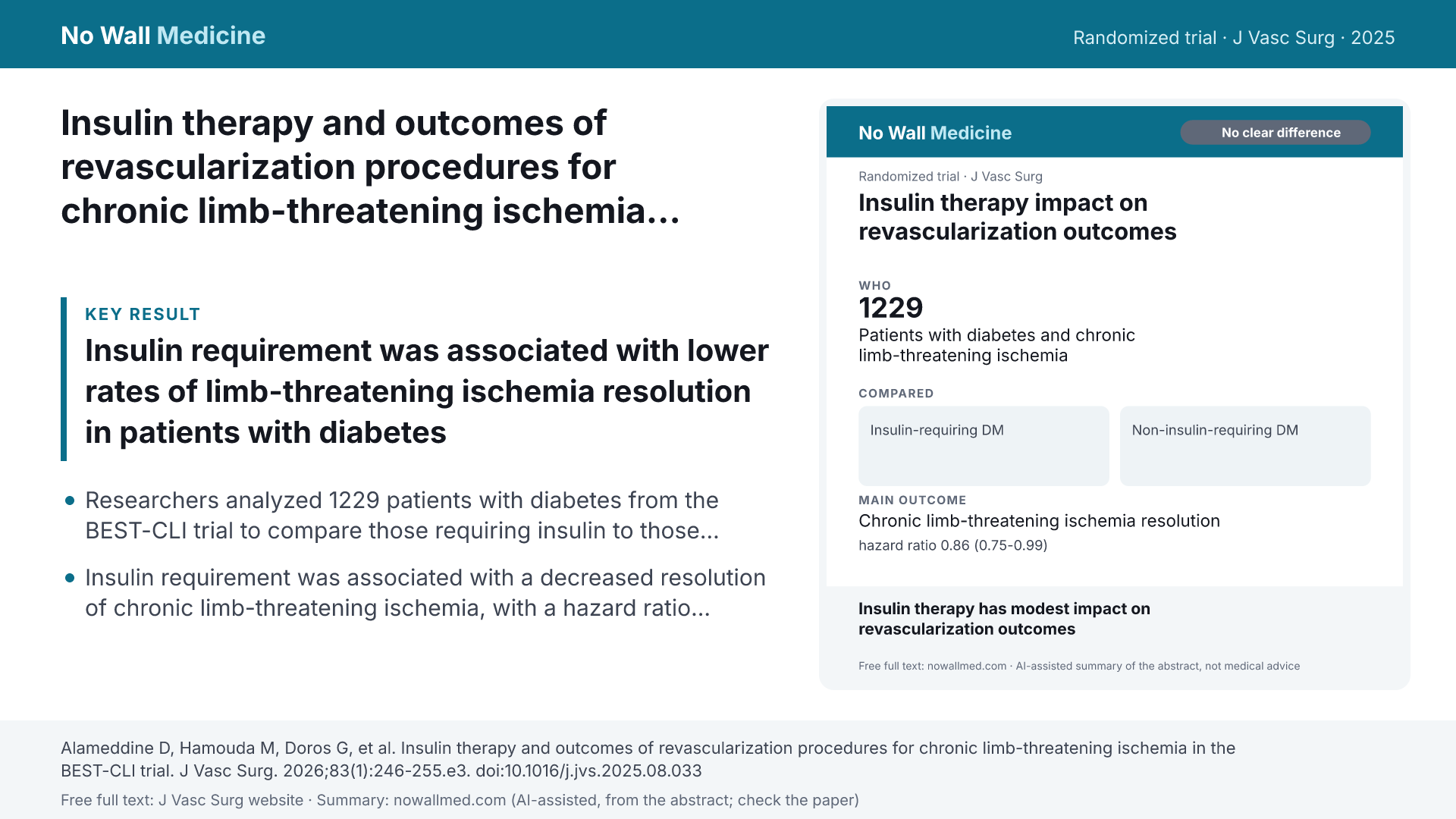
Insulin therapy and outcomes of revascularization procedures for chronic limb-threatening ischemia in the BEST-CLI trial
Key result: Insulin requirement was associated with lower rates of limb-threatening ischemia resolution in patients with diabetes
Key points
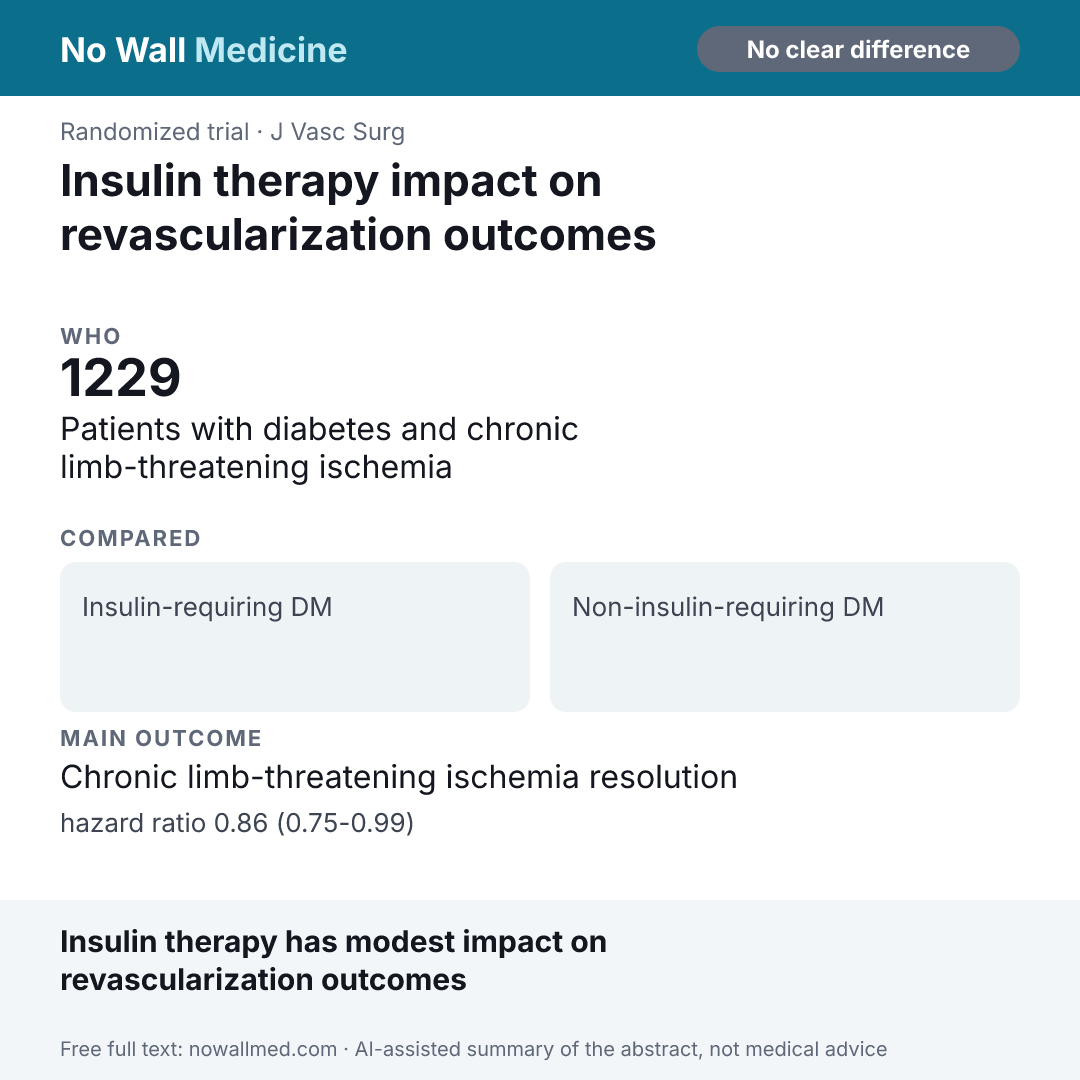
- Researchers analyzed 1229 patients with diabetes from the BEST-CLI trial to compare those requiring insulin to those who did not.
- Insulin requirement was associated with a decreased resolution of chronic limb-threatening ischemia, with a hazard ratio of 0.86 [0.75-0.99].
- Open revascularization, or surgical blood vessel repair, was associated with lower risks of major amputation and death compared to endovascular therapy.
Why it matters: Observational studies comparing patients with diabetes based on insulin therapy have reported inconsistent findings regarding outcomes after blood vessel repair.
Discussion prompts
- Would these patients look like yours? Who was left out?
- Is the main outcome one that matters to patients?
- Is the difference large enough to change what you do?
Cite: Alameddine D, Hamouda M, Doros G, et al. Insulin therapy and outcomes of revascularization procedures for chronic limb-threatening ischemia in the BEST-CLI trial. J Vasc Surg. 2026;83(1):246-255.e3. doi:10.1016/j.jvs.2025.08.033
Free full text: J Vasc Surg website · Summary and visual abstract: nowallmed.com/a/insulin-therapy-and-outcomes-of-revascularization-procedures-for-2hsuj/ (AI-assisted from the abstract; check the paper before relying on it).