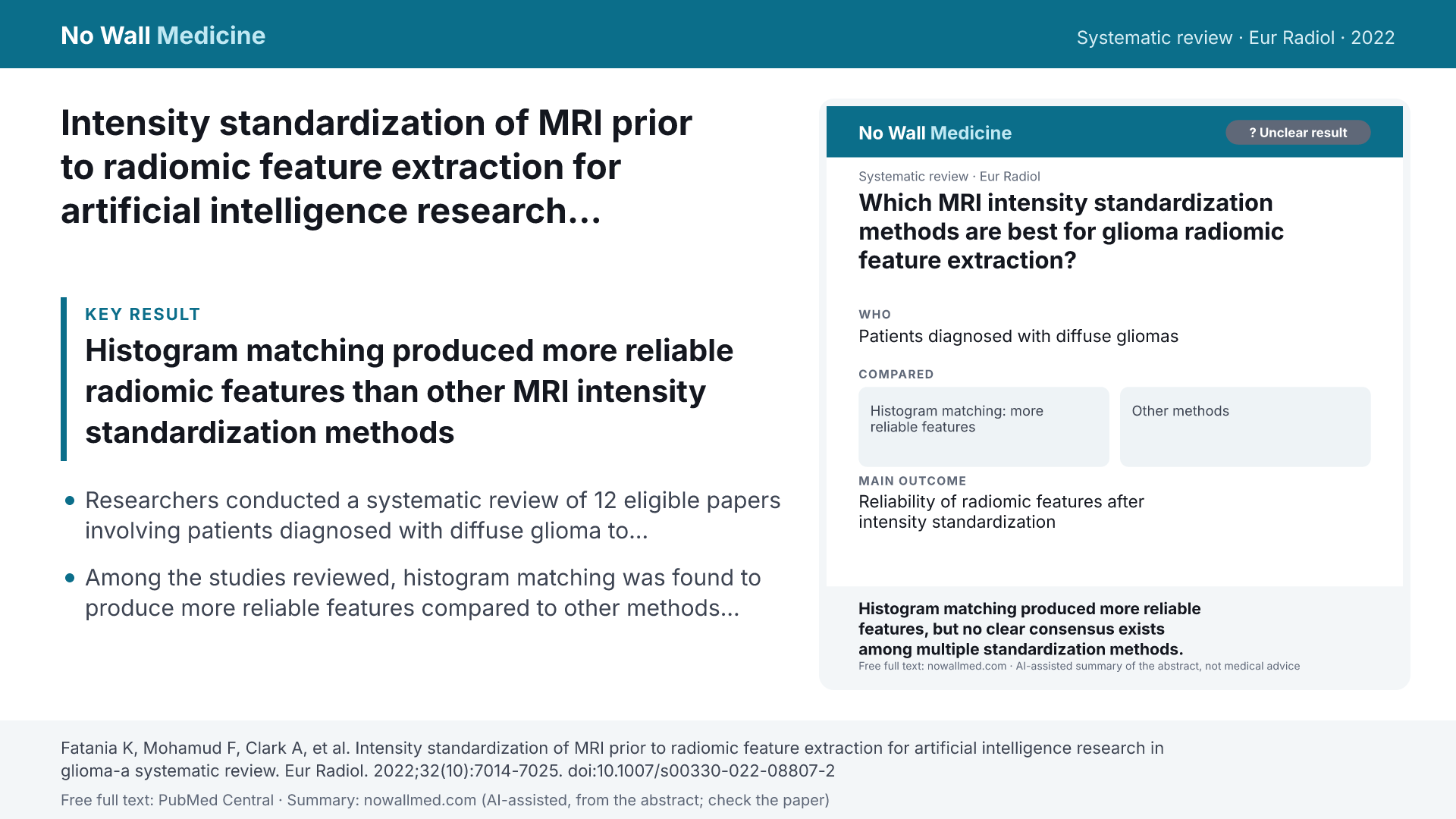
Histogram matching produced more reliable radiomic features than other MRI intensity standardization methods
Intensity standardization of MRI prior to radiomic feature extraction for artificial intelligence research in glioma-a systematic review
Systematic reviewUnclear result
Which MRI intensity standardization methods are best for glioma radiomic feature extraction?
Who
Patients diagnosed with diffuse gliomas
Compared
Histogram matching: more reliable features
Other methods
Main outcome
Reliability of radiomic features after intensity standardization
Bottom line: Histogram matching produced more reliable features, but no clear consensus exists among multiple standardization methods.
Eur Radiol · 2022-04-29 · Save PNG
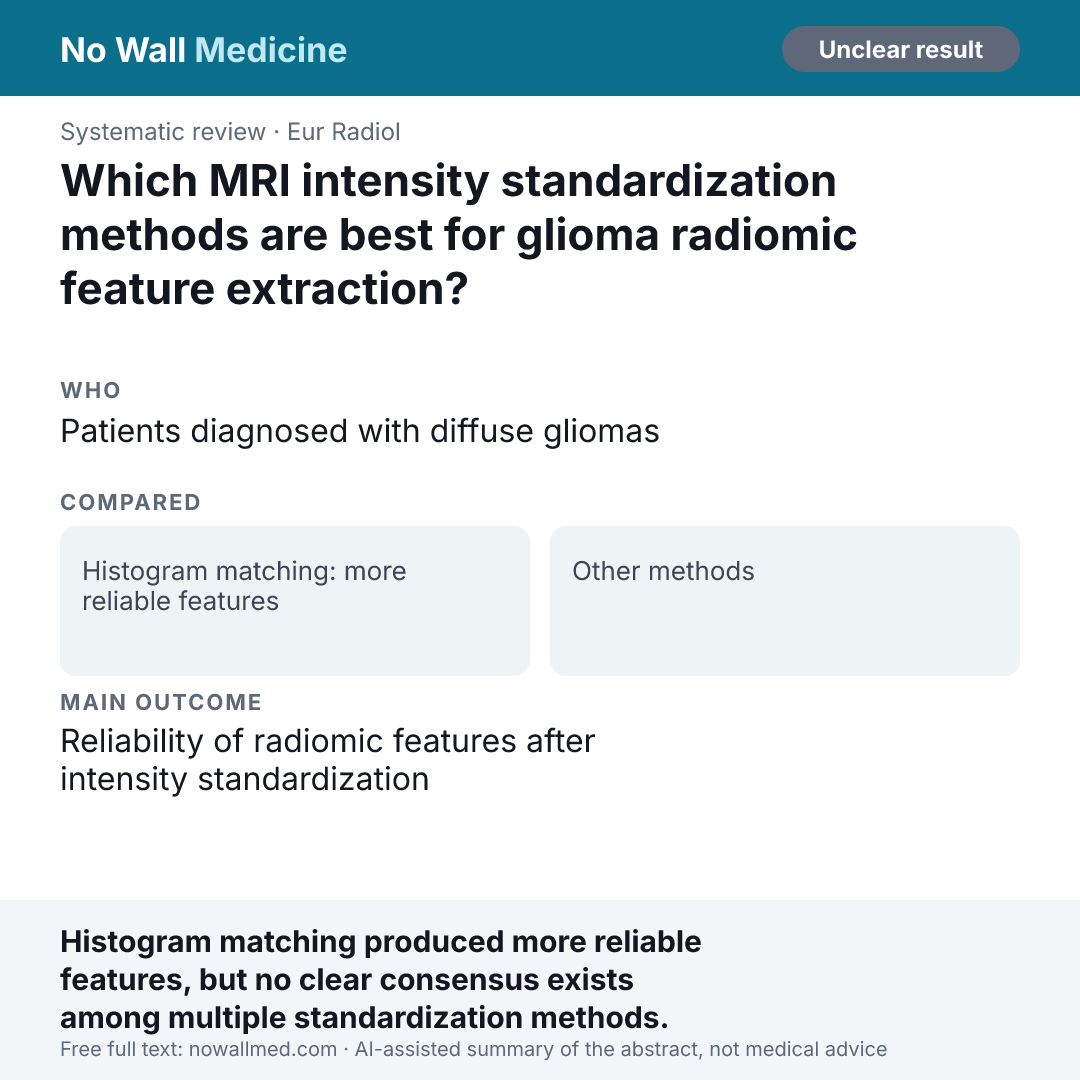
Clinical question: Which MRI intensity standardization methods are best for glioma radiomic feature extraction?
Why it matters: Clinical translation of radiomics is hampered by a lack of reproducibility across centers and difficulty in standardizing image intensity in magnetic resonance imaging datasets.
Key points
- Researchers conducted a systematic review of 12 eligible papers involving patients diagnosed with diffuse glioma to evaluate different MRI intensity standardization methods.
- Among the studies reviewed, histogram matching was found to produce more reliable features compared to other methods of altering magnetic resonance imaging signal intensity.
- The review identified three techniques: histogram matching (5/12), limiting or rescaling signal intensity (8/12), and deep learning (1/12).
Limitation the authors note: The authors note a lack of common pre-processing and different analyses among studies, which required a narrative synthesis rather than a meta-analysis.
Headline and key points written with AI from the paper’s abstract, with every number checked against it. Read the paper before relying on them.
Was this summary helpful?
Subject terms
Headline, design, result, key points, caveat and citation as plain text.
Cite this article
Fatania K, Mohamud F, Clark A, et al. Intensity standardization of MRI prior to radiomic feature extraction for artificial intelligence research in glioma-a systematic review. Eur Radiol. 2022. doi:10.1007/s00330-022-08807-2
Spotted a mistake? Suggest a correction