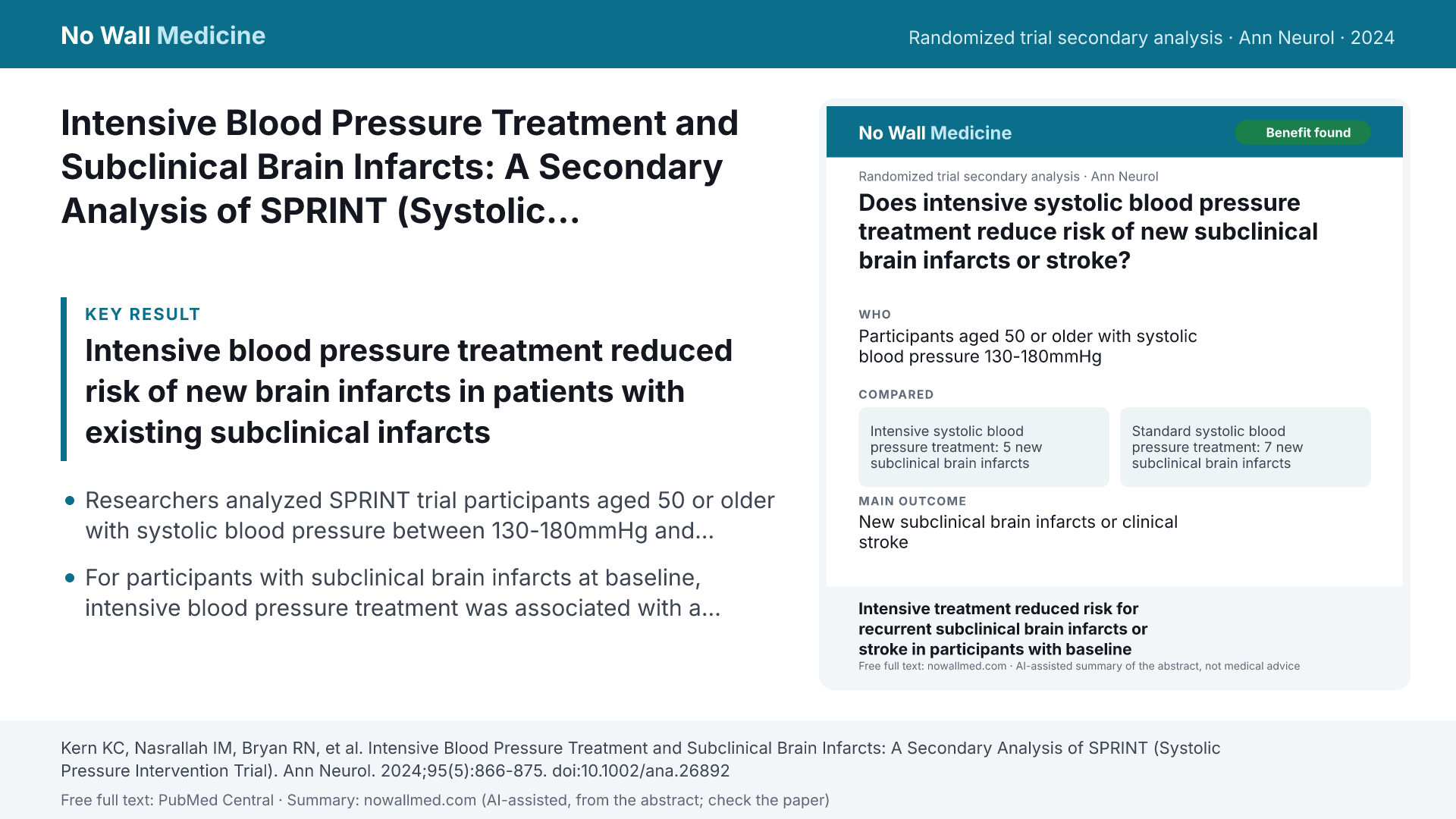
Intensive blood pressure treatment reduced risk of new brain infarcts in patients with existing subclinical infarcts
Intensive Blood Pressure Treatment and Subclinical Brain Infarcts: A Secondary Analysis of SPRINT (Systolic Pressure Intervention Trial)
Randomized trial secondary analysisBenefit found
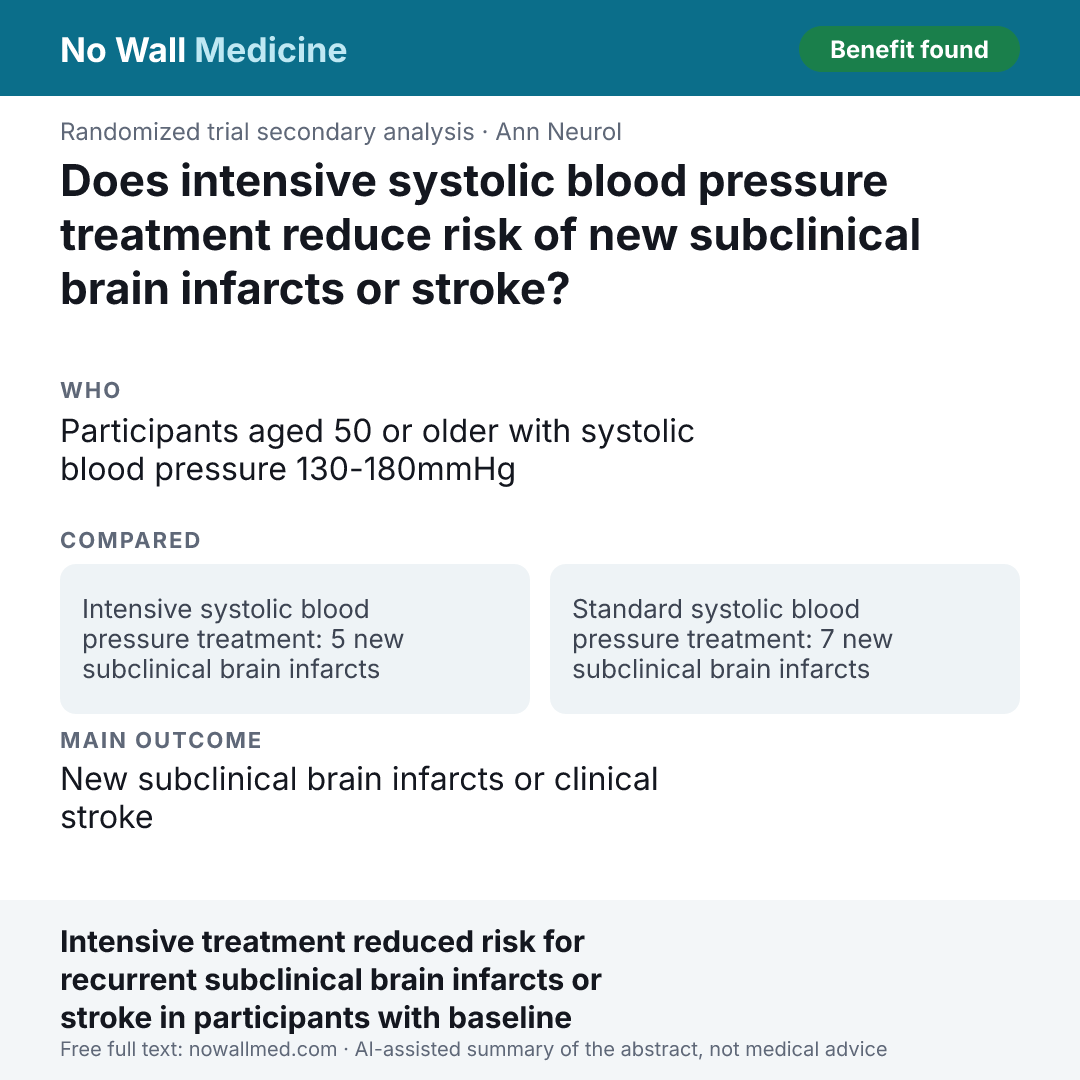
Does intensive systolic blood pressure treatment reduce risk of new subclinical brain infarcts or stroke?
Who
Participants aged 50 or older with systolic blood pressure 130-180mmHg
Compared
Intensive systolic blood pressure treatment: 5 new subclinical brain infarcts
Standard systolic blood pressure treatment: 7 new subclinical brain infarcts
Main outcome
New subclinical brain infarcts or clinical stroke
Result: subhazard ratio 0.050 (95% CI 0.0031 to 0.79) for participants with baseline subclinical brain infarcts
Bottom line: Intensive treatment reduced risk for recurrent subclinical brain infarcts or stroke in participants with baseline subclinical brain infarcts.
Ann Neurol · 2024-02-16 · Save PNG
Clinical question: Does intensive systolic blood pressure treatment reduce risk of new subclinical brain infarcts or stroke?
Key points
- Researchers analyzed SPRINT trial participants aged 50 or older with systolic blood pressure between 130-180mmHg and high cardiovascular risk.
- For participants with subclinical brain infarcts at baseline, intensive blood pressure treatment was associated with a lower risk of recurrent infarcts or stroke (sHR = 0.050; 95% CI 0.0031 to 0.79; p = 0.033).
- Baseline subclinical brain infarcts were associated with an increased risk of mild cognitive impairment or probable dementia (sHR = 2.38; 95% CI 1.23 to 4.61; p = 0.010).
Headline and key points written with AI from the paper’s abstract, with every number checked against it. Read the paper before relying on them.
Was this summary helpful?
Subject terms
Headline, design, result, key points, caveat and citation as plain text.
Cite this article
Kern KC, Nasrallah IM, Bryan RN, et al. Intensive Blood Pressure Treatment and Subclinical Brain Infarcts: A Secondary Analysis of SPRINT (Systolic Pressure Intervention Trial). Ann Neurol. 2024;95(5):866-875. doi:10.1002/ana.26892
Spotted a mistake? Suggest a correction