Interactive Effects of Molecular, Therapeutic, and Patient Factors on Outcome of Diffuse Low-Grade Glioma
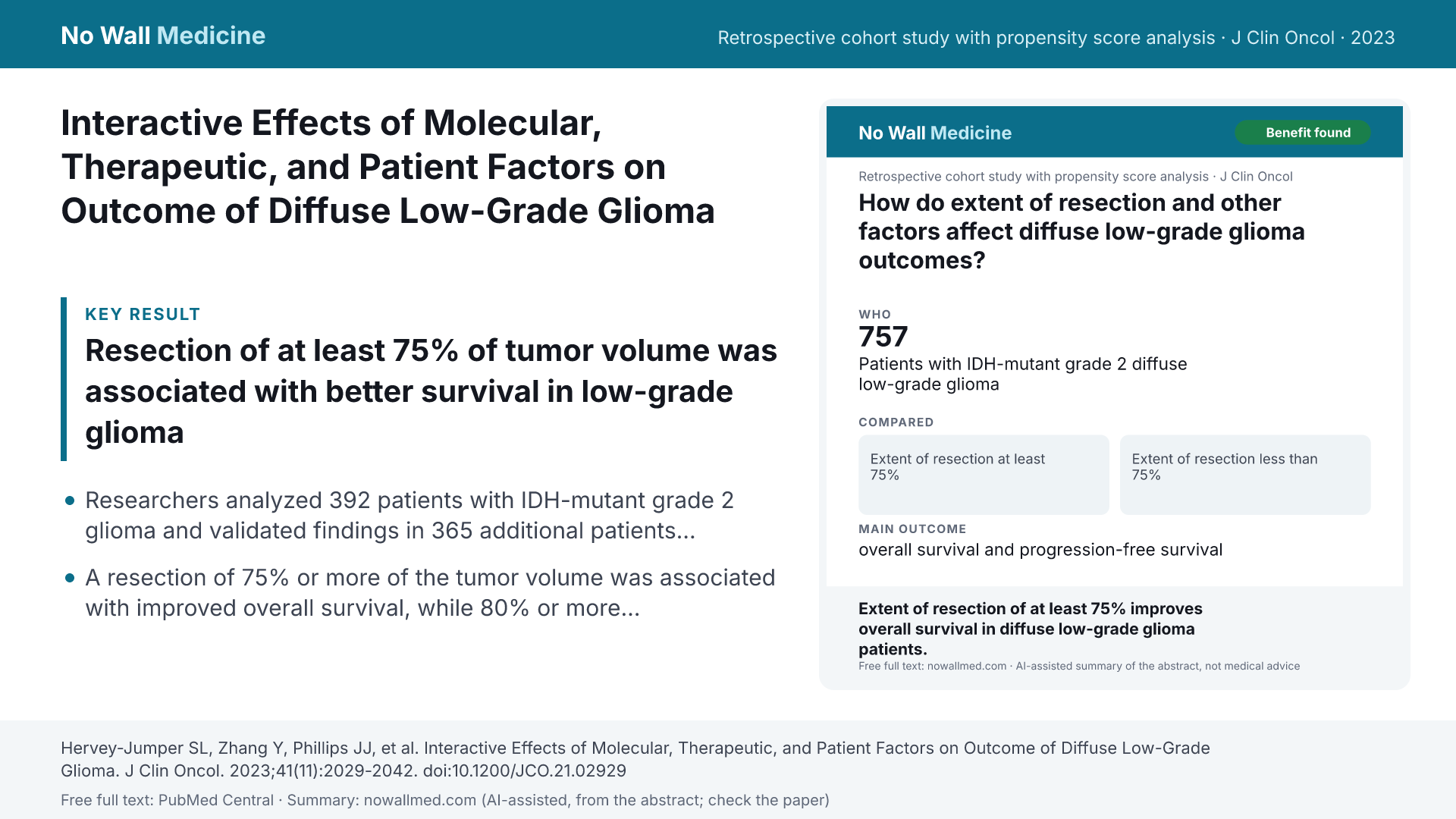
Key result: Resection of at least 75% of tumor volume was associated with better survival in low-grade glioma
Key points
- Researchers analyzed 392 patients with IDH-mutant grade 2 glioma and validated findings in 365 additional patients to examine how tumor removal affects survival.
- A resection of 75% or more of the tumor volume was associated with improved overall survival, while 80% or more was associated with improved progression-free survival.
- The shortest median overall survival occurred in astrocytoma patients with a postoperative tumor volume greater than 4.6 mL or those with a large preoperative volume and small postoperative volume.
Why it matters: The role of the extent of surgical tumor resection in patients with diffuse low-grade glioma is controversial because randomized clinical trials are not feasible.
Limitation the authors note: The study used a retrospective cohort design.
Discussion prompts
- Would these patients look like yours? Who was left out?
- Is the main outcome one that matters to patients?
- Is the difference large enough to change what you do?
Cite: Hervey-Jumper SL, Zhang Y, Phillips JJ, et al. Interactive Effects of Molecular, Therapeutic, and Patient Factors on Outcome of Diffuse Low-Grade Glioma. J Clin Oncol. 2023;41(11):2029-2042. doi:10.1200/JCO.21.02929
Free full text: PubMed Central · Summary and visual abstract: nowallmed.com/a/interactive-effects-of-molecular-therapeutic-and-patient-factors-on-1t7ry4v/ (AI-assisted from the abstract; check the paper before relying on it).