Interactive Remote Patient Monitoring Devices for Managing Chronic Health Conditions: Systematic Review and Meta-analysis
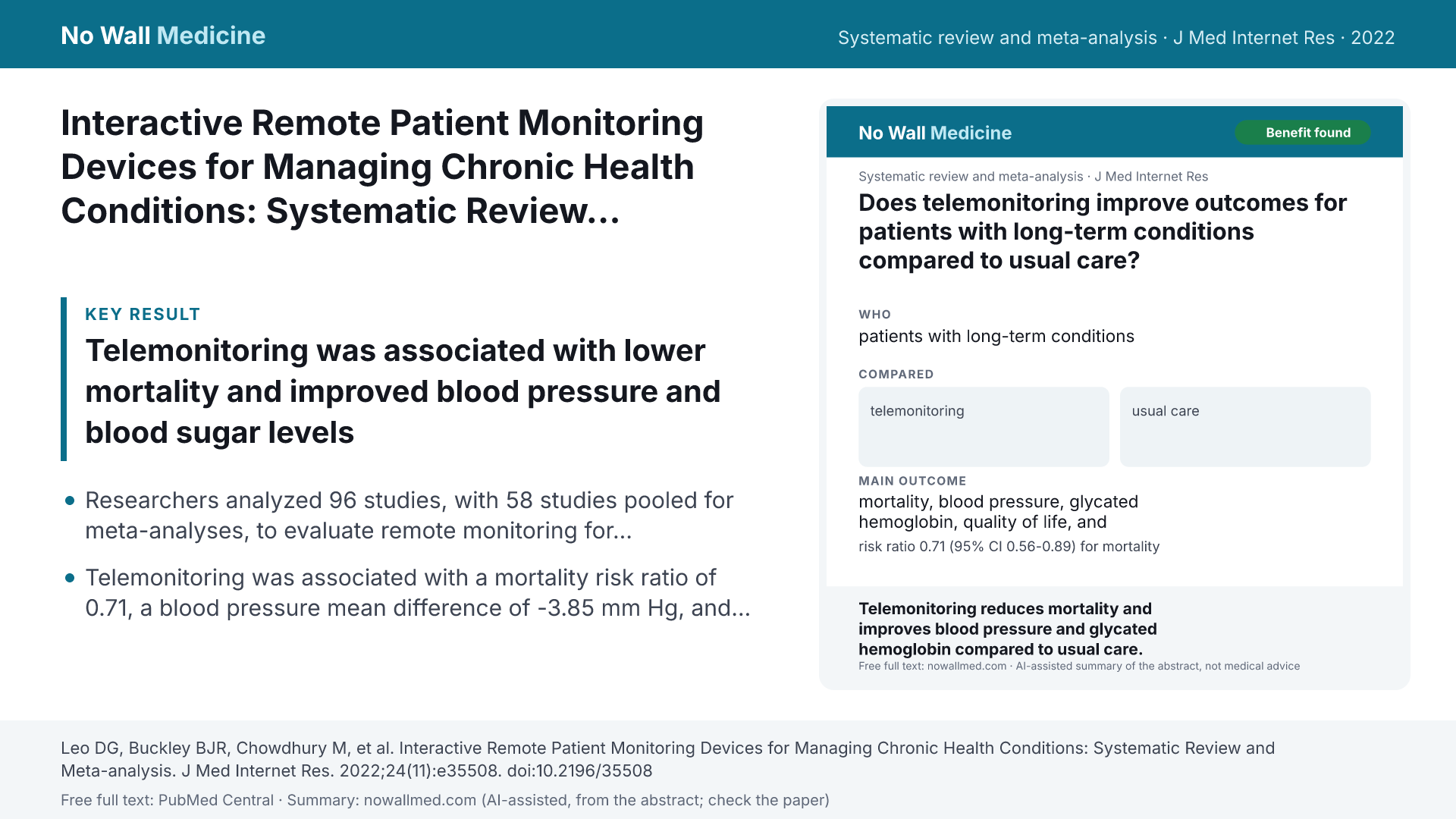
Key result: Telemonitoring was associated with lower mortality and improved blood pressure and blood sugar levels
Systematic review and meta-analysisBenefit found
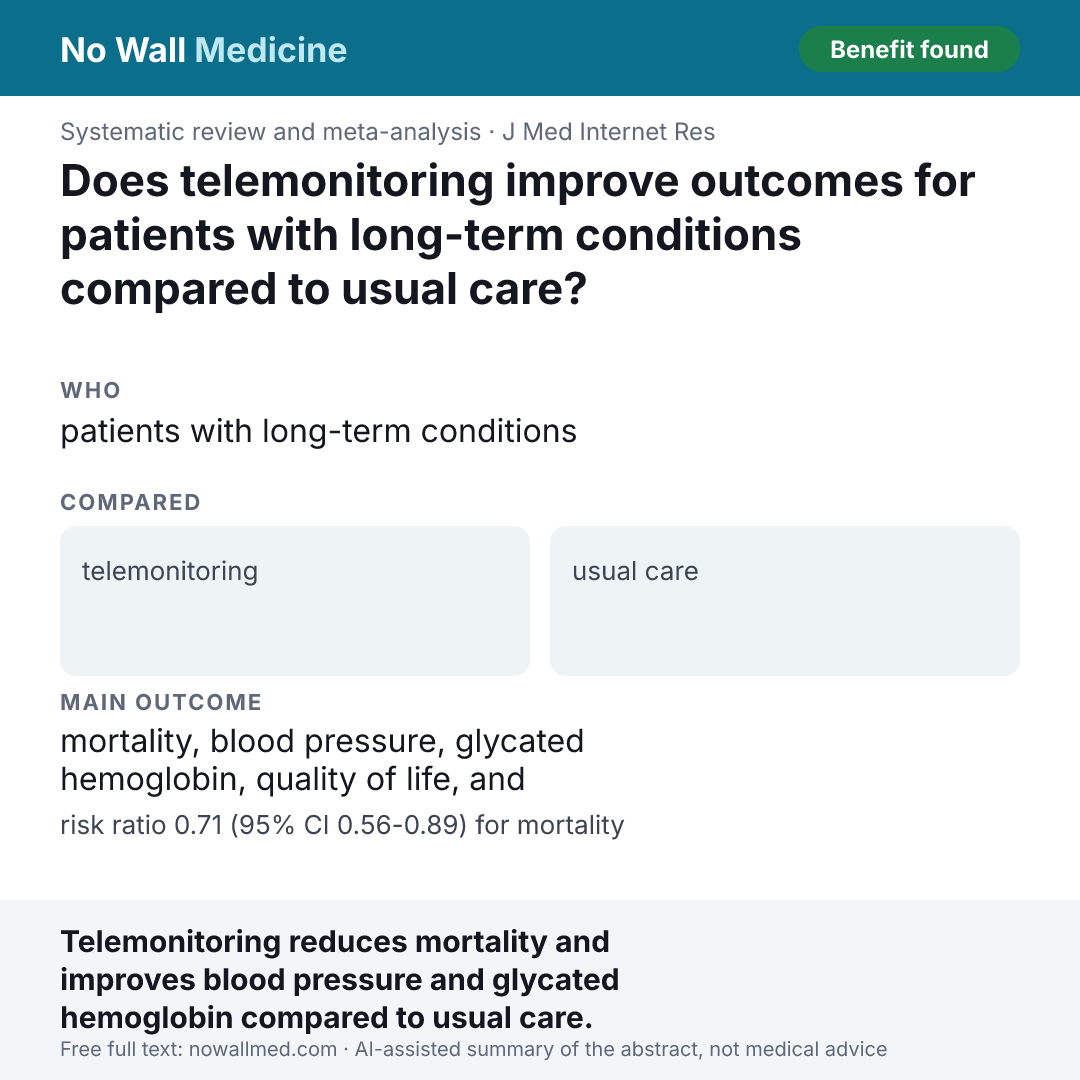
Does telemonitoring improve outcomes for patients with long-term conditions compared to usual care?
Who
patients with long-term conditions
Compared
telemonitoring
usual care
Main outcome
mortality, blood pressure, glycated hemoglobin, quality of life, and hospitalization
Result: risk ratio 0.71 (95% CI 0.56-0.89) for mortality
Bottom line: Telemonitoring reduces mortality and improves blood pressure and glycated hemoglobin compared to usual care.
Limitation: heterogeneity in assessment methods prevented meta-analysis of adherence, satisfaction, and acceptance outcomes
J Med Internet Res · 2022-11-03 · Save PNG
Key points
- Researchers analyzed 96 studies, with 58 studies pooled for meta-analyses, to evaluate remote monitoring for long-term conditions.
- Telemonitoring was associated with a mortality risk ratio of 0.71, a blood pressure mean difference of -3.85 mm Hg, and a glycated hemoglobin mean difference of -0.33.
- The technology was not linked to significant changes in quality of life or hospitalization risk, which had a risk ratio of 1.02.
Discussion prompts
- Would these patients look like yours? Who was left out?
- Is the main outcome one that matters to patients?
- Is the difference large enough to change what you do?
Cite: Leo DG, Buckley BJR, Chowdhury M, et al. Interactive Remote Patient Monitoring Devices for Managing Chronic Health Conditions: Systematic Review and Meta-analysis. J Med Internet Res. 2022;24(11):e35508. doi:10.2196/35508
Free full text: PubMed Central · Summary and visual abstract: nowallmed.com/a/interactive-remote-patient-monitoring-devices-for-managing-chronic-k2e8s4/ (AI-assisted from the abstract; check the paper before relying on it).