Genetically predicted higher interleukin-1 receptor antagonist levels were not linked to maternal fever during labor
Interleukin-1 receptor antagonist polymorphisms in women receiving epidural analgesia who develop maternal intrapartum fever: a prospective, multicentre Mendelian randomised study
Prospective, multicentre Mendelian randomised studyNo clear difference
Do genetically predicted interleukin-1 receptor antagonist levels reduce epidural-related maternal fever or antibiotic use?
Who
624
Women aged 18 or older receiving epidural analgesia during labour · Multicentre
Compared
Interleukin-1 receptor antagonist allele score 0: 19/74 (25.7%)
Interleukin-1 receptor antagonist allele score ≥1: 136/550 (24.7%)
Main outcome
Maternal intrapartum fever or administration of intrapartum antibiotics
Result: odds ratio 1.05 (95% confidence interval 0.60-1.83)
Bottom line: Genetically predicted higher interleukin-1 receptor antagonist levels do not alter the incidence of maternal intrapartum fever or antibiotic use.
Br J Anaesth · 2025-05-14Download image
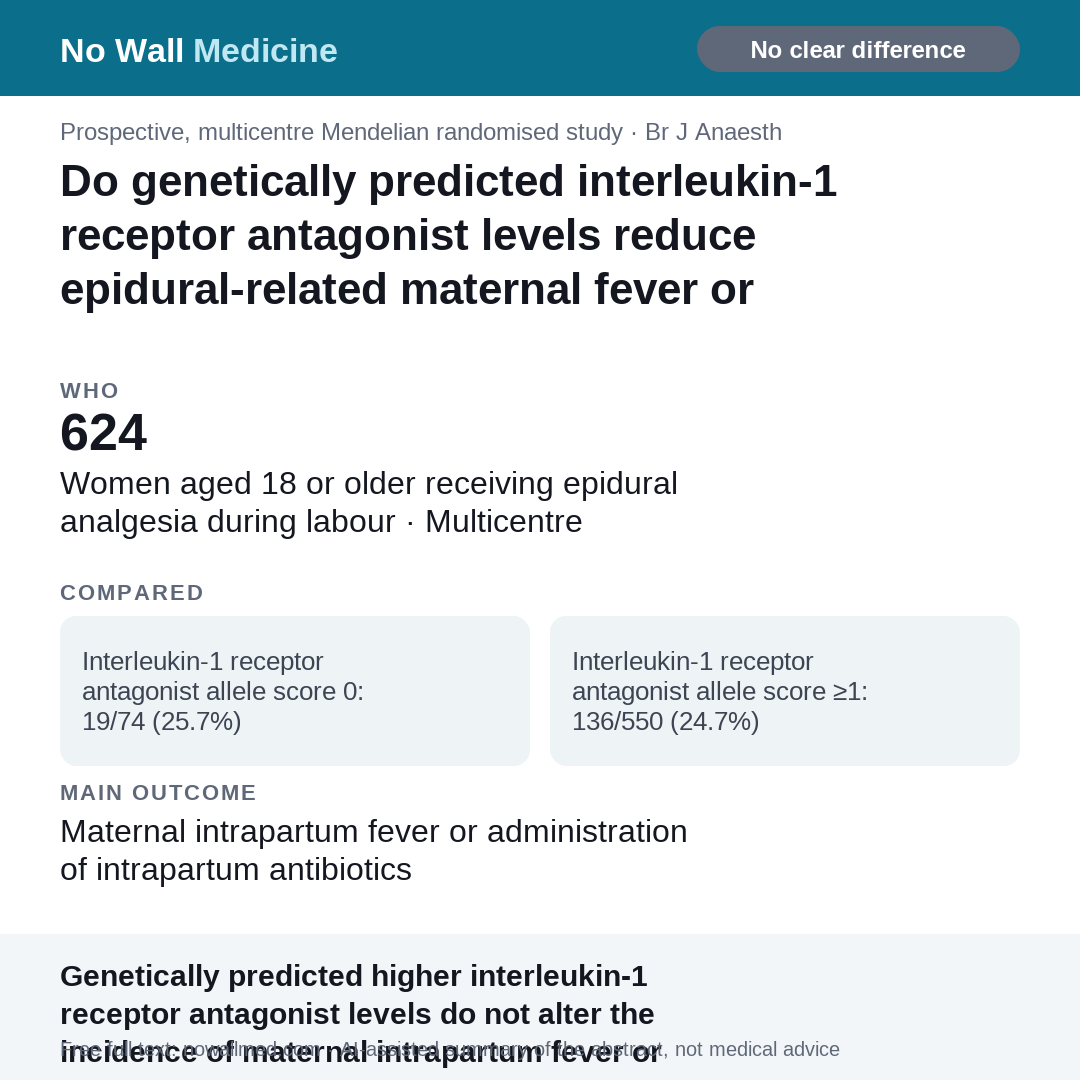
Clinical question: Do genetically predicted interleukin-1 receptor antagonist levels reduce epidural-related maternal fever or antibiotic use?
Why it matters: It was unclear if genetically predicted higher levels of the anti-inflammatory protein interleukin-1 receptor antagonist could reduce the risk of fever following epidural analgesia.
Key points
- Researchers studied 624 women receiving epidural pain relief during labor to see if genetic markers for interleukin-1 receptor antagonist levels influenced fever or antibiotic use.
- The composite outcome of fever over 38°C or antibiotic use occurred in 25.7% of women with the lowest genetic scores compared to 24.7% with higher scores.
- The study found no significant difference in the incidence of fever or antibiotic administration between the two genetic groups (P=0.89).
Headline and key points written with AI from the paper’s abstract, with every number checked against it. Read the paper before relying on them.
Was this summary helpful?
Subject terms
Cite this article
EPIFEVER-2 investigators. Interleukin-1 receptor antagonist polymorphisms in women receiving epidural analgesia who develop maternal intrapartum fever: a prospective, multicentre Mendelian randomised study. Br J Anaesth. 2025. doi:10.1016/j.bja.2025.03.037
Spotted a mistake? Suggest a correction
Top studies every Monday
The week’s key trials and guidelines in your specialties, plus any topics you follow. By email, free.
Get the weekly digest