Higher interleukin-6 levels were associated with worse outcomes in patients with heart failure
Interleukin-6 in Heart Failure With Reduced Ejection Fraction and the Effect of Dapagliflozin: An Exploratory Analysis of the Dapagliflozin and Prevention of Adverse Outcomes in Heart Failure Trial
Exploratory analysis of a randomized trialBenefit found
Does interleukin-6 and high-sensitivity C-reactive protein associate with outcomes in heart failure?
Who
2,940
Patients with heart failure and reduced ejection fraction
Compared
Interleukin-6 tertile 2: HR 1.34 (95% CI: 1.04-1.73)
Interleukin-6 tertile 3: HR 1.80 (95% CI: 1.41-2.31)
Main outcome
Composite of worsening heart failure event or cardiovascular death
Bottom line: Elevated interleukin-6 and C-reactive protein associate with worse outcomes, but dapagliflozin benefit is consistent regardless of levels.
JACC Heart Fail · 2025-03-12Download image
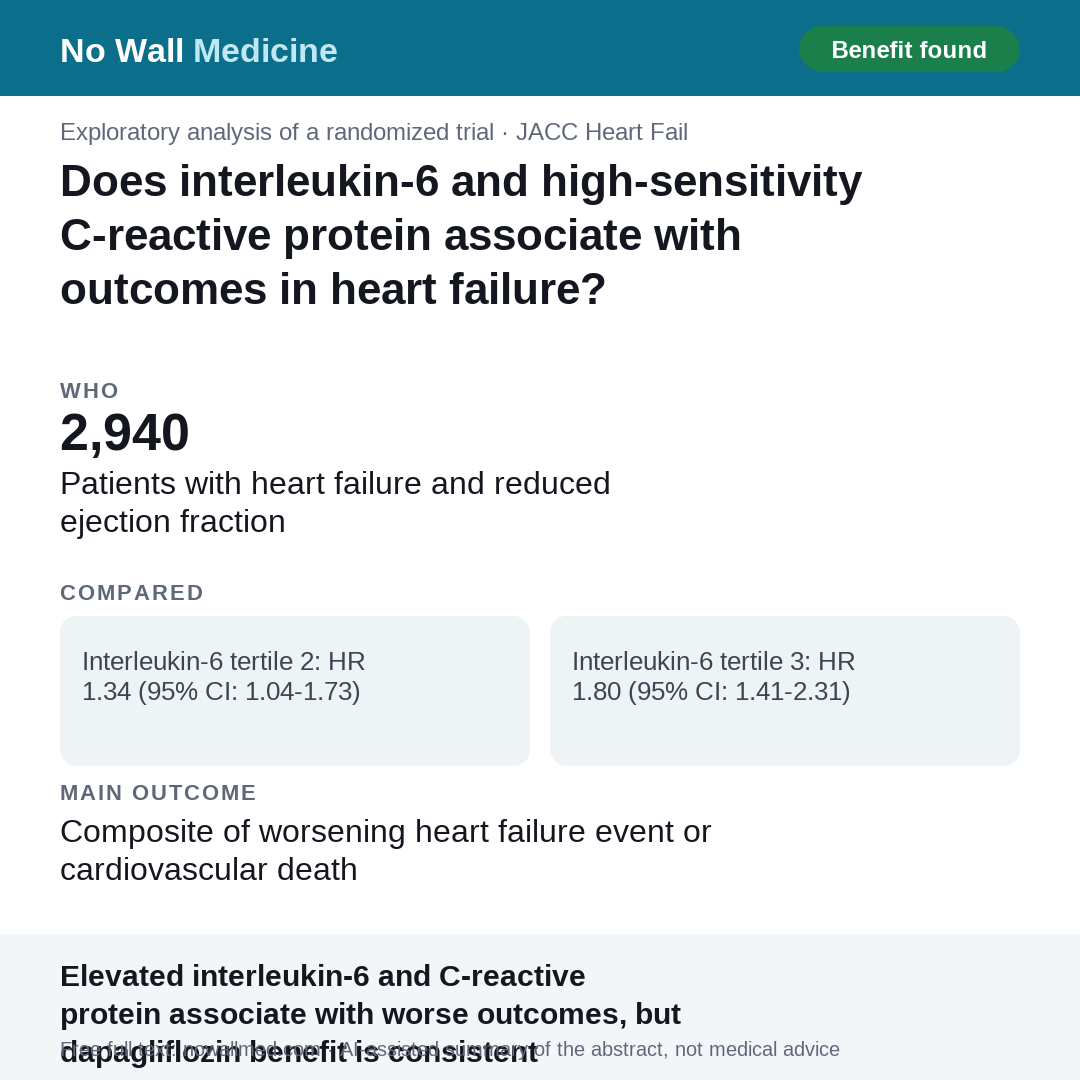
Clinical question: Does interleukin-6 and high-sensitivity C-reactive protein associate with outcomes in heart failure?
Why it matters: It was unknown how interleukin-6 and high-sensitivity C-reactive protein levels relate to outcomes and the effects of dapagliflozin in patients with heart failure.
Key points
- Researchers analyzed 2,940 patients with heart failure and reduced ejection fraction to measure interleukin-6, a signaling protein, and high-sensitivity C-reactive protein, a marker of inflammation.
- Higher baseline interleukin-6 levels were associated with increased risk of worsening heart failure or cardiovascular death, with the highest group having a hazard ratio of 1.80.
- The benefits of dapagliflozin on primary outcomes were consistent regardless of baseline interleukin-6 or high-sensitivity C-reactive protein concentrations.
Headline and key points written with AI from the paper’s abstract, with every number checked against it. Read the paper before relying on them.
Topics
Cite this article
Docherty KF, McDowell K, Welsh P, Petrie MC, Anand I, Berg DD. Interleukin-6 in Heart Failure With Reduced Ejection Fraction and the Effect of Dapagliflozin: An Exploratory Analysis of the Dapagliflozin and Prevention of Adverse Outcomes in Heart Failure Trial. JACC Heart Fail. 2025. doi:10.1016/j.jchf.2024.12.012
Spotted a mistake? Suggest a correction
Top studies every Monday
The week’s key trials and guidelines in your specialties, plus any topics you follow. By email, free.
Get the weekly digest