Internet-Based Cognitive Behavioral Therapy for Informal Caregivers: Randomized Controlled Pilot Trial
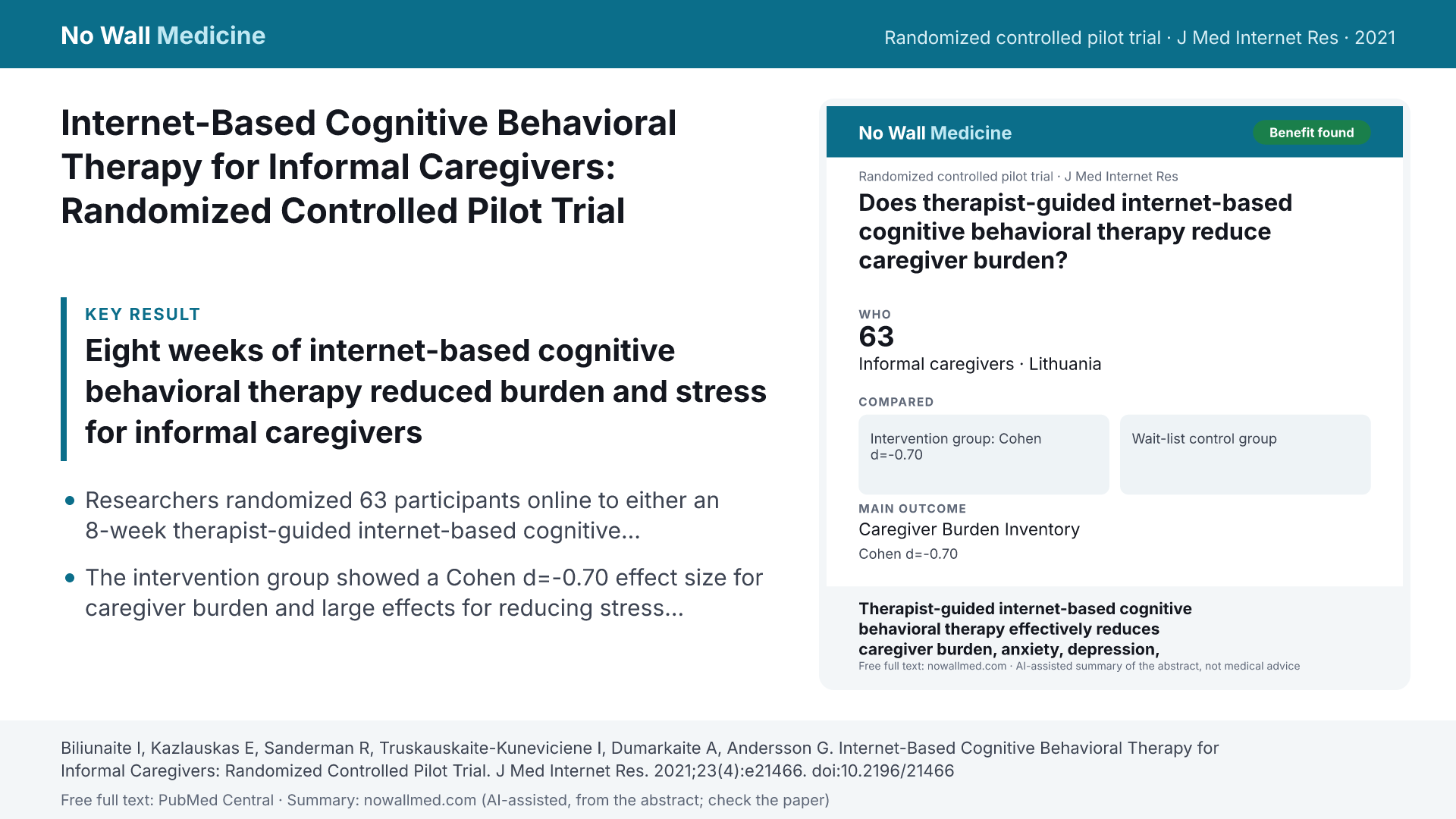
Key result: Eight weeks of internet-based cognitive behavioral therapy reduced burden and stress for informal caregivers
Randomized controlled pilot trialBenefit found
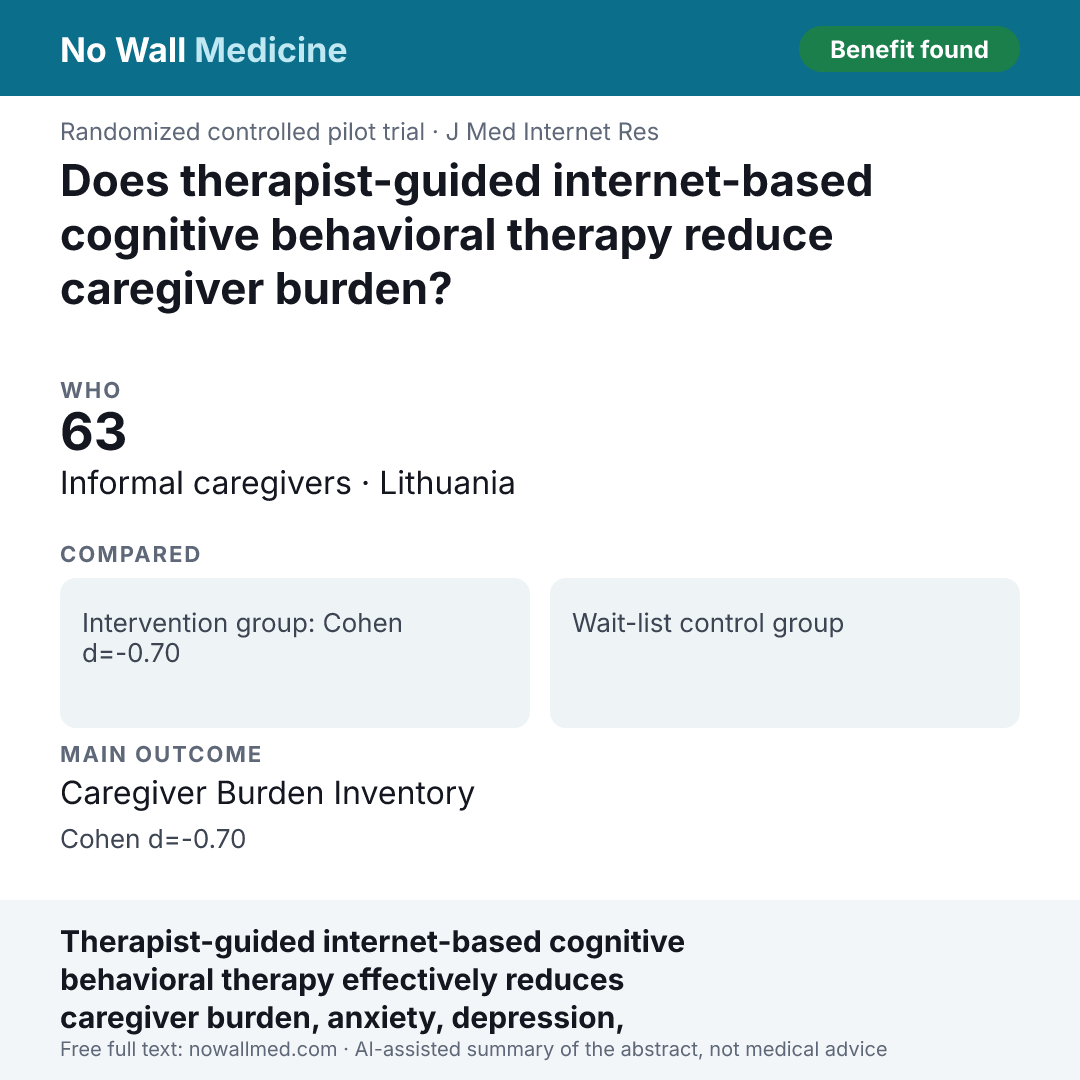
Does therapist-guided internet-based cognitive behavioral therapy reduce caregiver burden?
Who
63
Informal caregivers · Lithuania
Compared
Intervention group: Cohen d=-0.70
Wait-list control group
Main outcome
Caregiver Burden Inventory
Result: Cohen d=-0.70
Bottom line: Therapist-guided internet-based cognitive behavioral therapy effectively reduces caregiver burden, anxiety, depression, stress, and improves quality of life.
J Med Internet Res · 2021-04-07 · Save PNG
Key points
- Researchers randomized 63 participants online to either an 8-week therapist-guided internet-based cognitive behavioral therapy program or a wait-list control group.
- The intervention group showed a Cohen d=-0.70 effect size for caregiver burden and large effects for reducing stress and increasing quality of life.
- Participants reported moderate reductions in depression and anxiety scores and significant improvements in the physical health and development subscales of the caregiver burden inventory.
Discussion prompts
- Would these patients look like yours? Who was left out?
- Is the main outcome one that matters to patients?
- Is the difference large enough to change what you do?
Cite: Biliunaite I, Kazlauskas E, Sanderman R, Truskauskaite-Kuneviciene I, Dumarkaite A, Andersson G. Internet-Based Cognitive Behavioral Therapy for Informal Caregivers: Randomized Controlled Pilot Trial. J Med Internet Res. 2021;23(4):e21466. doi:10.2196/21466
Free full text: PubMed Central · Summary and visual abstract: nowallmed.com/a/internet-based-cognitive-behavioral-therapy-for-informal-caregivers-iceczs/ (AI-assisted from the abstract; check the paper before relying on it).