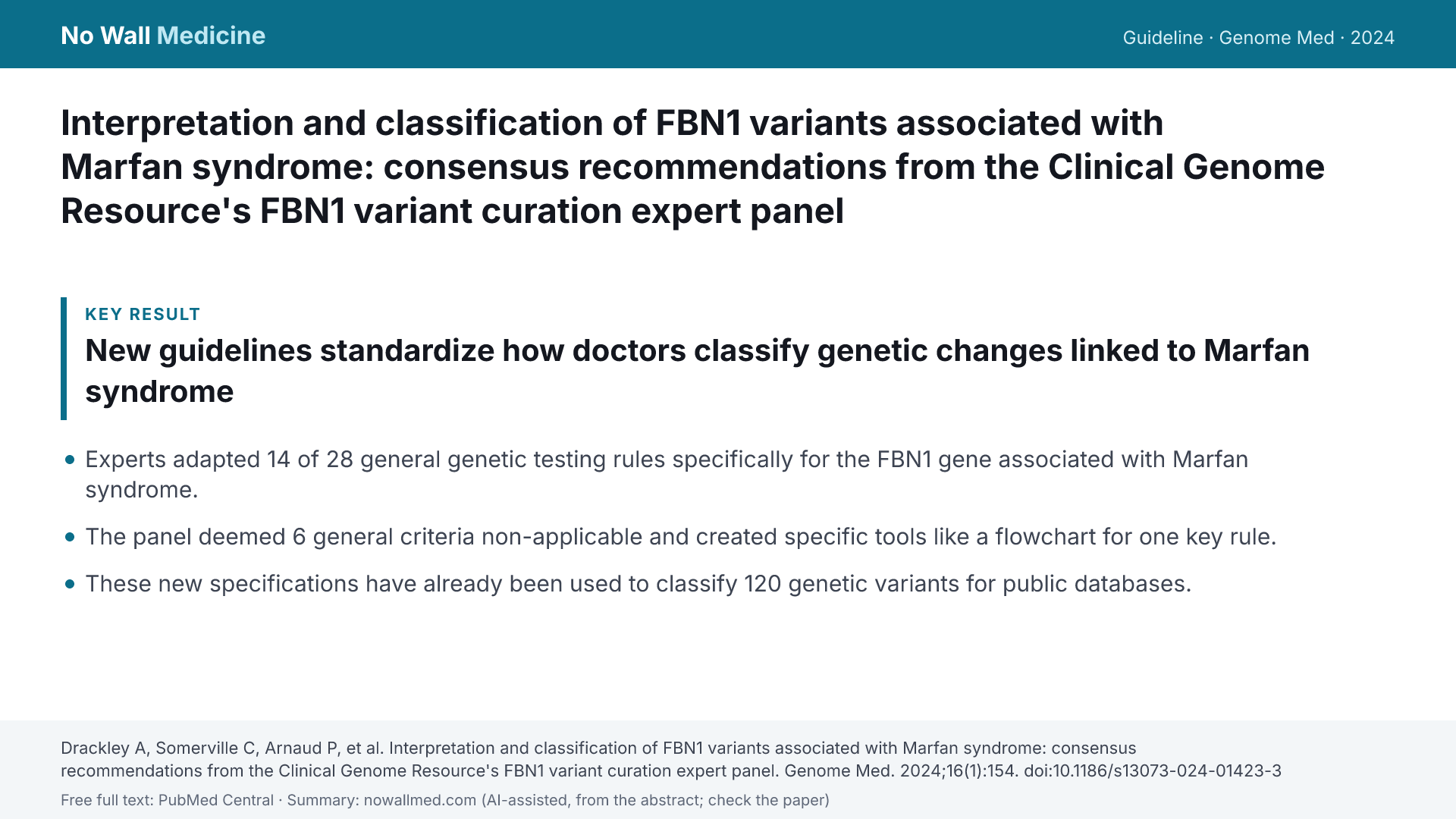
Interpretation and classification of FBN1 variants associated with Marfan syndrome: consensus recommendations from the Clinical Genome Resource's FBN1 variant curation expert panel
Key result: New guidelines standardize how doctors classify genetic changes linked to Marfan syndrome
Key points
- Experts adapted 14 of 28 general genetic testing rules specifically for the FBN1 gene associated with Marfan syndrome.
- The panel deemed 6 general criteria non-applicable and created specific tools like a flowchart for one key rule.
- These new specifications have already been used to classify 120 genetic variants for public databases.
Why it matters: General genetic testing guidelines are not specific to individual genes, leading to inconsistent classifications for Marfan syndrome variants.
Discussion prompts
- Would these patients look like yours? Who was left out?
- Is the main outcome one that matters to patients?
- Is the difference large enough to change what you do?
Cite: Drackley A, Somerville C, Arnaud P, et al. Interpretation and classification of FBN1 variants associated with Marfan syndrome: consensus recommendations from the Clinical Genome Resource's FBN1 variant curation expert panel. Genome Med. 2024;16(1):154. doi:10.1186/s13073-024-01423-3
Free full text: PubMed Central · Summary and visual abstract: nowallmed.com/a/interpretation-and-classification-of-fbn1-variants-associated-with-1q7eqz2/ (AI-assisted from the abstract; check the paper before relying on it).