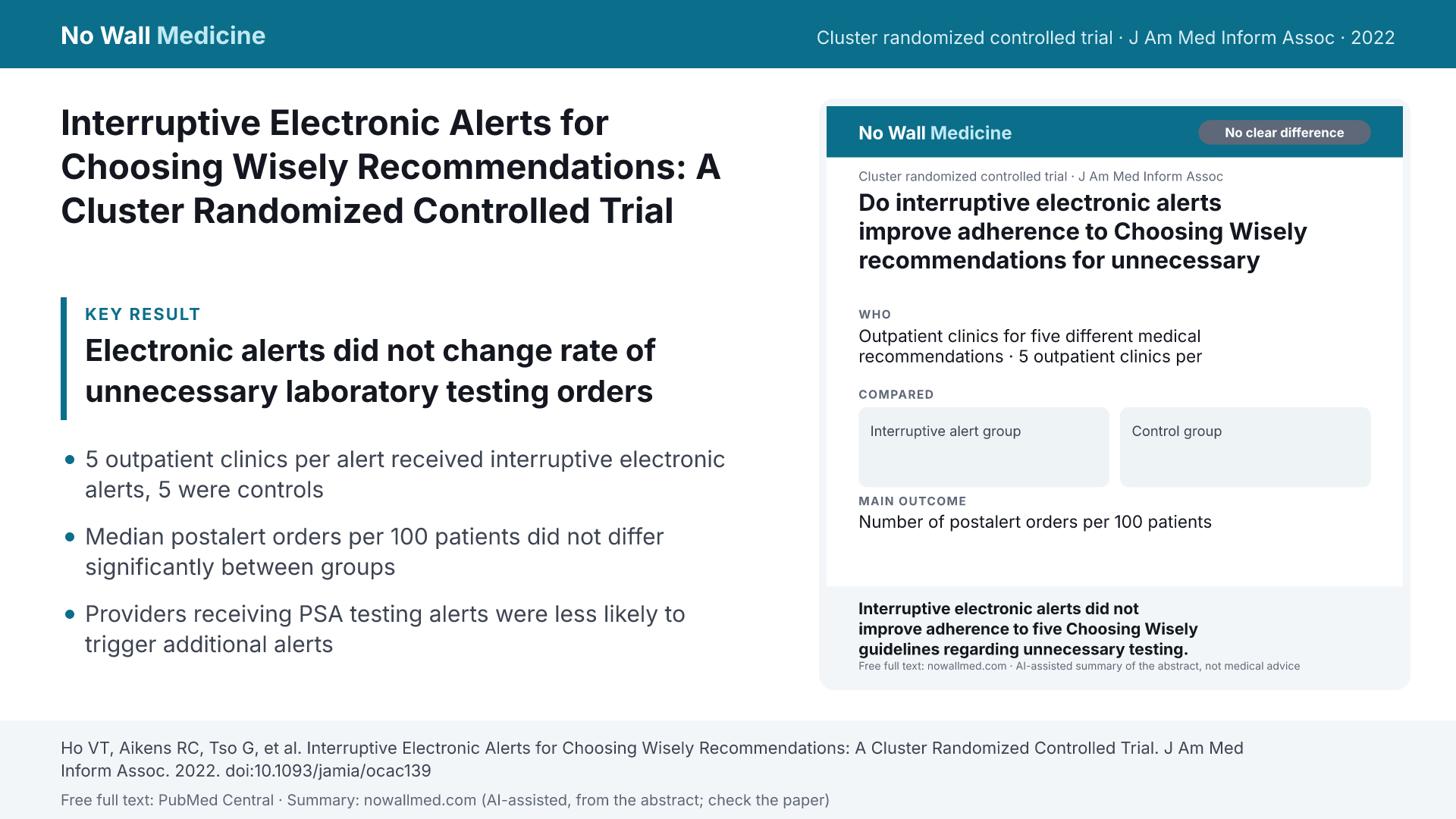
Interruptive Electronic Alerts for Choosing Wisely Recommendations: A Cluster Randomized Controlled Trial
Key result: Electronic alerts did not change rate of unnecessary laboratory testing orders
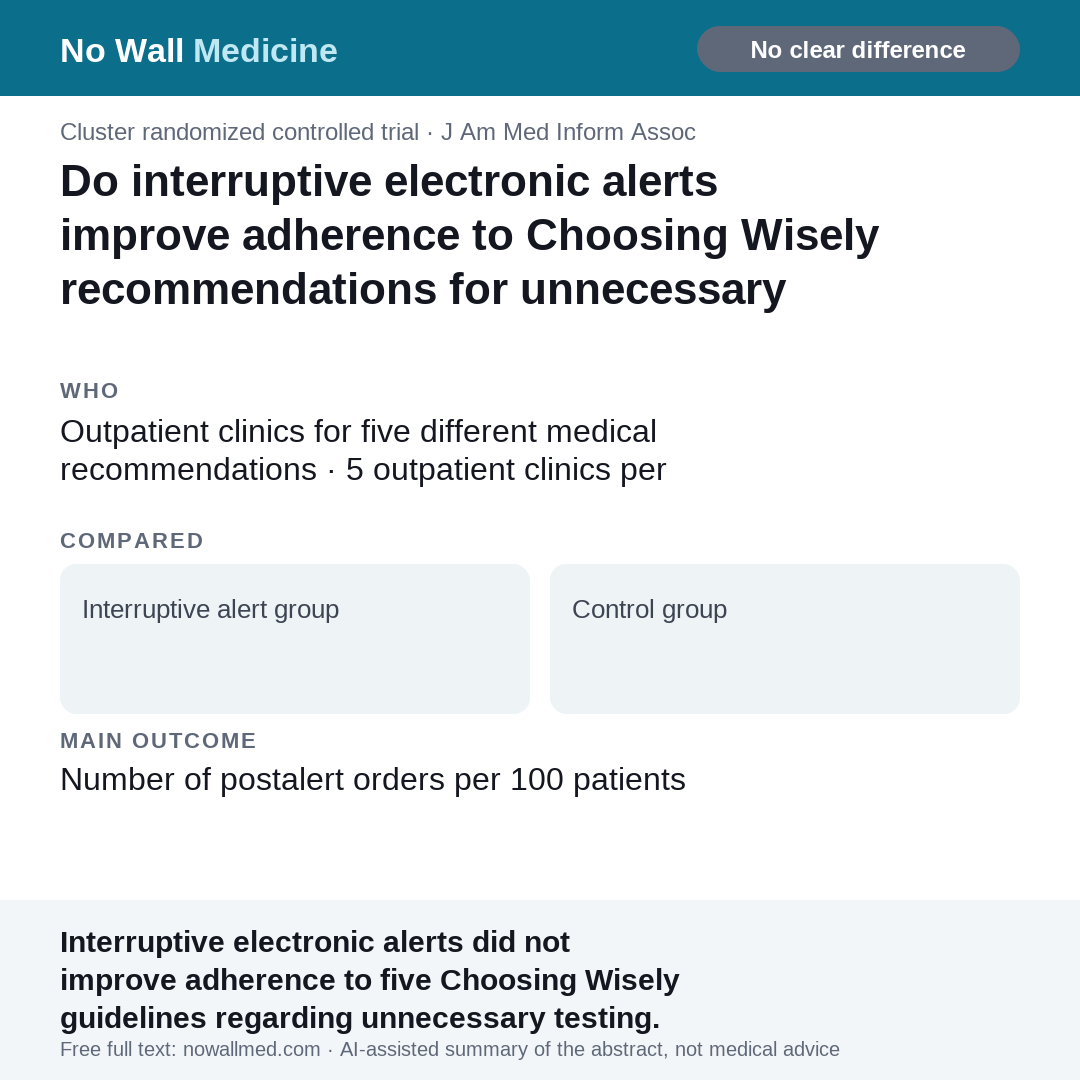
Cluster randomized controlled trialNo clear difference
Do interruptive electronic alerts improve adherence to Choosing Wisely recommendations for unnecessary laboratory testing?
Who
Outpatient clinics for five different medical recommendations · 5 outpatient clinics per alert type
Compared
Interruptive alert group
Control group
Main outcome
Number of postalert orders per 100 patients
Bottom line: Interruptive electronic alerts did not improve adherence to five Choosing Wisely guidelines regarding unnecessary testing.
J Am Med Inform Assoc · 2022-08-27Download image
Key points
- 5 outpatient clinics per alert received interruptive electronic alerts, 5 were controls.
- Median postalert orders per 100 patients did not differ significantly between groups.
- Providers receiving PSA testing alerts were less likely to trigger additional alerts.
Discussion prompts
- Would these patients look like yours? Who was left out?
- Is the main outcome one that matters to patients?
- Is the difference large enough to change what you do?
Cite: Ho VT, Aikens RC, Tso G, et al. Interruptive Electronic Alerts for Choosing Wisely Recommendations: A Cluster Randomized Controlled Trial. J Am Med Inform Assoc. 2022. doi:10.1093/jamia/ocac139
Free full text: PubMed Central · Summary and visual abstract: nowallmed.com/a/interruptive-electronic-alerts-for-choosing-wisely-recommendations-a-1ff2gv4/ (AI-assisted from the abstract; check the paper before relying on it).