Cognitive-Behavioral Therapy for Insomnia is most effective for sleep and mental health in cancer survivors
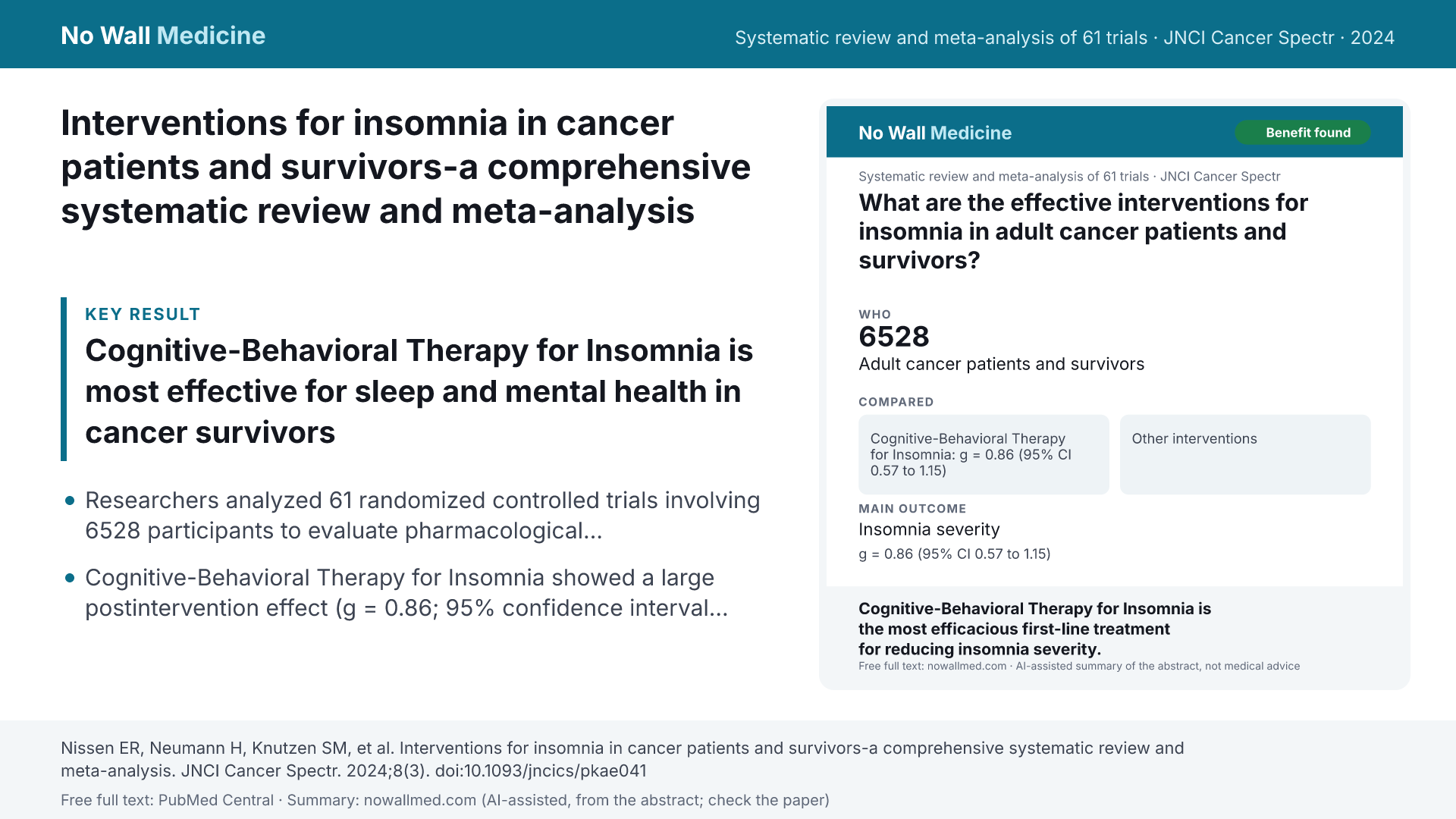
Interventions for insomnia in cancer patients and survivors-a comprehensive systematic review and meta-analysis
Systematic review and meta-analysis of 61 trialsBenefit found
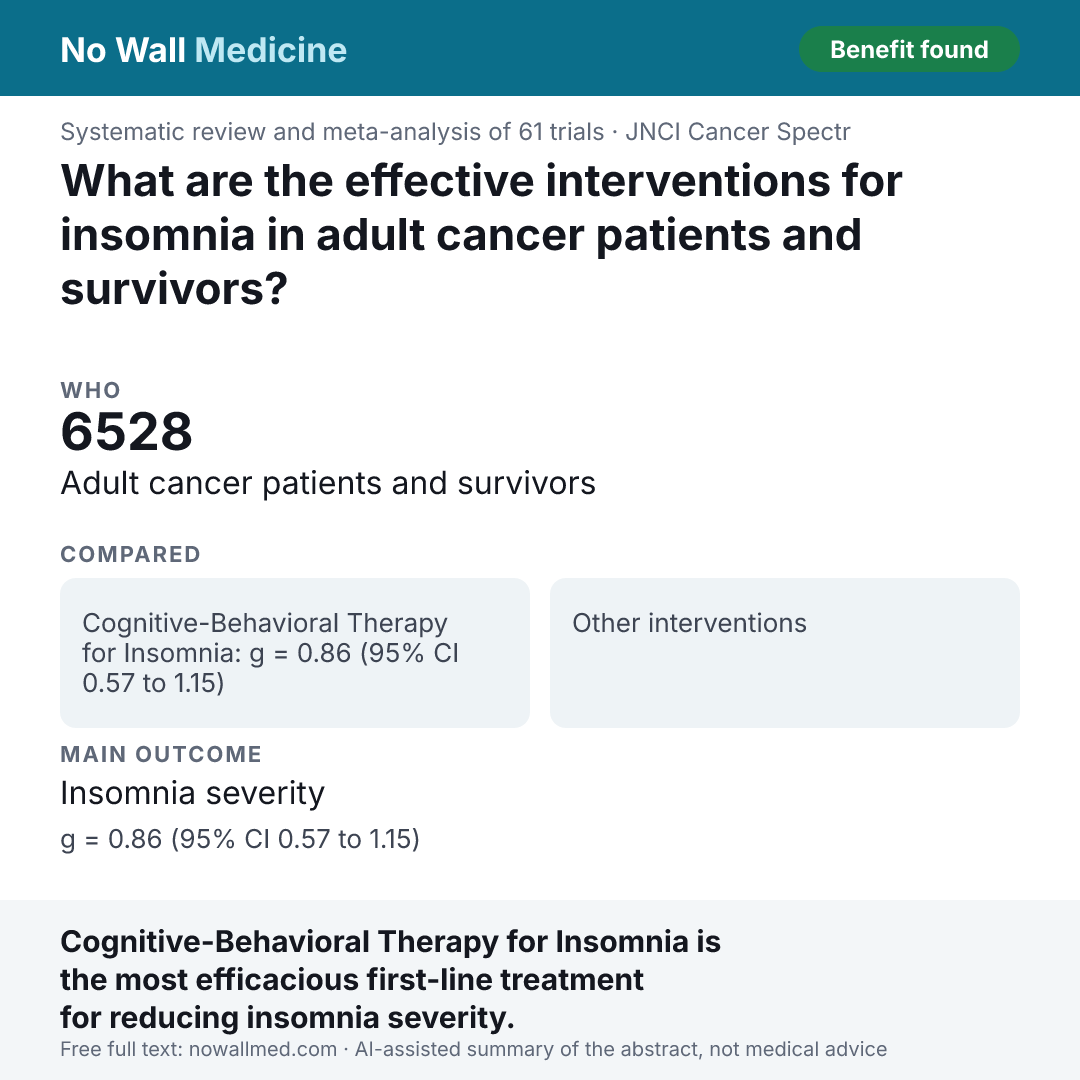
What are the effective interventions for insomnia in adult cancer patients and survivors?
Who
6528
Adult cancer patients and survivors
Compared
Cognitive-Behavioral Therapy for Insomnia: g = 0.86 (95% CI 0.57 to 1.15)
Other interventions
Main outcome
Insomnia severity
Result: g = 0.86 (95% CI 0.57 to 1.15)
Bottom line: Cognitive-Behavioral Therapy for Insomnia is the most efficacious first-line treatment for reducing insomnia severity.
JNCI Cancer Spectr · 2024-05-23 · Save PNG
Clinical question: What are the effective interventions for insomnia in adult cancer patients and survivors?
Why it matters: Effective management strategies for the persistent insomnia seen in cancer patients and survivors are currently needed.
Key points
- Researchers analyzed 61 randomized controlled trials involving 6528 participants to evaluate pharmacological and nonpharmacological treatments for insomnia in adult cancer patients and survivors.
- Cognitive-Behavioral Therapy for Insomnia showed a large postintervention effect (g = 0.86; 95% confidence interval [CI] = 0.57 to 1.15) and a medium effect at follow-up (g = 0.55; 95% CI = 0.18 to 0.92).
- Cognitive-Behavioral Therapy for Insomnia was associated with improvements in fatigue, depressive symptoms, and anxiety, while other treatments like melatonin and exercise showed less convincing evidence.
Headline and key points written with AI from the paper’s abstract, with every number checked against it. Read the paper before relying on them.
Was this summary helpful?
Subject terms
Headline, design, result, key points, caveat and citation as plain text.
Cite this article
Nissen ER, Neumann H, Knutzen SM, et al. Interventions for insomnia in cancer patients and survivors-a comprehensive systematic review and meta-analysis. JNCI Cancer Spectr. 2024;8(3). doi:10.1093/jncics/pkae041
Spotted a mistake? Suggest a correction