Interventions to reduce anticholinergic medication burden showed no significant difference in patient outcomes
Interventions for reducing anticholinergic medication burden in older adults-a systematic review and meta-analysis
Systematic review and meta-analysisNo clear difference
Do interventions reduce anticholinergic medication burden in older adults?
Who
Older adults
Compared
Intervention
Control
Main outcome
Falls, cognition, anticholinergic burden, and quality of life
Result: no significant difference in outcomes
Bottom line: Interventions to reduce anticholinergic burden showed no significant difference in falls, cognition, burden, or quality of life.
Age Ageing · 2023-09-23Download image
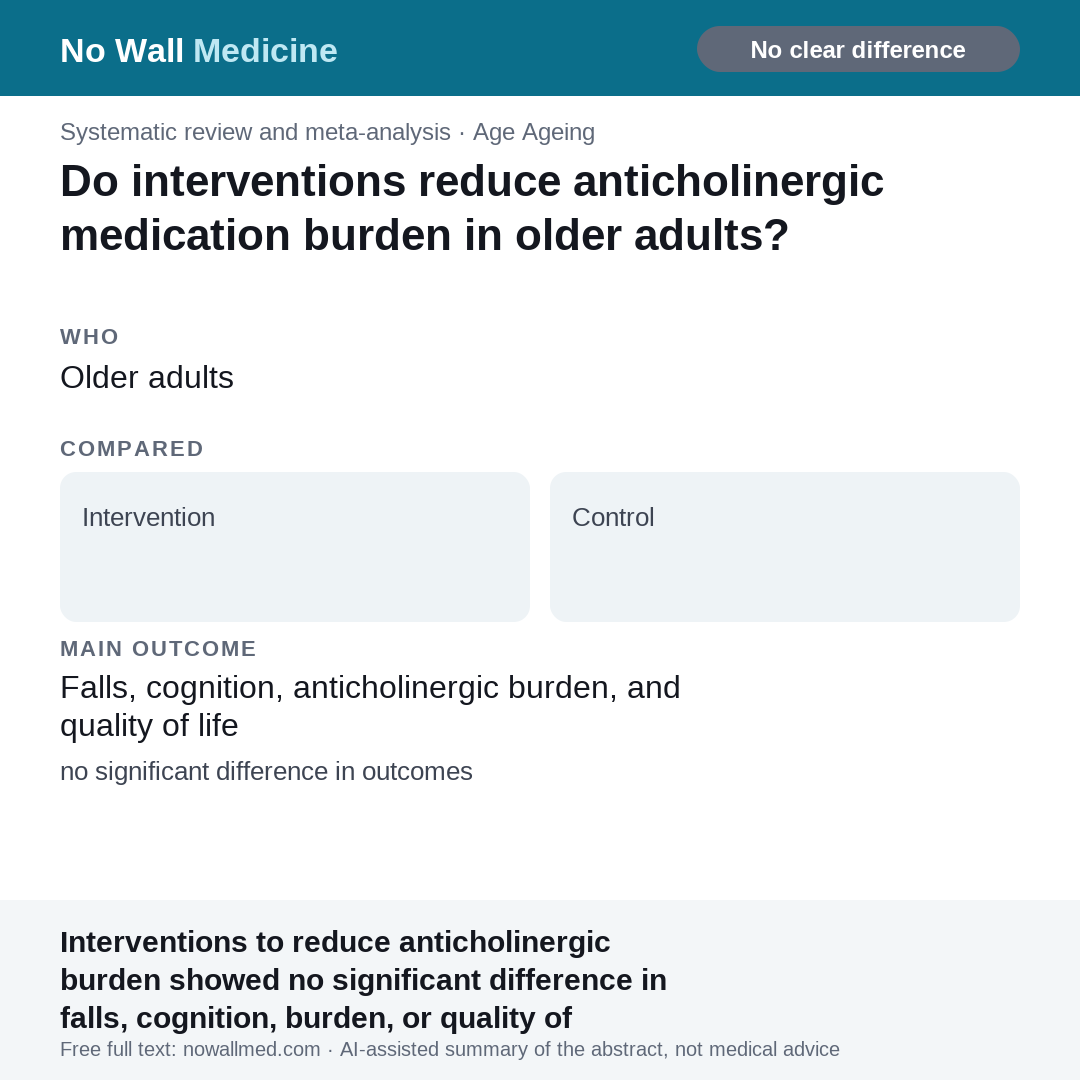
Clinical question: Do interventions reduce anticholinergic medication burden in older adults?
Why it matters: It is unknown if interventions like medication reviews and deprescribing, which is the planned process of reducing or stopping medications, effectively improve outcomes in older adults.
Key points
- Researchers analyzed seven randomized controlled trials involving participants measuring falls, cognition, anticholinergic burden, and quality of life.
- Interventions showed no significant difference compared to control groups for falls (OR = 0.76, 95% CI: 0.52-1.11, n = 647) or cognition (mean difference = 1.54, 95% CI: -0.04 to 3.13, n = 405).
- No significant differences were found for anticholinergic burden (mean difference = 0.04, 95% CI: -0.11 to 0.18, n = 710) or quality of life (mean difference = 0.04, 95% CI: -0.04 to 0.12, n = 461).
Limitation the authors note: The authors noted that short follow-up time and a lack of training and support surrounding successful deprescribing may have contributed to the results.
Headline and key points written with AI from the paper’s abstract, with every number checked against it. Read the paper before relying on them.
Was this summary helpful?
Subject terms
Cite this article
Braithwaite E, Todd OM, Atkin A, Hulatt R, Tadrous R, Alldred DP. Interventions for reducing anticholinergic medication burden in older adults-a systematic review and meta-analysis. Age Ageing. 2023. doi:10.1093/ageing/afad176
Spotted a mistake? Suggest a correction
Top studies every Monday
The week’s key trials and guidelines in your specialties, plus any topics you follow. By email, free.
Get the weekly digest