Omega-3 and carotenoid supplements showed benefits for computer vision syndrome symptoms in meta-analysis
Interventions for the Management of Computer Vision Syndrome: A Systematic Review and Meta-analysis
Systematic review and meta-analysis of 45 randomized controlled trialsMixed results
Are interventions effective for treating computer vision syndrome eye strain?
Who
4497
Participants with computer vision syndrome
Compared
Multifocal lenses: SMD 0.11 (95% CI -0.14 to 0.37)
Blue-blocking spectacles
Oral berry extract: SMD -0.27 (95% CI -0.70 to 0.16)
Oral omega-3: MD -3.36 (95% CI -3.63 to -3.10)
Main outcome
Visual fatigue, dry eye symptoms, and critical flicker-fusion frequency
Result: MD -3.36 (95% CI -3.63 to -3.10) for omega-3 dry eye symptoms
Bottom line: Omega-3 supplementation may reduce dry eye symptoms, but high-certainty evidence for any therapy was not identified.
Limitation: No high-certainty evidence was identified supporting the use of any analyzed therapies.
Ophthalmology · 2022-05-18Download image
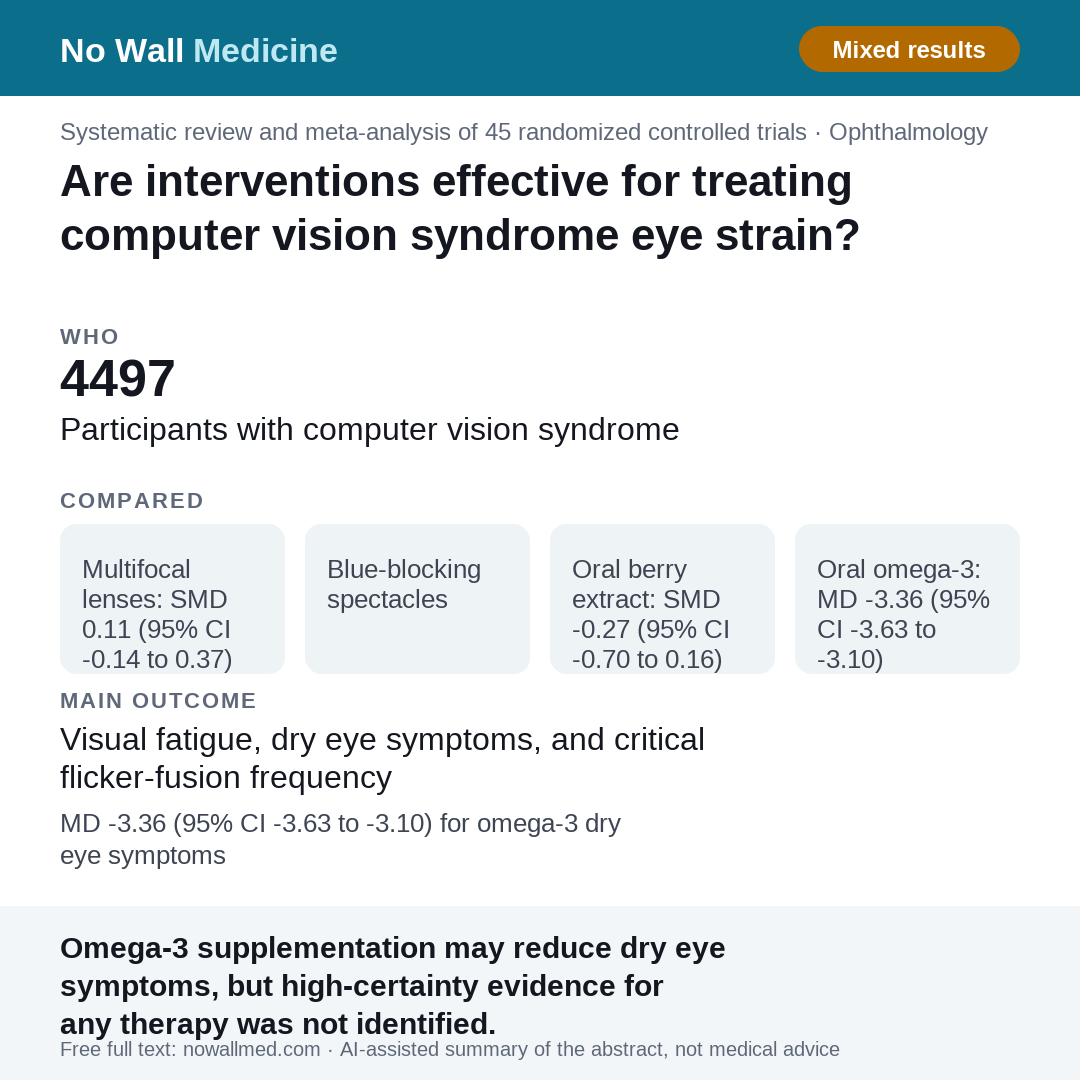
Clinical question: Are interventions effective for treating computer vision syndrome eye strain?
Why it matters: Clinical guidelines do not exist to help practitioners provide evidence-based advice regarding treatments for computer vision syndrome.
Key points
- Researchers analyzed 45 randomized controlled trials involving 4497 participants to evaluate treatments for eye strain from computer use.
- Oral omega-3 supplementation for 45 days to 3 months was associated with improved dry eye symptoms compared to placebo (MD, -3.36; 95% CI, -3.63 to -3.10).
- Oral carotenoid supplementation was associated with improved critical flicker-fusion frequency, which is a measure of how fast the eye can perceive flickering light (MD, 1.55 Hz; 95% CI, 0.42 to 2.67 Hz).
Limitation the authors note: The authors did not identify high-certainty evidence supporting the use of any of the therapies analyzed.
Headline and key points written with AI from the paper’s abstract, with every number checked against it. Read the paper before relying on them.
Was this summary helpful?
Subject terms
Cite this article
Singh S, McGuinness MB, Anderson AJ, Downie LE. Interventions for the Management of Computer Vision Syndrome: A Systematic Review and Meta-analysis. Ophthalmology. 2022. doi:10.1016/j.ophtha.2022.05.009
Spotted a mistake? Suggest a correction
Top studies every Monday
The week’s key trials and guidelines in your specialties, plus any topics you follow. By email, free.
Get the weekly digest