Interventions to improve adherence to lipid-lowering drugs: a systematic review and meta-analysis
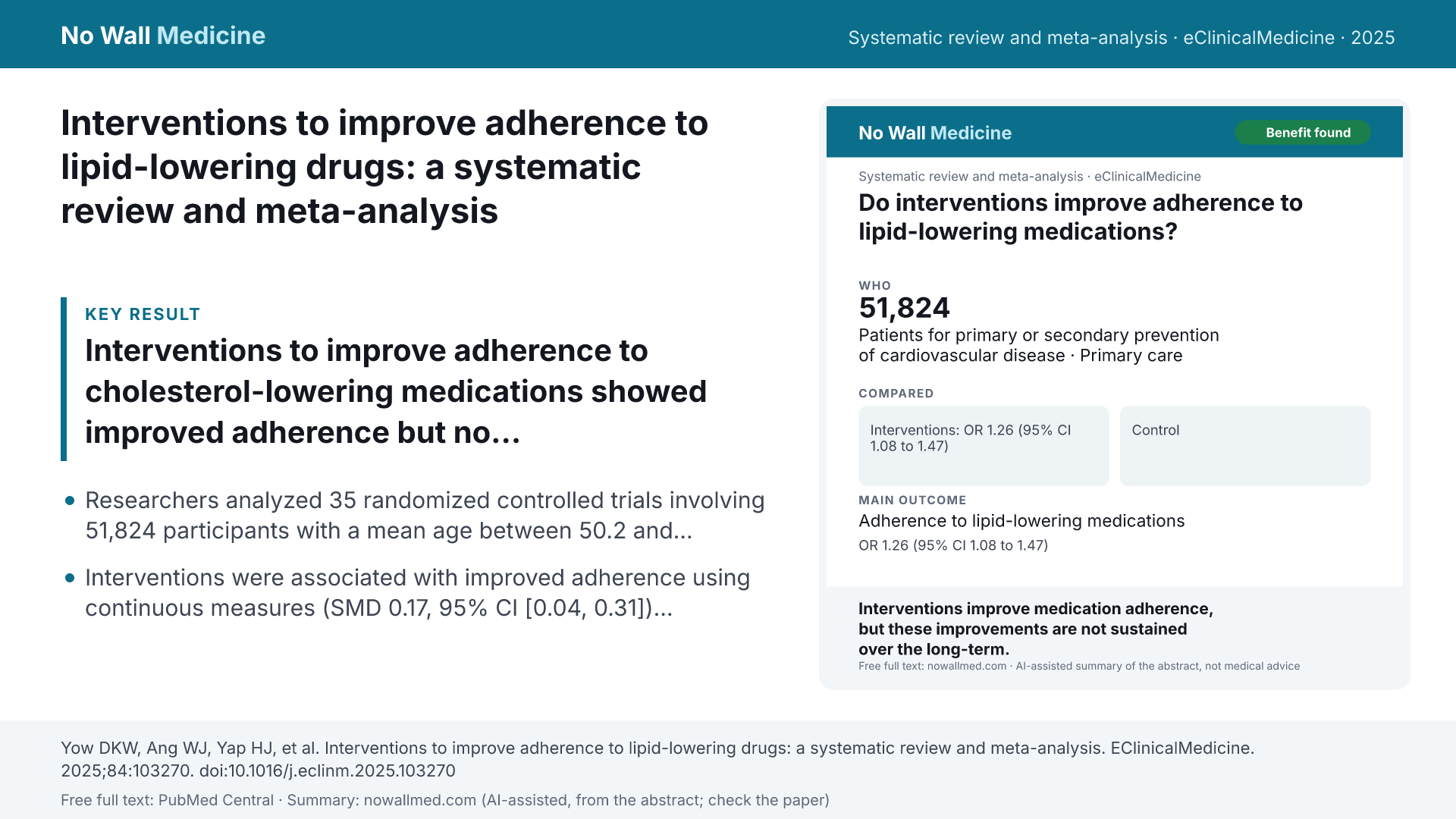
Key result: Interventions to improve adherence to cholesterol-lowering medications showed improved adherence but no physiological changes
Key points
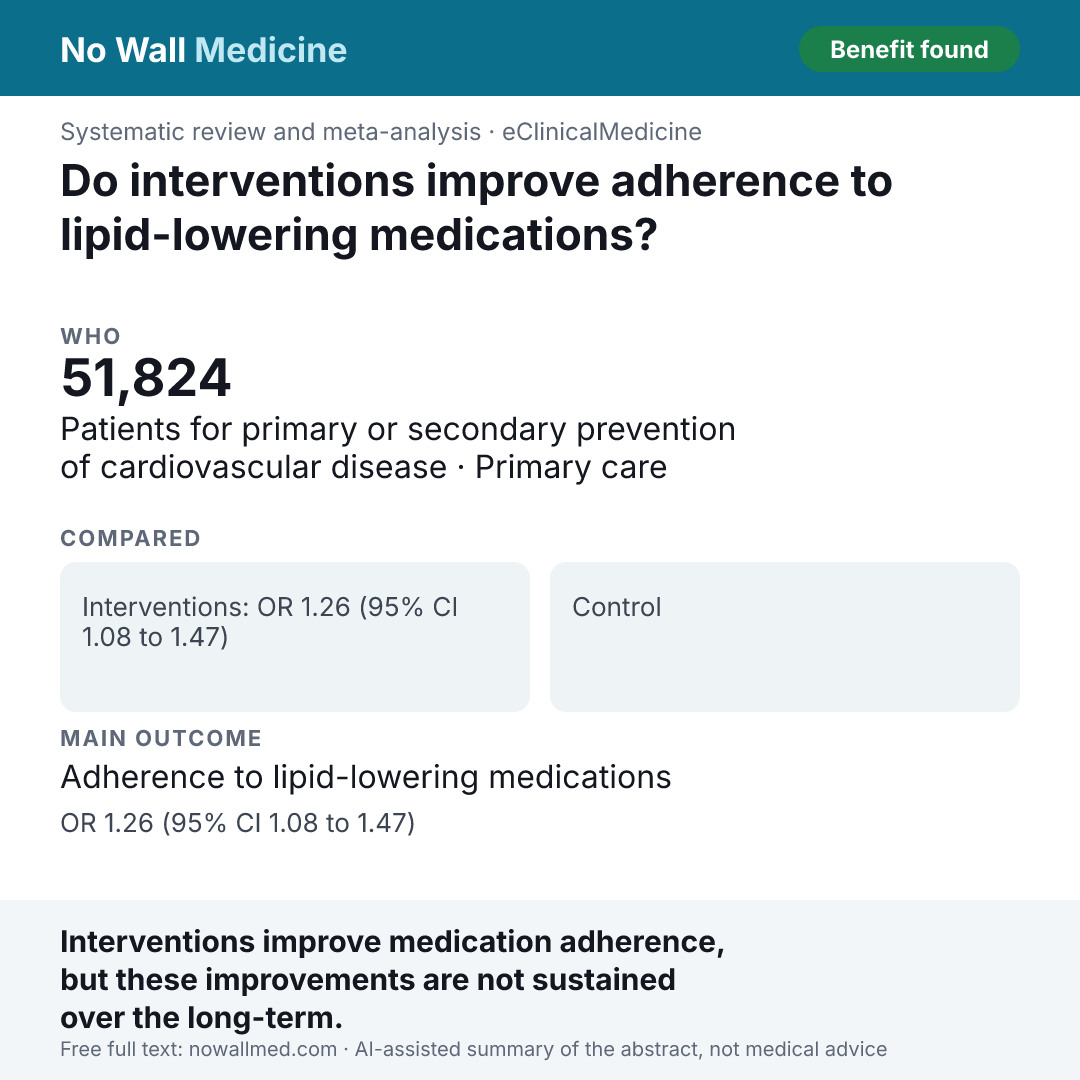
- Researchers analyzed 35 randomized controlled trials involving 51,824 participants with a mean age between 50.2 and 74.4 years.
- Interventions were associated with improved adherence using continuous measures (SMD 0.17, 95% CI [0.04, 0.31]) and dichotomous measures (OR 1.26, 95% CI [1.08, 1.47]).
- Complex behavioral approaches were associated with improved adherence (OR 1.74, 95% CI [1.17, 2.58]), but no differences in physiological outcomes were found.
Why it matters: Poor adherence to lipid-lowering medications remains a barrier to reducing the burden of cardiovascular disease.
Limitation the authors note: The authors state that improvements in medication adherence are not sustained over the long-term and more long-term randomized controlled trials are required.
Discussion prompts
- Would these patients look like yours? Who was left out?
- Is the main outcome one that matters to patients?
- Is the difference large enough to change what you do?
Cite: Yow DKW, Ang WJ, Yap HJ, et al. Interventions to improve adherence to lipid-lowering drugs: a systematic review and meta-analysis. EClinicalMedicine. 2025;84:103270. doi:10.1016/j.eclinm.2025.103270
Free full text: PubMed Central · Summary and visual abstract: nowallmed.com/a/interventions-to-improve-adherence-to-lipid-lowering-drugs-a-ky1z6h/ (AI-assisted from the abstract; check the paper before relying on it).