Interventions to improve medication adherence in adults with mental-physical multimorbidity in primary care: a systematic review
Systematic reviewMixed results
What interventions improve medication adherence in adults with mental-physical multimorbidity in primary care?
Who
2279
Adults with a physical condition and depression · Primary healthcare settings
Compared
Coordination and management of care processes: statistically significant improvements in medication adherence
Information and communication technology: no changes in medication adherence
Main outcome
Medication adherence
Bottom line: Coordinating and managing healthcare processes may improve medication adherence, but digital health technology effects remain unclear.
Limitation: It is still necessary to better understand how digital health technology can support patients.
Br J Gen Pract · 2024-06-27Download image
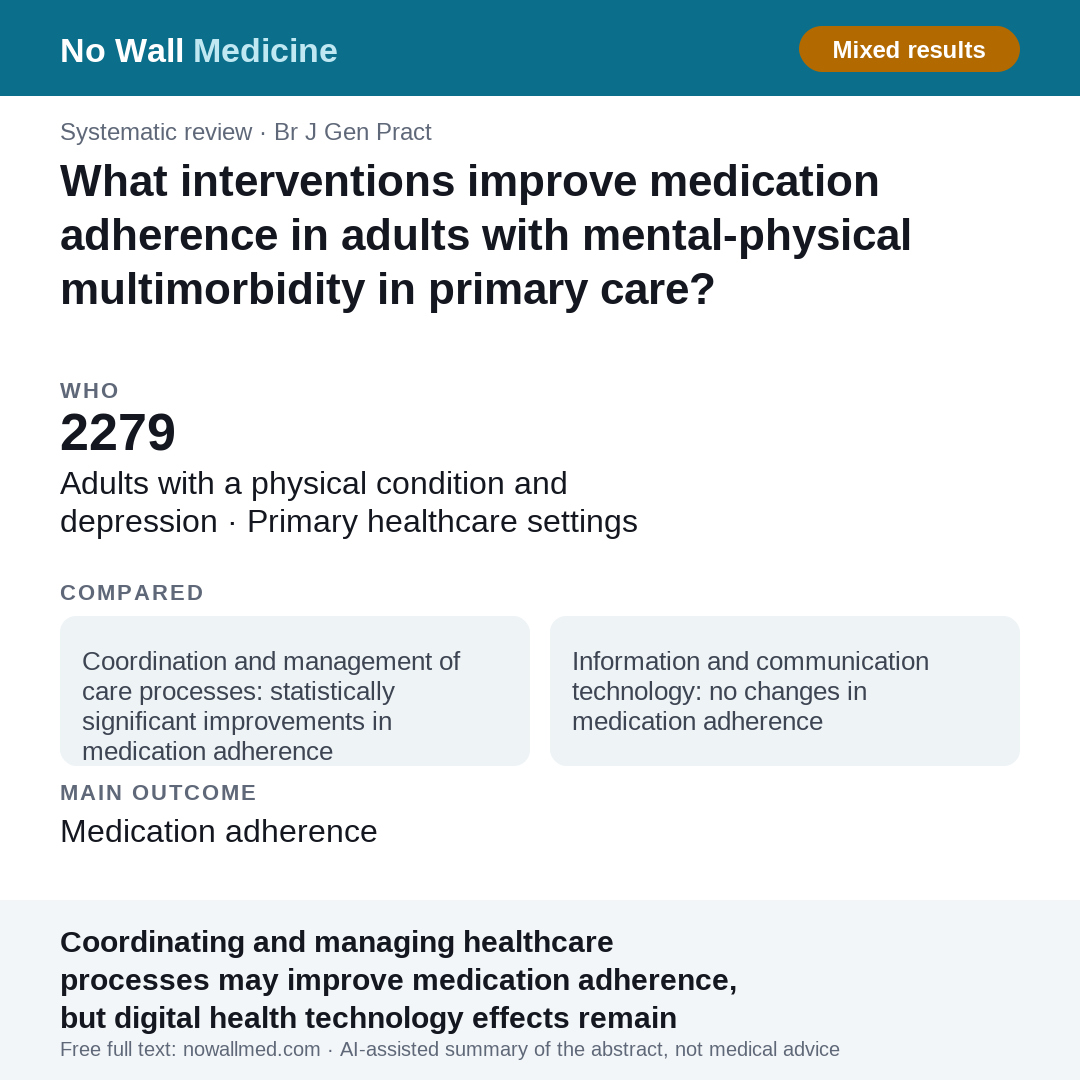
Clinical question: What interventions improve medication adherence in adults with mental-physical multimorbidity in primary care?
Abstract
Background
Medication non-adherence is a notable contributor to healthcare inefficiency, resulting in poor medication management, impaired patient outcomes, and ineffective symptom control. Aim
To summarise interventions targeting medication adherence for adults with mental-physical multimorbidity in primary healthcare settings. Design and setting
A systematic review of the literature - published in any language and with any country of origin - was conducted. Method
MEDLINE, EMBASE, PsycInfo, Web of Science, Cochrane Library, and the Cumulated Index to Nursing and Allied Health Literature - more commonly known as CINAHL - were searched for relevant studies. Data were extracted and synthesised using narrative synthesis. The Effective Practice and Organisation of Care (EPOC) taxonomy was used to classify intervention types. Risk of bias was assessed using the National Heart, Lung, and Blood Institute's quality assessment tool for controlled intervention studies. Results
Eleven studies, representing 2279 patients, were included. All interventions examined were classified into one EPOC domain, namely 'delivery arrangements'. All included studies examined patients who had a physical condition and depression. Seven studies examining interventions focused on coordination of care and management of care processes reported statistically significant improvements in medication adherence that were attributed to the intervention. Four studies considering the use of information and communication technology observed no changes in medication adherence. Conclusion
Interventions that coordinate and manage healthcare processes may help improve patients' adherence to medication regimes in those with mental-physical multimorbidity. However, it is still necessary to better understand how digital health technology can support patients in following their medication regimes. As the growing challenges of treating multimorbidity are faced, everyone involved in health services - from providers to policymakers - must be receptive to a more integrated approach to healthcare delivery.
Subject terms
Cite this article
Lammila-Escalera E, Greenfield G, Pan Z, Nicholls D, Majeed A, Hayhoe B. Interventions to improve medication adherence in adults with mental-physical multimorbidity in primary care: a systematic review. Br J Gen Pract. 2024. doi:10.3399/BJGP.2023.0406
Spotted a mistake? Suggest a correction
Top studies every Monday
The week’s key trials and guidelines in your specialties, plus any topics you follow. By email, free.
Get the weekly digest