Various interventions were associated with fewer postoperative neurocognitive complications despite very low certainty of evidence
Interventions to prevent postoperative neurocognitive complications: an umbrella review of meta-analyses of randomised controlled trials
Meta-analysis of trialsBenefit found
Do interventions prevent postoperative neurocognitive complications?
Who
250777
adult surgical populations
Compared
interventions
control
Main outcome
postoperative neurocognitive complications
Bottom line: Interventions reduce complications
Limitation: very low certainty of evidence
Anaesthesia · 2025-11-17Download image
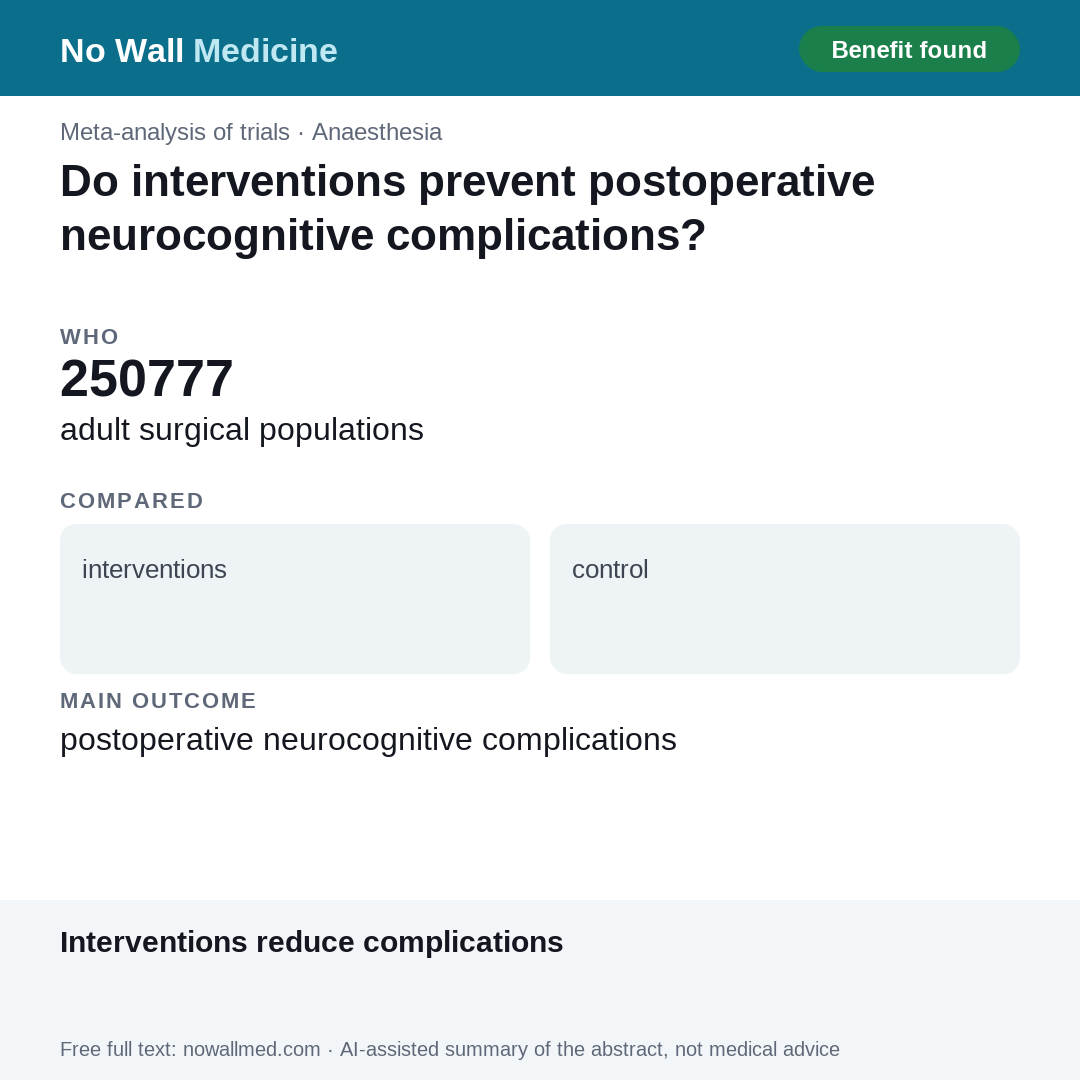
Clinical question: Do interventions prevent postoperative neurocognitive complications?
Why it matters: The certainty of how effective different interventions are for managing postoperative neurocognitive complications remains unclear.
Key points
- Researchers analyzed 114 systematic reviews and meta-analyses involving 250,777 patients to evaluate pharmacological and non-pharmacological interventions for preventing brain-related complications after surgery.
- Dexmedetomidine, cerebral monitoring, acupuncture, sleep interventions, steroids, antipsychotics, peripheral nerve blocks, esketamine, and remimazolam were associated with reductions in postoperative neurocognitive complications.
- The overall certainty of evidence for all these interventions was predominantly very low.
Headline and key points written with AI from the paper’s abstract, with every number checked against it. Read the paper before relying on them.
Topics
Cite this article
D'Amico F, Turi S, Manazza M, Lo Bianco G, Monti G, Zangrillo A. Interventions to prevent postoperative neurocognitive complications: an umbrella review of meta-analyses of randomised controlled trials. Anaesthesia. 2025. doi:10.1111/anae.70061
Spotted a mistake? Suggest a correction