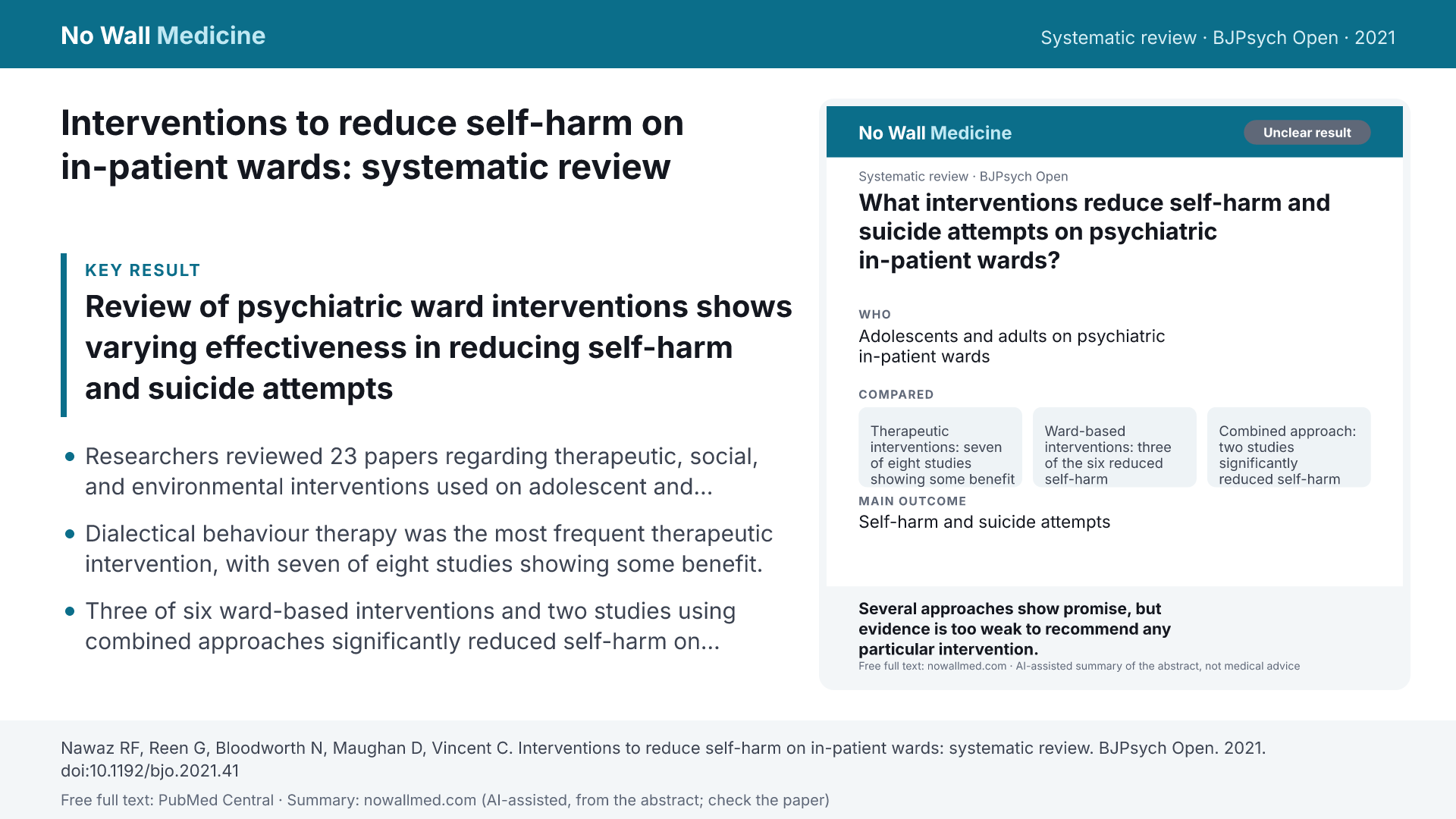
Review of psychiatric ward interventions shows varying effectiveness in reducing self-harm and suicide attempts
Interventions to reduce self-harm on in-patient wards: systematic review
Psychiatry & Mental HealthAdult and pediatric
Systematic reviewUnclear result
What interventions reduce self-harm and suicide attempts on psychiatric in-patient wards?
Who
Adolescents and adults on psychiatric in-patient wards
Compared
Therapeutic interventions: seven of eight studies showing some benefit
Ward-based interventions: three of the six reduced self-harm
Combined approach: two studies significantly reduced self-harm
Main outcome
Self-harm and suicide attempts
Bottom line: Several approaches show promise, but evidence is too weak to recommend any particular intervention.
BJPsych Open · 2021-04-16Download image
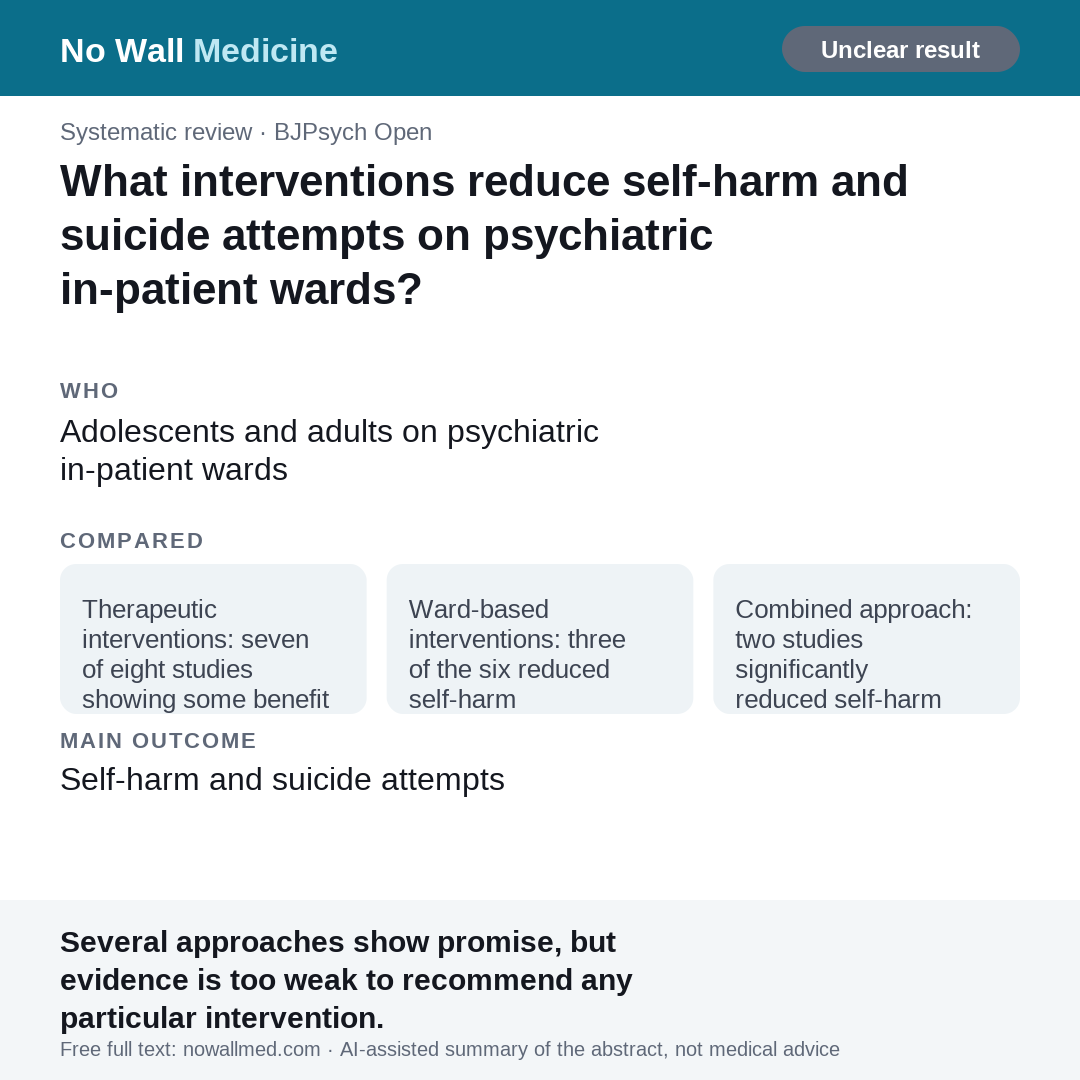
Clinical question: What interventions reduce self-harm and suicide attempts on psychiatric in-patient wards?
Why it matters: There is no consensus on the most appropriate means of reducing and managing self-harm during in-patient admissions.
Key points
- Researchers reviewed 23 papers regarding therapeutic, social, and environmental interventions used on adolescent and adult psychiatric in-patient wards.
- Dialectical behaviour therapy was the most frequent therapeutic intervention, with seven of eight studies showing some benefit.
- Three of six ward-based interventions and two studies using combined approaches significantly reduced self-harm on the wards.
Headline and key points written with AI from the paper’s abstract, with every number checked against it. Read the paper before relying on them.
Was this summary helpful?
Cite this article
Nawaz RF, Reen G, Bloodworth N, Maughan D, Vincent C. Interventions to reduce self-harm on in-patient wards: systematic review. BJPsych Open. 2021. doi:10.1192/bjo.2021.41
Spotted a mistake? Suggest a correction