Various perinatal interventions were associated with reduced risk of severe brain injury in preterm infants
Interventions to Reduce Severe Brain Injury Risk in Preterm Neonates: A Systematic Review and Meta-analysis
Meta-analysis of 221 randomized clinical trialsMixed results
Do perinatal interventions reduce severe brain injury risk in preterm neonates?
Who
221
Preterm neonates
Compared
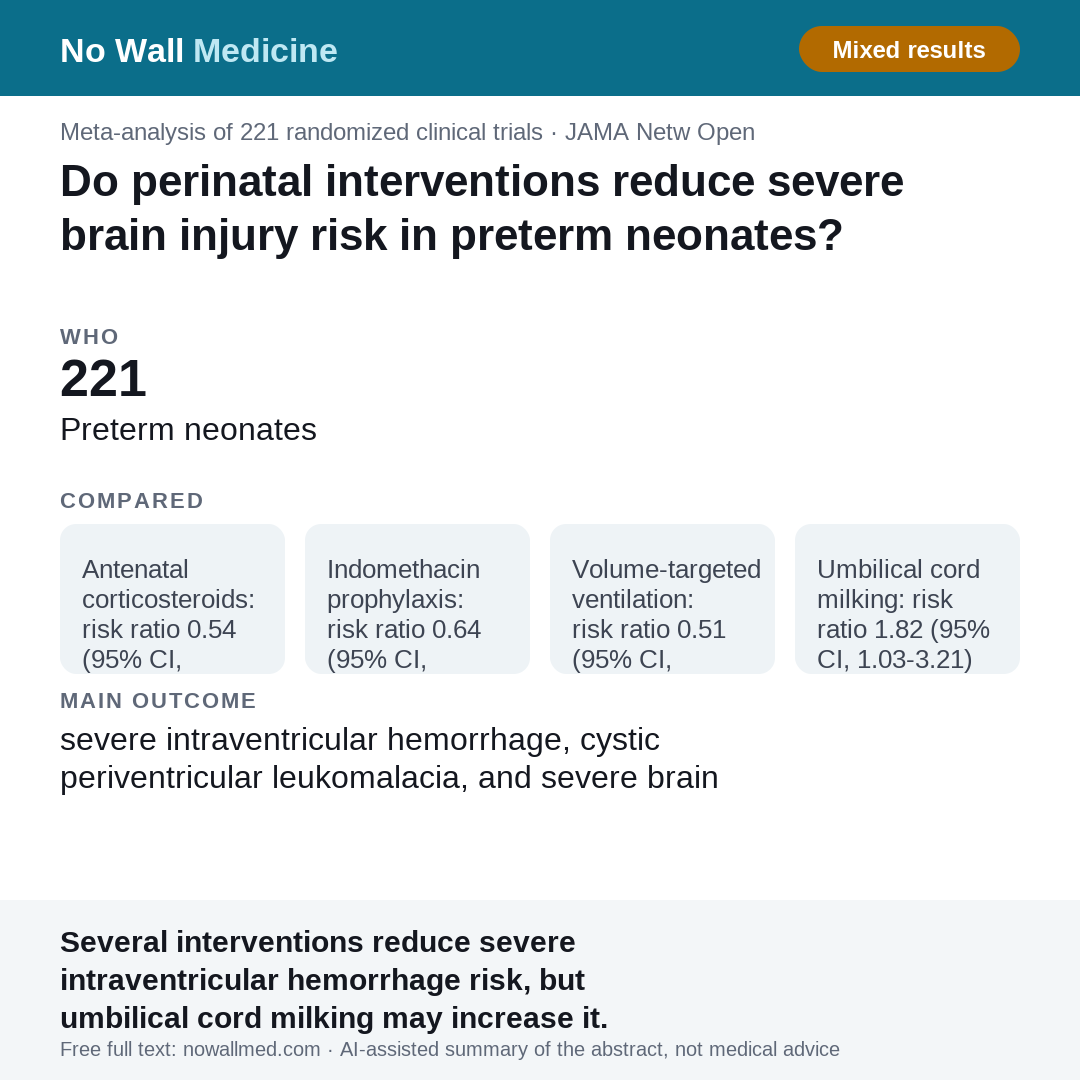
Antenatal corticosteroids: risk ratio 0.54 (95% CI, 0.35-0.82)
Indomethacin prophylaxis: risk ratio 0.64 (95% CI, 0.52-0.79)
Volume-targeted ventilation: risk ratio 0.51 (95% CI, 0.36-0.72)
Umbilical cord milking: risk ratio 1.82 (95% CI, 1.03-3.21)
Main outcome
severe intraventricular hemorrhage, cystic periventricular leukomalacia, and severe brain injury
Bottom line: Several interventions reduce severe intraventricular hemorrhage risk, but umbilical cord milking may increase it.
Limitation: Clinicians should consider the certainty of evidence before applying these interventions to clinical practice.
JAMA Netw Open · 2023-04-03Download image
Clinical question: Do perinatal interventions reduce severe brain injury risk in preterm neonates?
Why it matters: The effectiveness of different perinatal interventions for reducing severe brain injury in preterm neonates needed to be evaluated across various clinical settings.
Key points
- Researchers analyzed 221 randomized clinical trials involving 44 perinatal interventions to assess risks of severe intraventricular hemorrhage (bleeding in the brain) and cystic periventricular leukomalacia (brain tissue damage).
- Indomethacin prophylaxis was associated with a moderate reduction in severe intraventricular hemorrhage risk (RR, 0.64) and volume-targeted ventilation was associated with a large reduction (RR, 0.51).
- Umbilical cord milking was associated with a moderate increase in severe intraventricular hemorrhage risk (RR, 1.82) compared with delayed cord clamping.
Headline and key points written with AI from the paper’s abstract, with every number checked against it. Read the paper before relying on them.
Was this summary helpful?
Subject terms
Cite this article
Razak A, Patel W, Durrani NUR, Pullattayil AK. Interventions to Reduce Severe Brain Injury Risk in Preterm Neonates: A Systematic Review and Meta-analysis. JAMA Netw Open. 2023. doi:10.1001/jamanetworkopen.2023.7473
Spotted a mistake? Suggest a correction
Top studies every Monday
The week’s key trials and guidelines in your specialties, plus any topics you follow. By email, free.
Get the weekly digest