Interventions Using Wearable Activity Trackers to Improve Patient Physical Activity and Other Outcomes in Adults Who Are Hospitalized: A Systematic Review and Meta-analysis
Systematic review and meta-analysisBenefit found
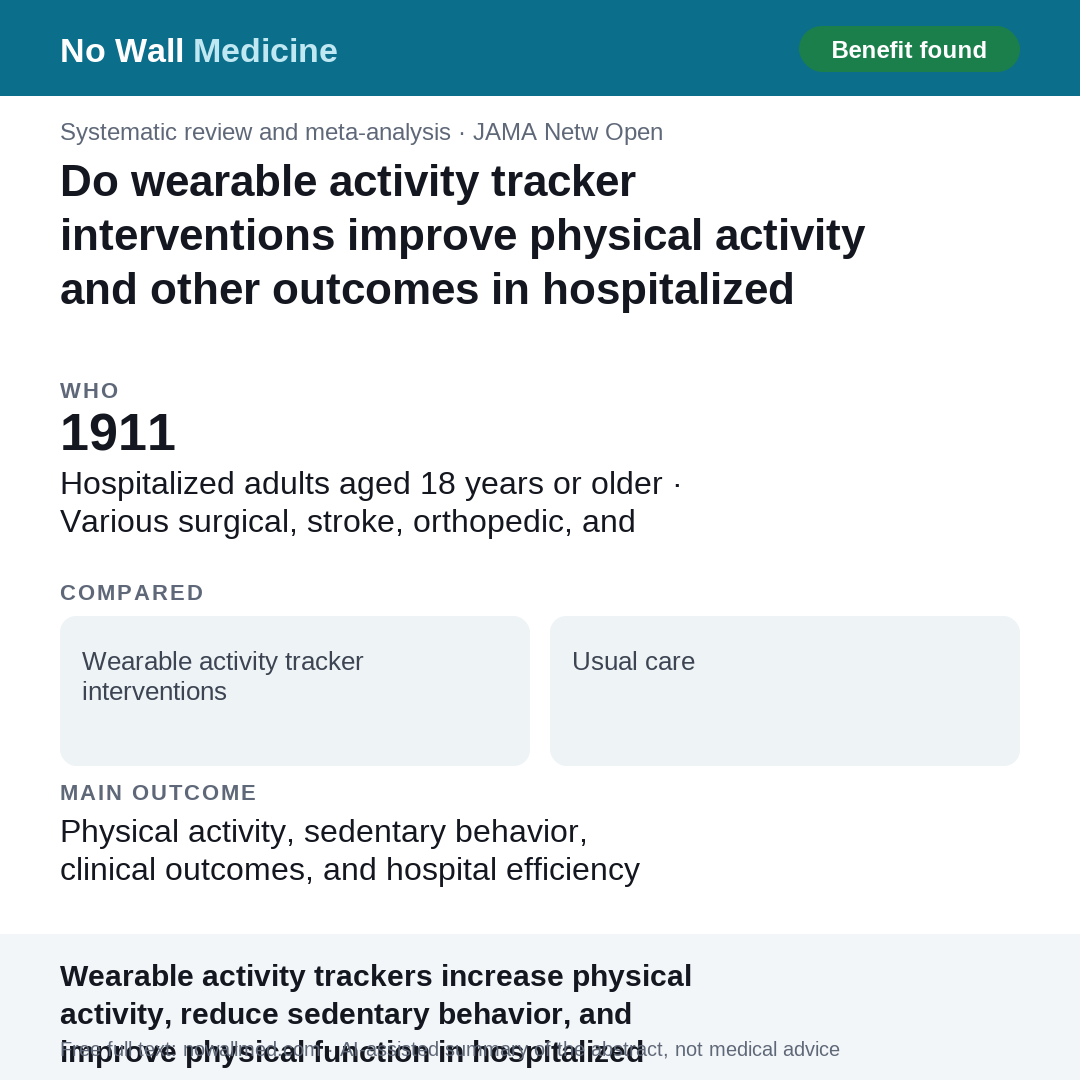
Do wearable activity tracker interventions improve physical activity and other outcomes in hospitalized adults?
Who
1911
Hospitalized adults aged 18 years or older · Various surgical, stroke, orthopedic, and medical cohorts
Compared
Wearable activity tracker interventions
Usual care
Main outcome
Physical activity, sedentary behavior, clinical outcomes, and hospital efficiency
Result: standardized mean difference 0.35 (95% CI 0.15 to 0.54) for physical activity
Bottom line: Wearable activity trackers increase physical activity, reduce sedentary behavior, and improve physical function in hospitalized patients.
JAMA Netw Open · 2023-06-01Download image
Clinical question: Do wearable activity tracker interventions improve physical activity and other outcomes in hospitalized adults?
Abstract
Importance
Low levels of physical activity during hospitalization are thought to contribute to a range of poor outcomes for patients. Using wearable activity trackers during hospitalization may help improve patient activity, sedentary behavior, and other outcomes. Objective
To evaluate the association of interventions that use wearable activity trackers during hospitalization with patient physical activity, sedentary behavior, clinical outcomes, and hospital efficiency outcomes. Data sources
OVID MEDLINE, CINAHL, Embase, EmCare, PEDro, SportDiscuss, and Scopus databases were searched from inception to March 2022. The Cochrane Central Register for Controlled trials, ClinicalTrials.gov, and World Health Organization Clinical Trials Registry were also searched for registered protocols. No language restrictions were imposed. Study selection
Randomized clinical trials and nonrandomized clinical trials of interventions that used wearable activity trackers to increase physical activity or reduce sedentary behavior in adults (aged 18 years or older) who were hospitalized were included. Data extraction and synthesis
Study selection, data extraction, and critical appraisal were conducted in duplicate. Data were pooled for meta-analysis using random-effects models. The Preferred Reporting Items for Systematic Reviews and Meta-analyses guideline was followed. Main outcomes and measures
The primary outcomes were objectively measured physical activity or sedentary behavior. Secondary outcomes included clinical outcomes (eg, physical function, pain, mental health), and hospital efficiency outcomes (eg, length of stay, readmission). Results
Fifteen studies with a total of 1911 participants were included, representing various surgical cohorts (4 studies), stroke rehabilitation (3 studies), orthopedic rehabilitation (3 studies), mixed rehabilitation (3 studies), and mixed medical (2 studies). All studies were included in meta-analyses. There was a significant association between wearable activity tracker interventions with higher overall physical activity (standardized mean difference, 0.35; 95% CI, 0.15 to 0.54; I2 = 72%; P < .002) and less sedentary behavior (mean difference, -35.46 min/d; 95% CI, -57.43 to -13.48 min/d; I2 = 0; P = .002), and a significant association between wearable activity tracker interventions with improvements in physical function (standardized mean difference, 0.27; 95% CI, 0.08 to 0.46; I2 = 0; P = .006) compared with usual care. There was no significant association between wearable activity tracker interventions with pain, mental health, length of stay, or readmission risk. Conclusions and relevance
In this systematic review and meta-analysis, interventions that used wearable activity trackers with patients who are hospitalized were associated with higher physical activity levels, less sedentary behavior, and better physical functioning compared with usual care.
Subject terms
Cite this article
Szeto K, Arnold J, Singh B, Gower B, Simpson CEM, Maher C. Interventions Using Wearable Activity Trackers to Improve Patient Physical Activity and Other Outcomes in Adults Who Are Hospitalized: A Systematic Review and Meta-analysis. JAMA Netw Open. 2023. doi:10.1001/jamanetworkopen.2023.18478
Spotted a mistake? Suggest a correction
Top studies every Monday
The week’s key trials and guidelines in your specialties, plus any topics you follow. By email, free.
Get the weekly digest