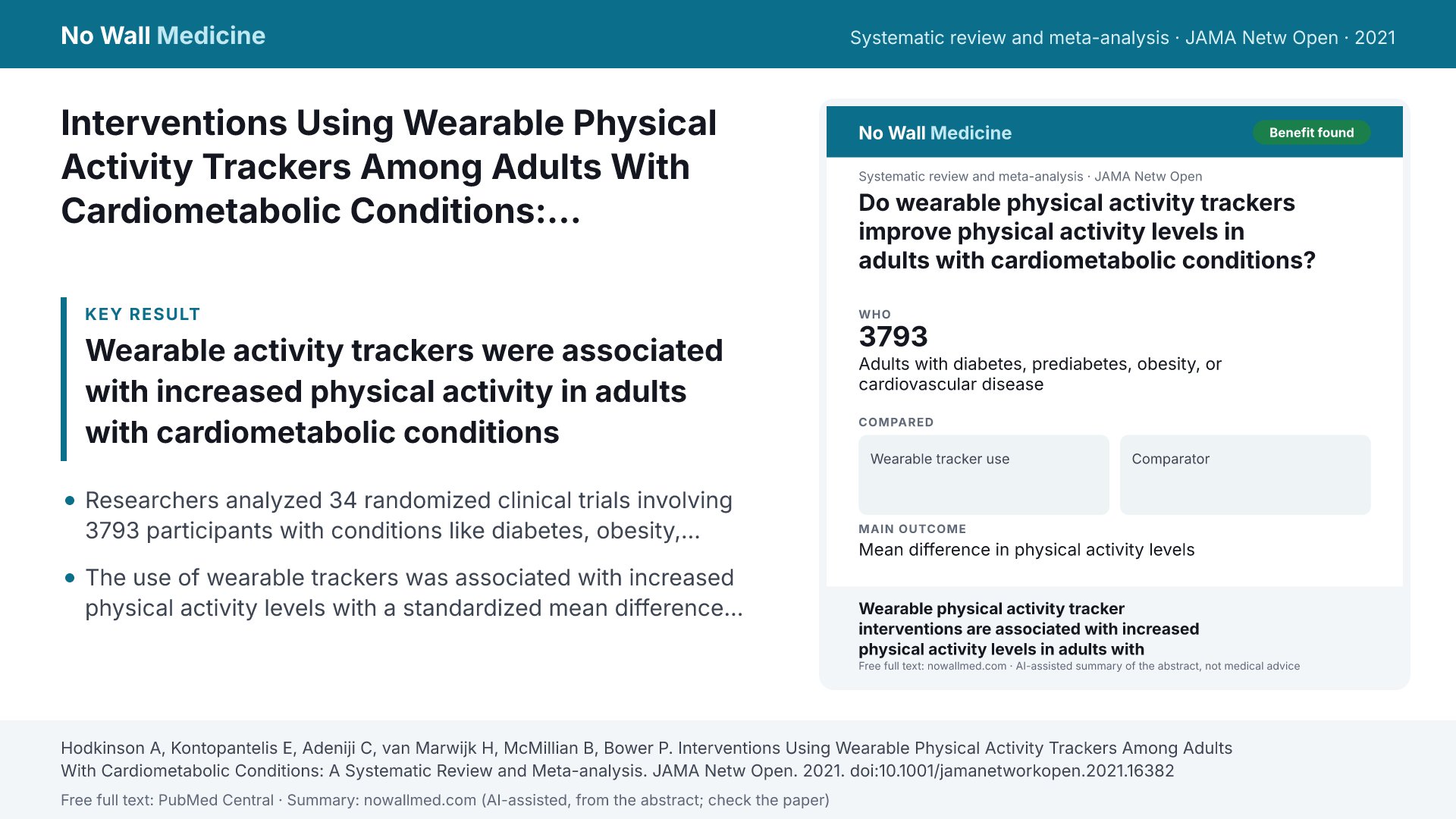
Interventions Using Wearable Physical Activity Trackers Among Adults With Cardiometabolic Conditions: A Systematic Review and Meta-analysis
Key result: Wearable activity trackers were associated with increased physical activity in adults with cardiometabolic conditions
Key points
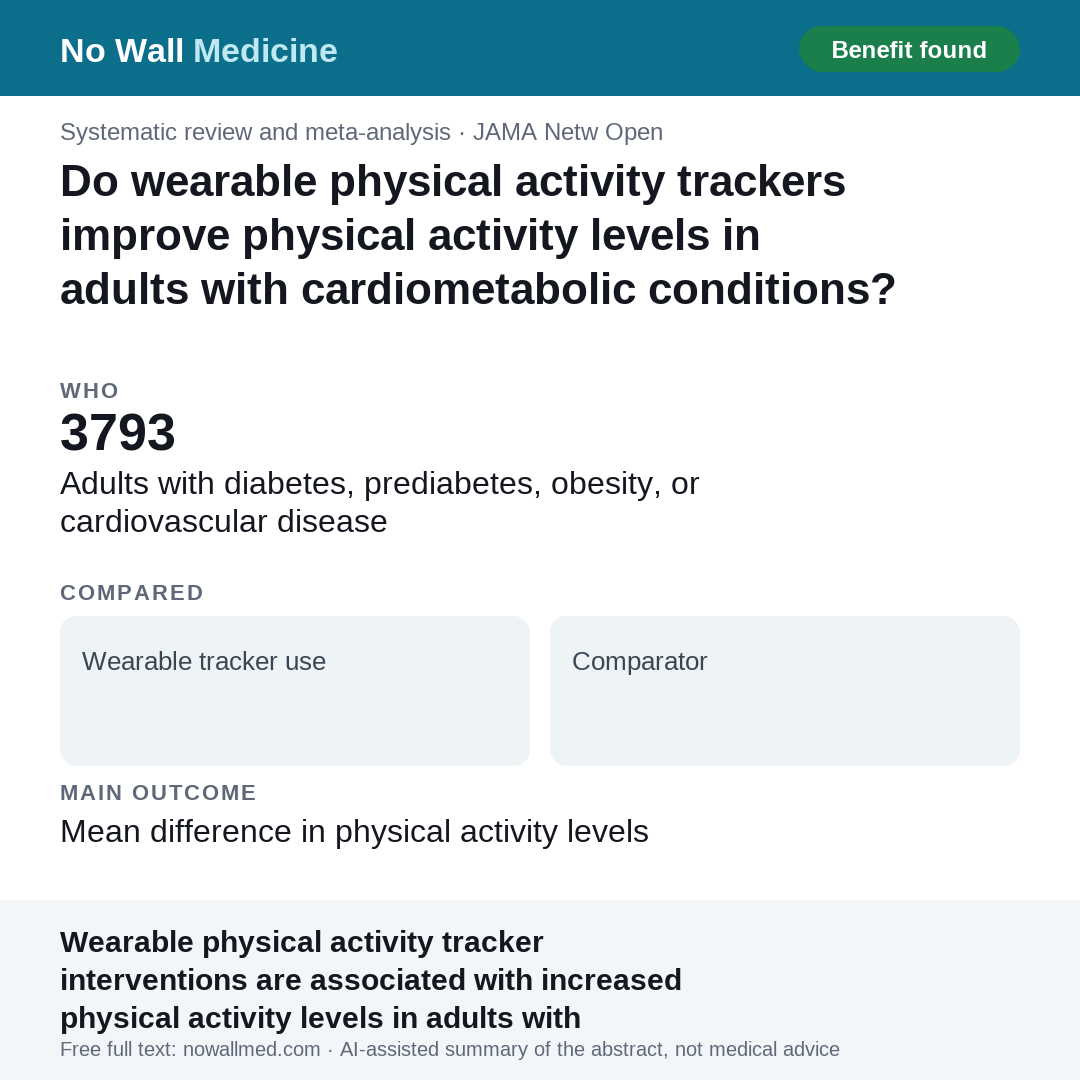
- Researchers analyzed 34 randomized clinical trials involving 3793 participants with conditions like diabetes, obesity, or cardiovascular disease.
- The use of wearable trackers was associated with increased physical activity levels with a standardized mean difference of 0.72.
- Increased activity levels were associated with interventions using pedometers, including men, and those involving face-to-face consultations with facilitators.
Why it matters: It was unknown if using wearable devices like fitness trackers or pedometers is associated with changes in physical activity for adults living with cardiometabolic conditions.
Discussion prompts
- Would these patients look like yours? Who was left out?
- Is the main outcome one that matters to patients?
- Is the difference large enough to change what you do?
Cite: Hodkinson A, Kontopantelis E, Adeniji C, van Marwijk H, McMillian B, Bower P. Interventions Using Wearable Physical Activity Trackers Among Adults With Cardiometabolic Conditions: A Systematic Review and Meta-analysis. JAMA Netw Open. 2021. doi:10.1001/jamanetworkopen.2021.16382
Free full text: PubMed Central · Summary and visual abstract: nowallmed.com/a/interventions-using-wearable-physical-activity-trackers-among-adults-bxi8dt/ (AI-assisted from the abstract; check the paper before relying on it).