Intracorporeal versus extracorporeal anastomosis in laparoscopic total gastrectomy: a systematic review and meta-analysis
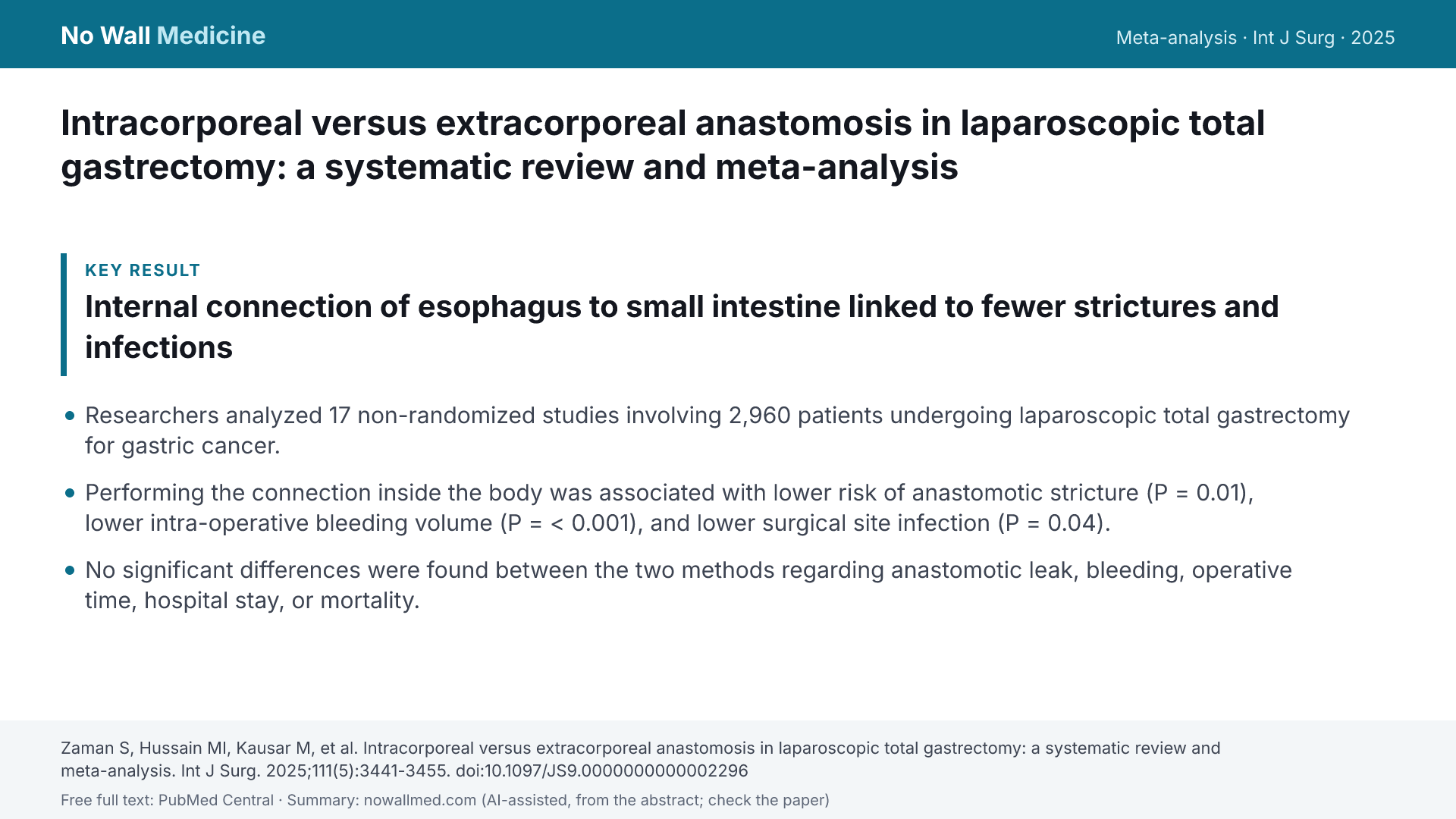
Key result: Internal connection of esophagus to small intestine linked to fewer strictures and infections
Key points
- Researchers analyzed 17 non-randomized studies involving 2,960 patients undergoing laparoscopic total gastrectomy for gastric cancer.
- Performing the connection inside the body was associated with lower risk of anastomotic stricture (P = 0.01), lower intra-operative bleeding volume (P = < 0.001), and lower surgical site infection (P = 0.04).
- No significant differences were found between the two methods regarding anastomotic leak, bleeding, operative time, hospital stay, or mortality.
Limitation the authors note: The authors note that future adequately powered randomized studies are needed to compare the two techniques.
Discussion prompts
- Would these patients look like yours? Who was left out?
- Is the main outcome one that matters to patients?
- Is the difference large enough to change what you do?
Cite: Zaman S, Hussain MI, Kausar M, et al. Intracorporeal versus extracorporeal anastomosis in laparoscopic total gastrectomy: a systematic review and meta-analysis. Int J Surg. 2025;111(5):3441-3455. doi:10.1097/JS9.0000000000002296
Free full text: PubMed Central · Summary and visual abstract: nowallmed.com/a/intracorporeal-versus-extracorporeal-anastomosis-in-laparoscopic-lrb6s7/ (AI-assisted from the abstract; check the paper before relying on it).