Intracranial atherosclerosis disease was associated with higher risks of cognitive impairment and dementia
Intracranial Atherosclerosis Disease Associated With Cognitive Impairment and Dementia: Systematic Review and Meta-Analysis
Systematic review and meta-analysisBenefit found
Is intracranial atherosclerosis disease associated with cognitive impairment and dementia?
Who
11184
Individuals with intracranial atherosclerosis disease
Compared
Intracranial atherosclerosis disease
Controls
Main outcome
Cognitive impairment and dementia
Result: 1.87 (95% CI 1.49-2.35)
Bottom line: Intracranial atherosclerosis disease is associated with greater cognitive impairment and dementia across age, sex, and race.
J Am Heart Assoc · 2023-11-20Download image
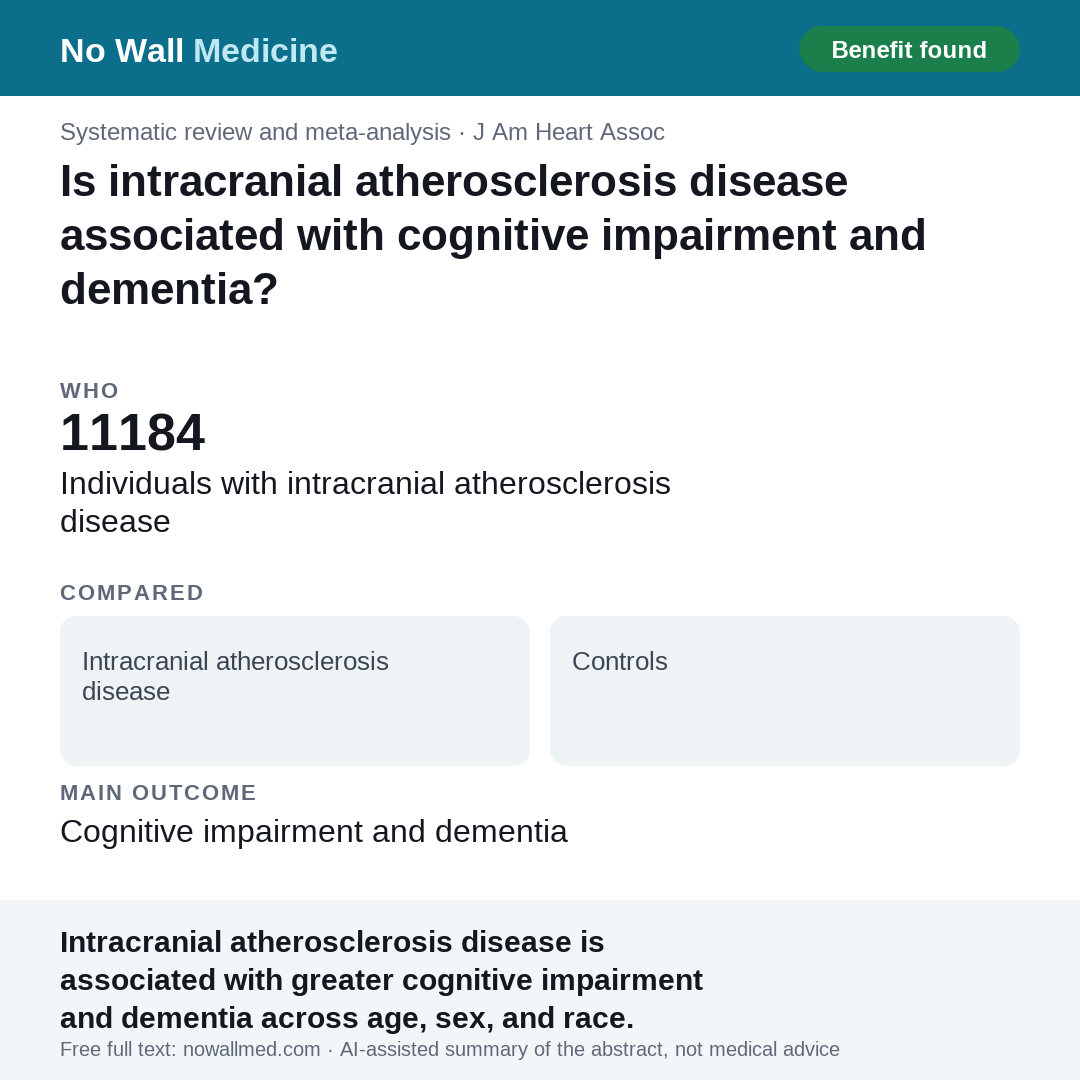
Clinical question: Is intracranial atherosclerosis disease associated with cognitive impairment and dementia?
Why it matters: Previous studies evaluating the link between intracranial atherosclerosis disease and cognitive impairment have produced mixed results.
Key points
- Researchers analyzed 22 studies involving 11,184 individuals with an average age range of 59.8-87.6 years to examine the link between intracranial atherosclerosis disease and cognitive issues.
- The pooled analysis showed that intracranial atherosclerosis disease, defined as at least 50% narrowing in one intracranial vessel, was associated with greater cognitive impairment (1.87 [95% CI, 1.49-2.35]).
- Postmortem studies indicated that patients with Alzheimer disease and vascular dementia had a higher burden of intracranial atherosclerosis disease compared to controls.
Headline and key points written with AI from the paper’s abstract, with every number checked against it. Read the paper before relying on them.
Topics
Cite this article
Sabayan B, Goudarzi R, Ji Y, Borhani-Haghighi A, Olson-Bullis BA, Murray AM. Intracranial Atherosclerosis Disease Associated With Cognitive Impairment and Dementia: Systematic Review and Meta-Analysis. J Am Heart Assoc. 2023. doi:10.1161/JAHA.123.032506
Spotted a mistake? Suggest a correction
Top studies every Monday
The week’s key trials and guidelines in your specialties, plus any topics you follow. By email, free.
Get the weekly digest