Intramuscular epinephrine was associated with improved survival in one adult out-of-hospital cardiac arrest study
Intramuscular epinephrine in cardiac arrest: A systematic review
Systematic reviewBenefit found
Is intramuscular epinephrine better than intravenous or intraosseous epinephrine in cardiac arrest?
Who
Children, adults, and animals with cardiac arrest
Compared
Intramuscular epinephrine: survival 11.0 %
Intravenous or intraosseous epinephrine: survival 7.0 %
Main outcome
survival and neurologically favourable survival
Result: aOR 1.73, 95 % CI 1.10-2.71
Bottom line: One human study suggested intramuscular epinephrine improved survival compared to intravenous or intraosseous administration.
Limitation: Low certainty of evidence and moderate risk of bias across included studies.
Resusc Plus · 2025-10-15Download image
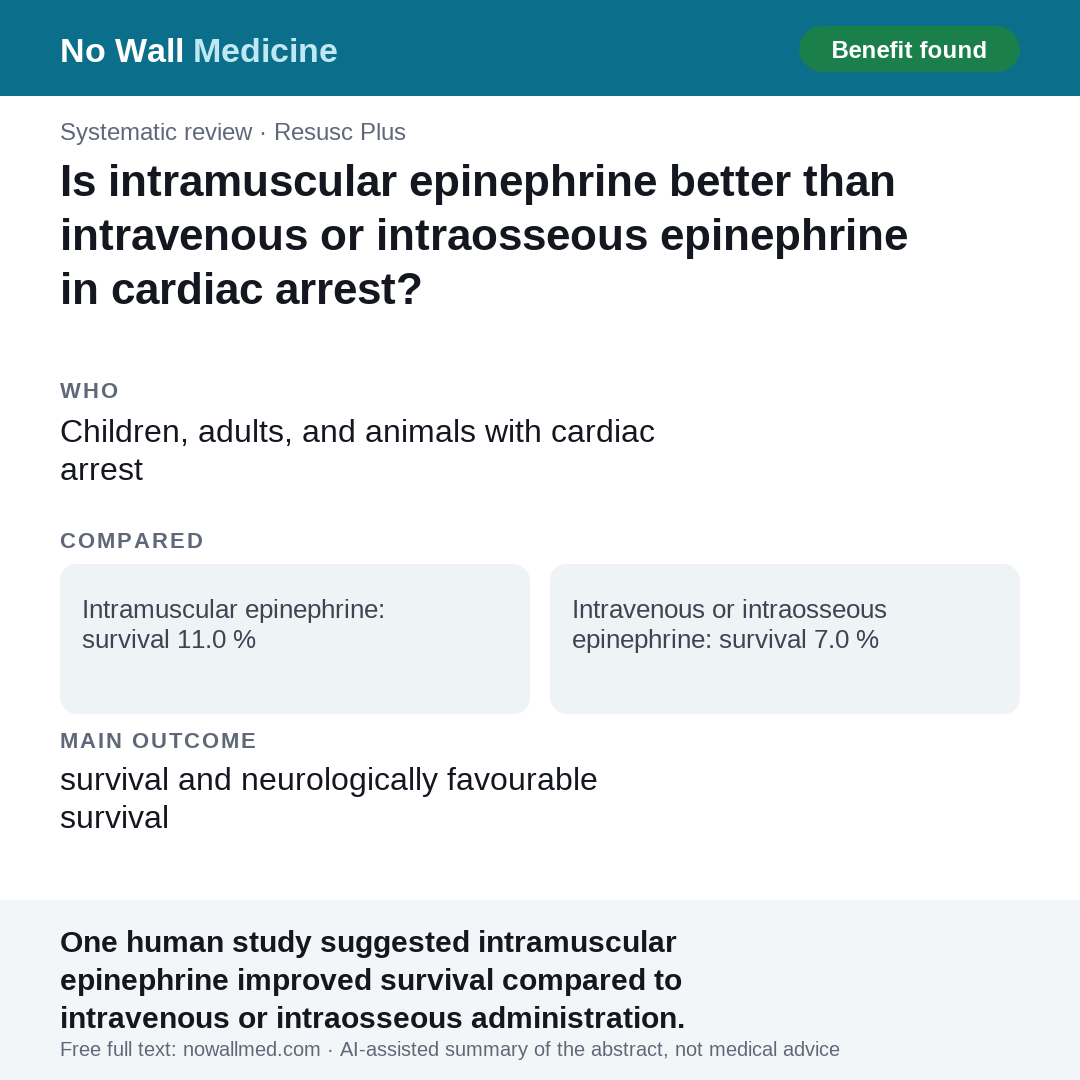
Clinical question: Is intramuscular epinephrine better than intravenous or intraosseous epinephrine in cardiac arrest?
Why it matters: Intramuscular epinephrine is not currently indicated for cardiac arrest, though it may be faster and easier to administer than intravenous or intraosseous routes.
Key points
- Researchers reviewed one human before-and-after study of 1405 adults with out-of-hospital cardiac arrest and five animal studies.
- In the human study, intramuscular epinephrine was associated with 11.0% survival compared to 7.0% for intravenous or intraosseous epinephrine.
- Neurologically favourable survival was associated with intramuscular epinephrine at 9.8% compared to 6.2% for intravenous or intraosseous administration.
Limitation the authors note: The certainty of evidence was low and the risk of bias was moderate across all included studies.
Headline and key points written with AI from the paper’s abstract, with every number checked against it. Read the paper before relying on them.
Cite this article
Alshaikh R, Sheikh A, Fleming C, Garcia-Bournissen F, Tijssen JA. Intramuscular epinephrine in cardiac arrest: A systematic review. Resusc Plus. 2025. doi:10.1016/j.resplu.2025.101133
Spotted a mistake? Suggest a correction
Top studies every Monday
The week’s key trials and guidelines in your specialties, plus any topics you follow. By email, free.
Get the weekly digest