Intraoperative Oxygen Concentration and Neurocognition after Cardiac Surgery
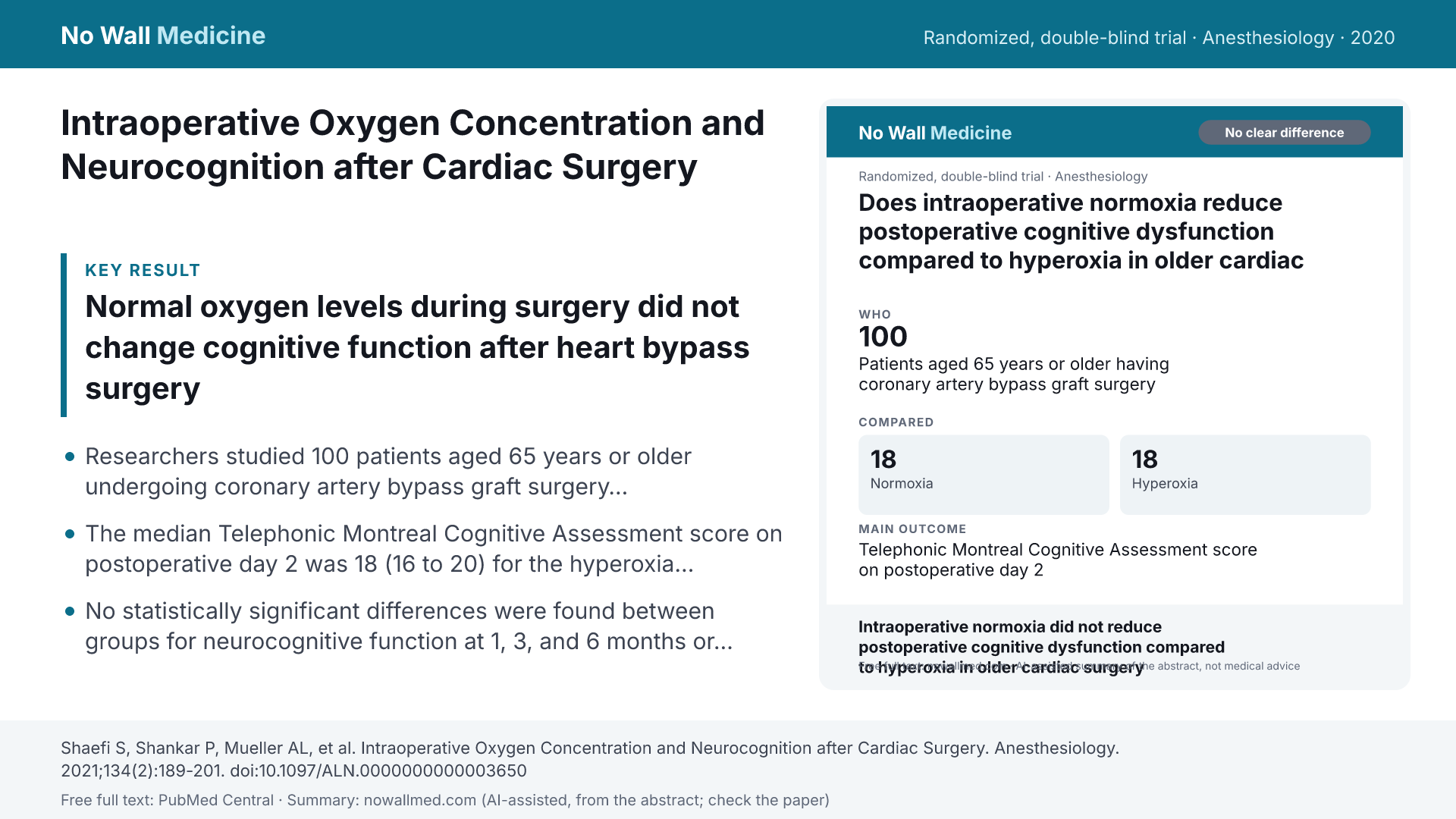
Key result: Normal oxygen levels during surgery did not change cognitive function after heart bypass surgery
Randomized, double-blind trialNo clear difference
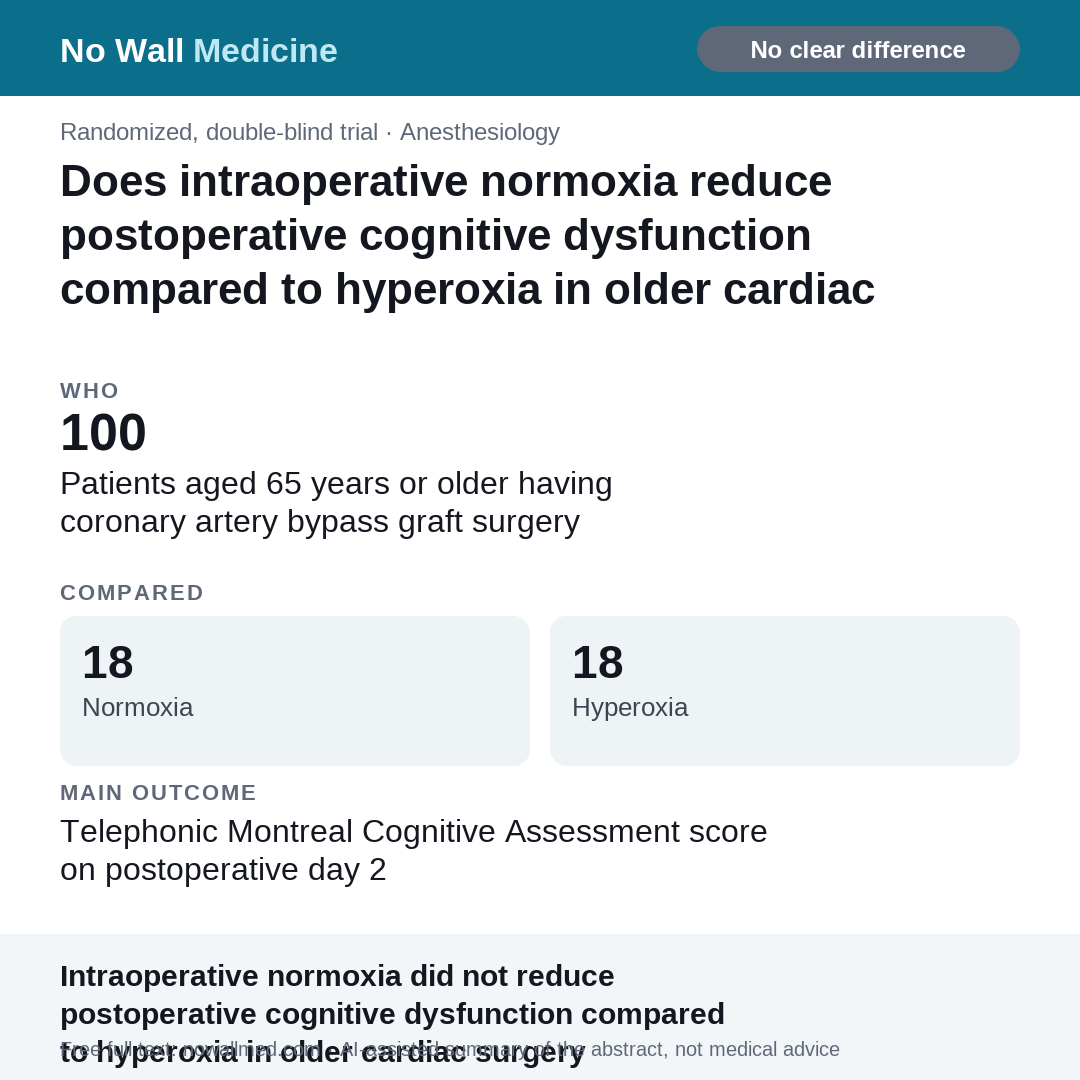
Does intraoperative normoxia reduce postoperative cognitive dysfunction compared to hyperoxia in older cardiac surgery patients?
Who
100
Patients aged 65 years or older having coronary artery bypass graft surgery
Compared
18Normoxia (14 to 20)
18Hyperoxia (16 to 20)
Main outcome
Telephonic Montreal Cognitive Assessment score on postoperative day 2
Bottom line: Intraoperative normoxia did not reduce postoperative cognitive dysfunction compared to hyperoxia in older cardiac surgery patients.
Anesthesiology · 2020-12-18Download image
Key points
- Researchers studied 100 patients aged 65 years or older undergoing coronary artery bypass graft surgery with cardiopulmonary bypass.
- The median Telephonic Montreal Cognitive Assessment score on postoperative day 2 was 18 (16 to 20) for the hyperoxia group and 18 (14 to 20) for the normoxia group.
- No statistically significant differences were found between groups for neurocognitive function at 1, 3, and 6 months or for secondary outcomes.
Discussion prompts
- Would these patients look like yours? Who was left out?
- Is the main outcome one that matters to patients?
- Is the difference large enough to change what you do?
Cite: Shaefi S, Shankar P, Mueller AL, et al. Intraoperative Oxygen Concentration and Neurocognition after Cardiac Surgery. Anesthesiology. 2020. doi:10.1097/ALN.0000000000003650
Free full text: PubMed Central · Summary and visual abstract: nowallmed.com/a/intraoperative-oxygen-concentration-and-neurocognition-after-cardiac-rspueh/ (AI-assisted from the abstract; check the paper before relying on it).