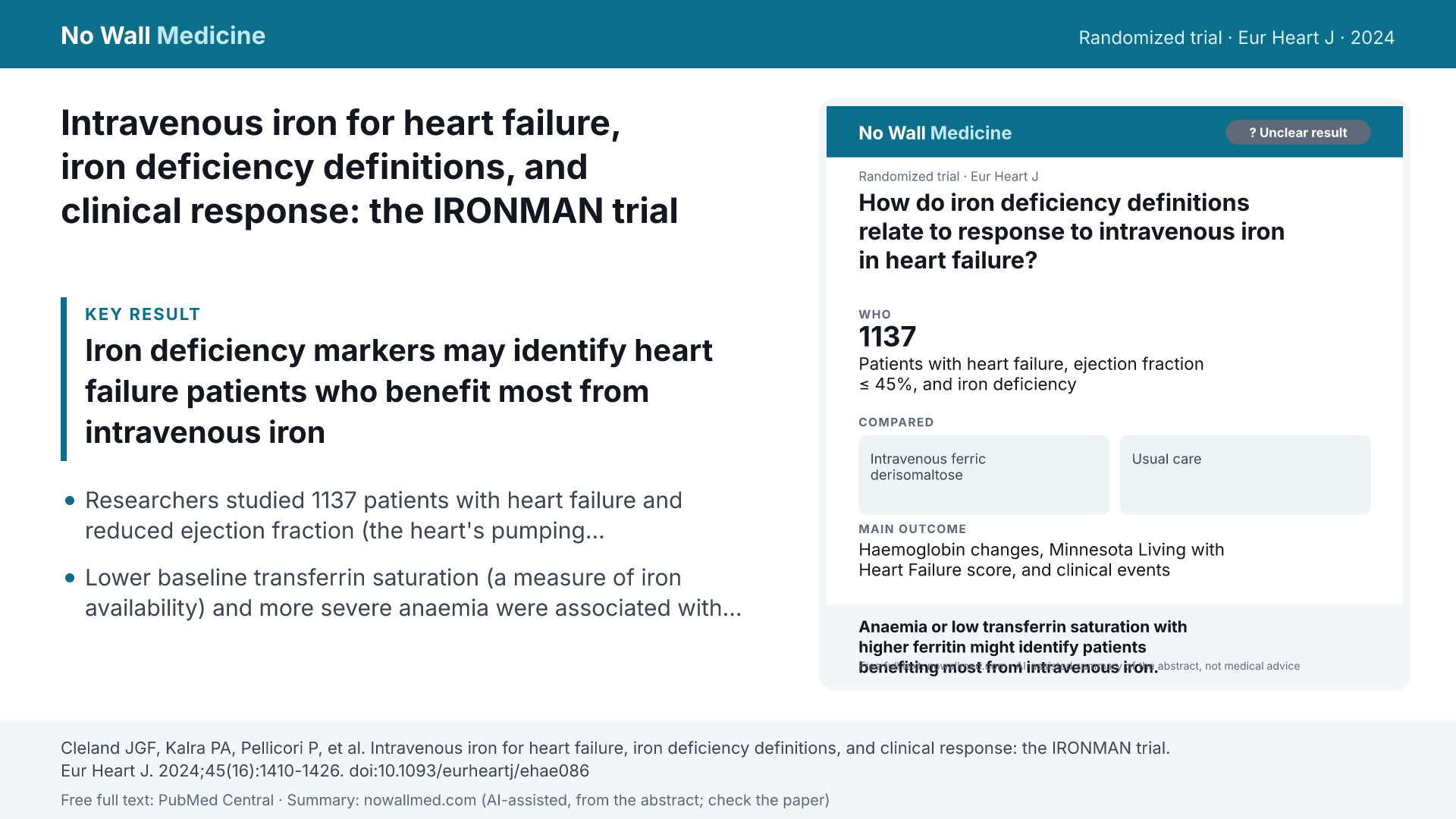
Iron deficiency markers may identify heart failure patients who benefit most from intravenous iron
Intravenous iron for heart failure, iron deficiency definitions, and clinical response: the IRONMAN trial
Randomized trialUnclear result
How do iron deficiency definitions relate to response to intravenous iron in heart failure?
Who
1137
Patients with heart failure, ejection fraction ≤ 45%, and iron deficiency
Compared
Intravenous ferric derisomaltose
Usual care
Main outcome
Haemoglobin changes, Minnesota Living with Heart Failure score, and clinical events
Bottom line: Anaemia or low transferrin saturation with higher ferritin might identify patients benefiting most from intravenous iron.
Eur Heart J · 2024-03-06Download image
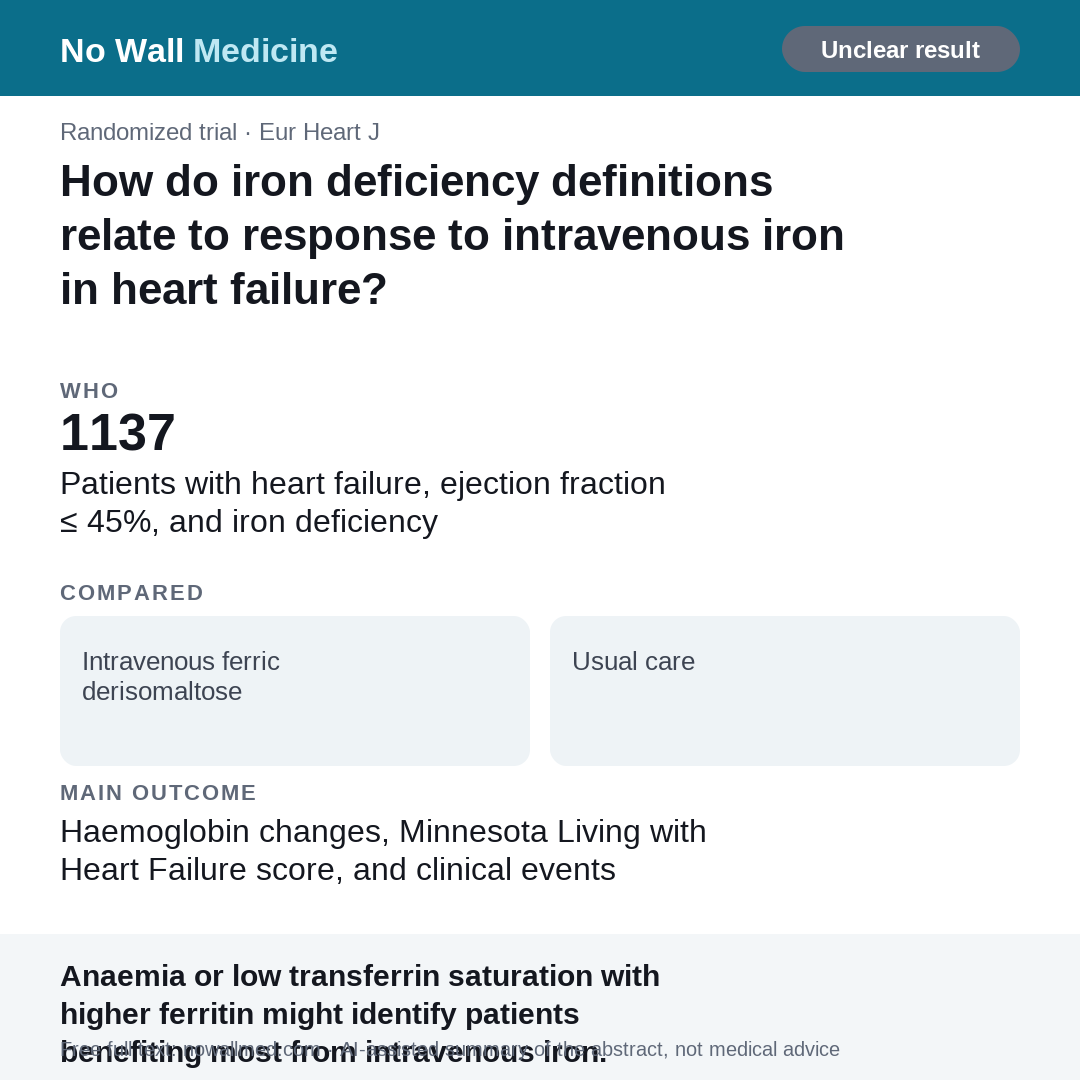
Clinical question: How do iron deficiency definitions relate to response to intravenous iron in heart failure?
Why it matters: It is unknown how specific blood test levels for iron deficiency and anaemia influence how patients with heart failure respond to intravenous iron therapy.
Key points
- Researchers studied 1137 patients with heart failure and reduced ejection fraction (the heart's pumping ability) randomized to receive intravenous ferric derisomaltose or usual care.
- Lower baseline transferrin saturation (a measure of iron availability) and more severe anaemia were associated with a greater rise in haemoglobin after iron treatment.
- The absence of anaemia or a transferrin saturation of 20% or higher was associated with lower event rates and little evidence of benefit from intravenous iron.
Headline and key points written with AI from the paper’s abstract, with every number checked against it. Read the paper before relying on them.
Was this summary helpful?
Subject terms
Cite this article
Cleland JGF, Kalra PA, Pellicori P, et al. Intravenous iron for heart failure, iron deficiency definitions, and clinical response: the IRONMAN trial. Eur Heart J. 2024. doi:10.1093/eurheartj/ehae086
Spotted a mistake? Suggest a correction