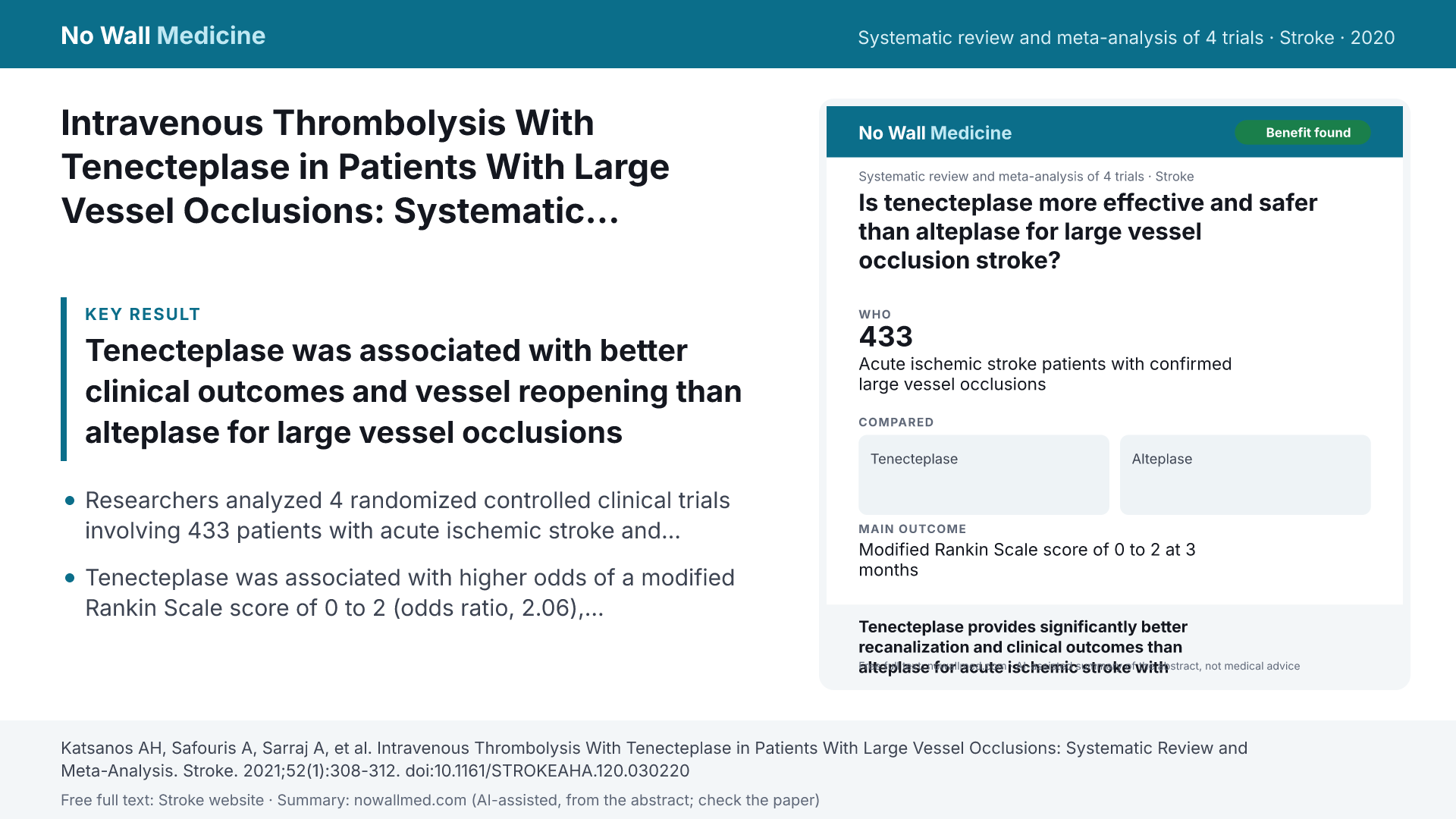
Intravenous Thrombolysis With Tenecteplase in Patients With Large Vessel Occlusions: Systematic Review and Meta-Analysis
Key result: Tenecteplase was associated with better clinical outcomes and vessel reopening than alteplase for large vessel occlusions
Systematic review and meta-analysis of 4 trialsBenefit found
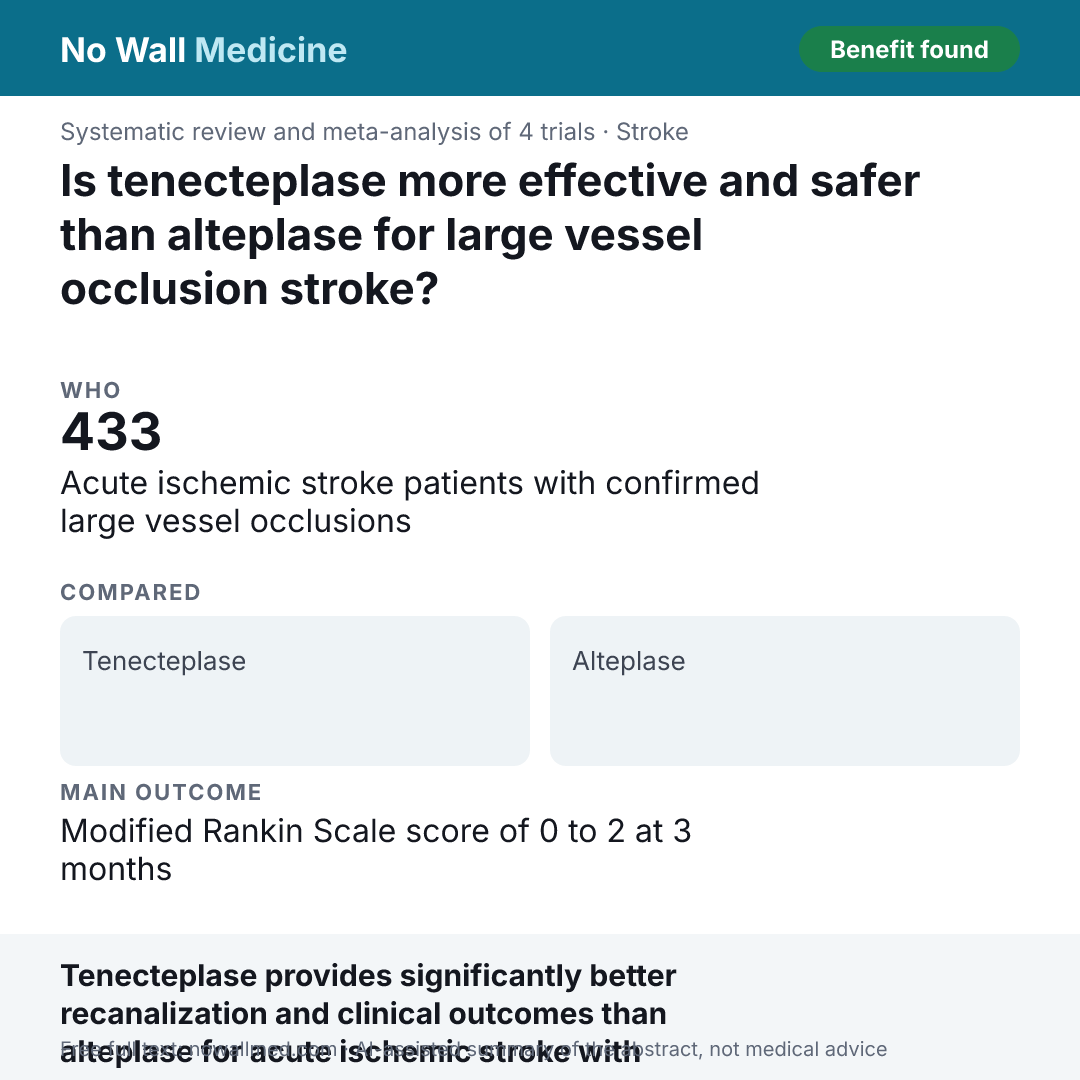
Is tenecteplase more effective and safer than alteplase for large vessel occlusion stroke?
Who
433
Acute ischemic stroke patients with confirmed large vessel occlusions
Compared
Tenecteplase
Alteplase
Main outcome
Modified Rankin Scale score of 0 to 2 at 3 months
Result: odds ratio 2.06 (95% CI 1.15-3.69)
Bottom line: Tenecteplase provides significantly better recanalization and clinical outcomes than alteplase for acute ischemic stroke with large vessel occlusions.
Stroke · 2020-12-04 · Save PNG
Key points
- Researchers analyzed 4 randomized controlled clinical trials involving 433 patients with acute ischemic stroke and confirmed large vessel occlusions.
- Tenecteplase was associated with higher odds of a modified Rankin Scale score of 0 to 2 (odds ratio, 2.06), successful recanalization (odds ratio, 3.05), and functional improvement (common odds ratio, 1.84) at 3 months.
- No difference was detected between the two treatments regarding symptomatic intracranial hemorrhage, any intracranial hemorrhage, or all-cause mortality at 3 months.
Discussion prompts
- Would these patients look like yours? Who was left out?
- Is the main outcome one that matters to patients?
- Is the difference large enough to change what you do?
Cite: Katsanos AH, Safouris A, Sarraj A, et al. Intravenous Thrombolysis With Tenecteplase in Patients With Large Vessel Occlusions: Systematic Review and Meta-Analysis. Stroke. 2021;52(1):308-312. doi:10.1161/STROKEAHA.120.030220
Free full text: Stroke website · Summary and visual abstract: nowallmed.com/a/intravenous-thrombolysis-with-tenecteplase-in-patients-with-large-rxt7v4/ (AI-assisted from the abstract; check the paper before relying on it).