Intravenous vitamin C administration to patients with septic shock: a pilot randomised controlled trial
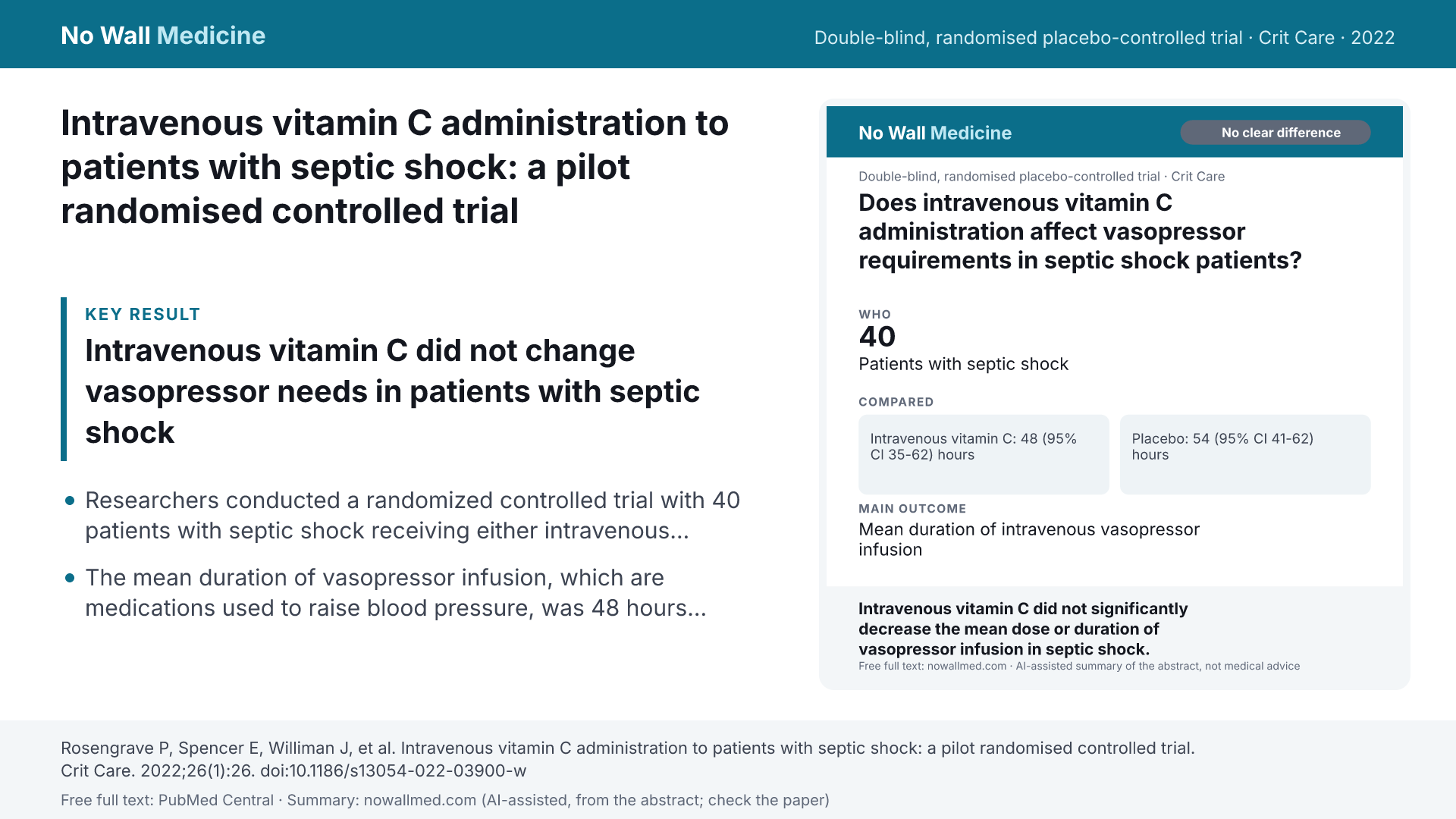
Key result: Intravenous vitamin C did not change vasopressor needs in patients with septic shock
Double-blind, randomised placebo-controlled trialNo clear difference
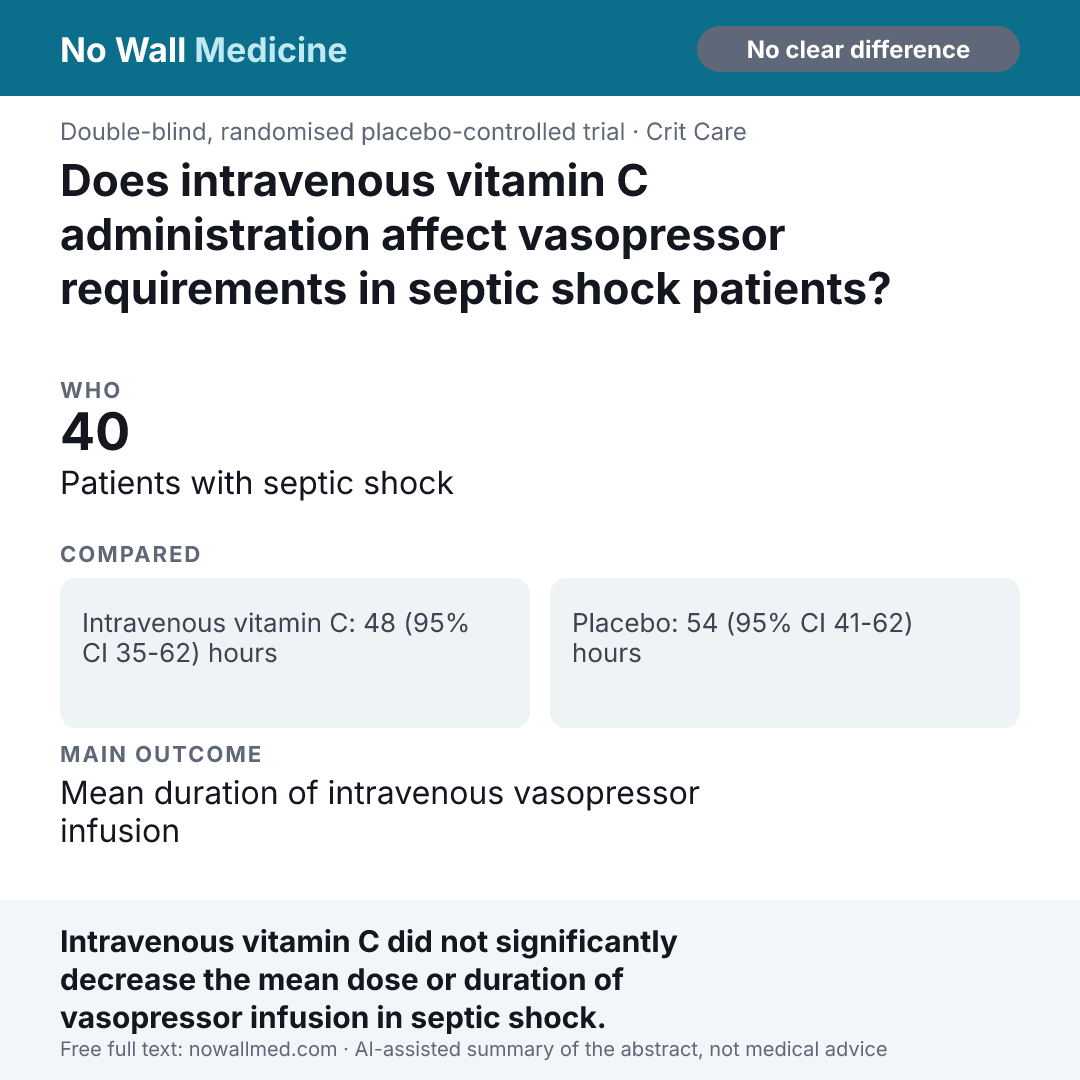
Does intravenous vitamin C administration affect vasopressor requirements in septic shock patients?
Who
40
Patients with septic shock
Compared
Intravenous vitamin C: 48 (95% CI 35-62) hours
Placebo: 54 (95% CI 41-62) hours
Main outcome
Mean duration of intravenous vasopressor infusion
Bottom line: Intravenous vitamin C did not significantly decrease the mean dose or duration of vasopressor infusion in septic shock.
Limitation: Further research considering intervention timing, dose, duration, and location may provide more definitive evidence.
Crit Care · 2022-01-25 · Save PNG
Key points
- Researchers conducted a randomized controlled trial with 40 patients with septic shock receiving either intravenous vitamin C or a placebo.
- The mean duration of vasopressor infusion, which are medications used to raise blood pressure, was 48 hours for vitamin C and 54 hours for placebo.
- No significant differences were found between groups regarding mortality, Sequential Organ Failure Assessment scores, or length of stay in the hospital or intensive care unit.
Discussion prompts
- Would these patients look like yours? Who was left out?
- Is the main outcome one that matters to patients?
- Is the difference large enough to change what you do?
Cite: Rosengrave P, Spencer E, Williman J, et al. Intravenous vitamin C administration to patients with septic shock: a pilot randomised controlled trial. Crit Care. 2022;26(1):26. doi:10.1186/s13054-022-03900-w
Free full text: PubMed Central · Summary and visual abstract: nowallmed.com/a/intravenous-vitamin-c-administration-to-patients-with-septic-shock-a-e5gc35/ (AI-assisted from the abstract; check the paper before relying on it).