Vancomycin powder placed in wounds was associated with lower infection rates after joint replacement surgery
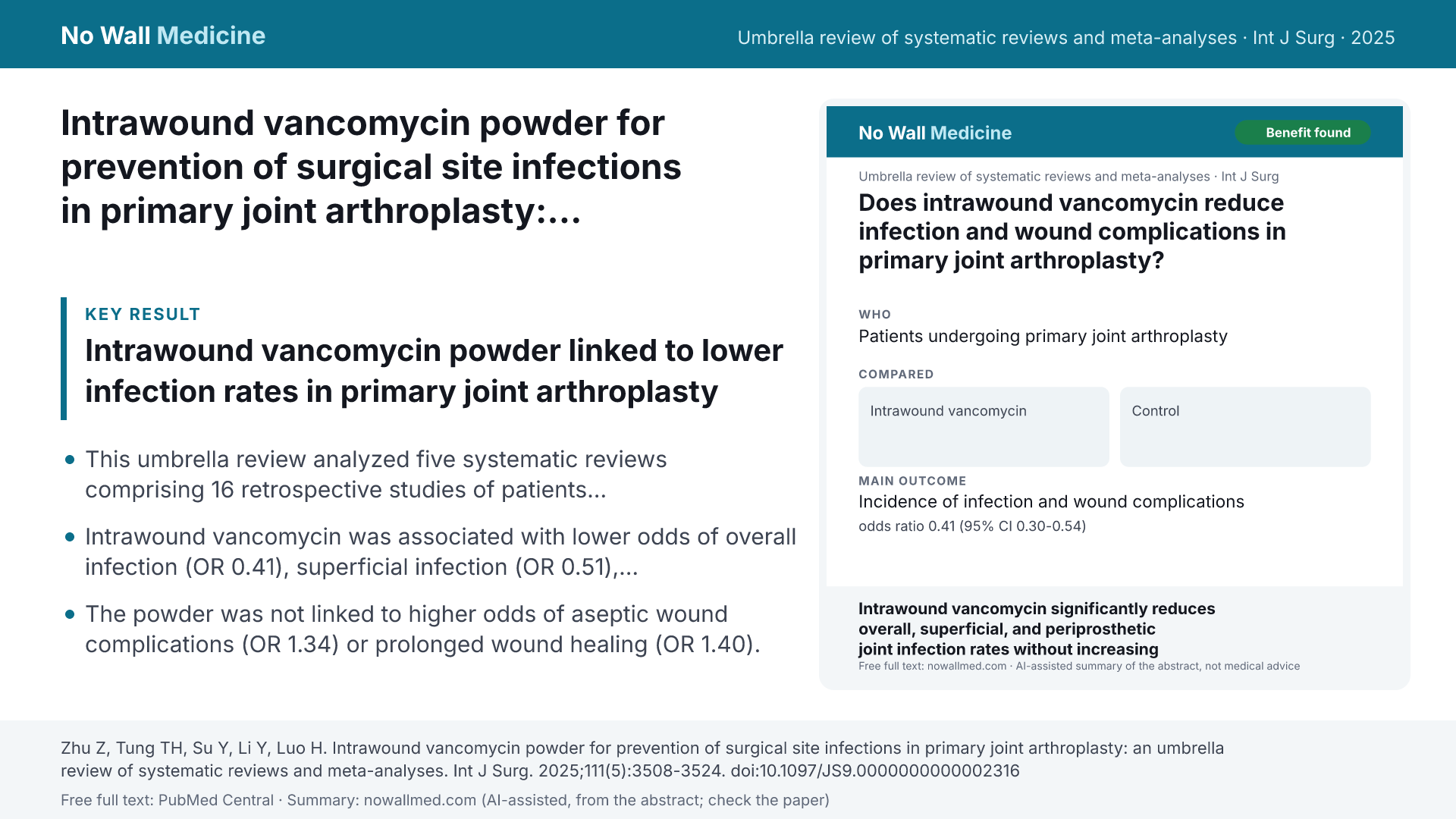
Intrawound vancomycin powder for prevention of surgical site infections in primary joint arthroplasty: an umbrella review of systematic reviews and meta-analyses
Umbrella review of systematic reviews and meta-analysesBenefit found
Does intrawound vancomycin reduce infection and wound complications in primary joint arthroplasty?
Who
Patients undergoing primary joint arthroplasty
Compared
Intrawound vancomycin
Control
Main outcome
Incidence of infection and wound complications
Result: odds ratio 0.41 (95% CI 0.30-0.54)
Bottom line: Intrawound vancomycin significantly reduces overall, superficial, and periprosthetic joint infection rates without increasing aseptic wound complications.
Limitation: Inclusion of studies with varying quality requires findings to be interpreted with caution.
Int J Surg · 2025-05-01Download image
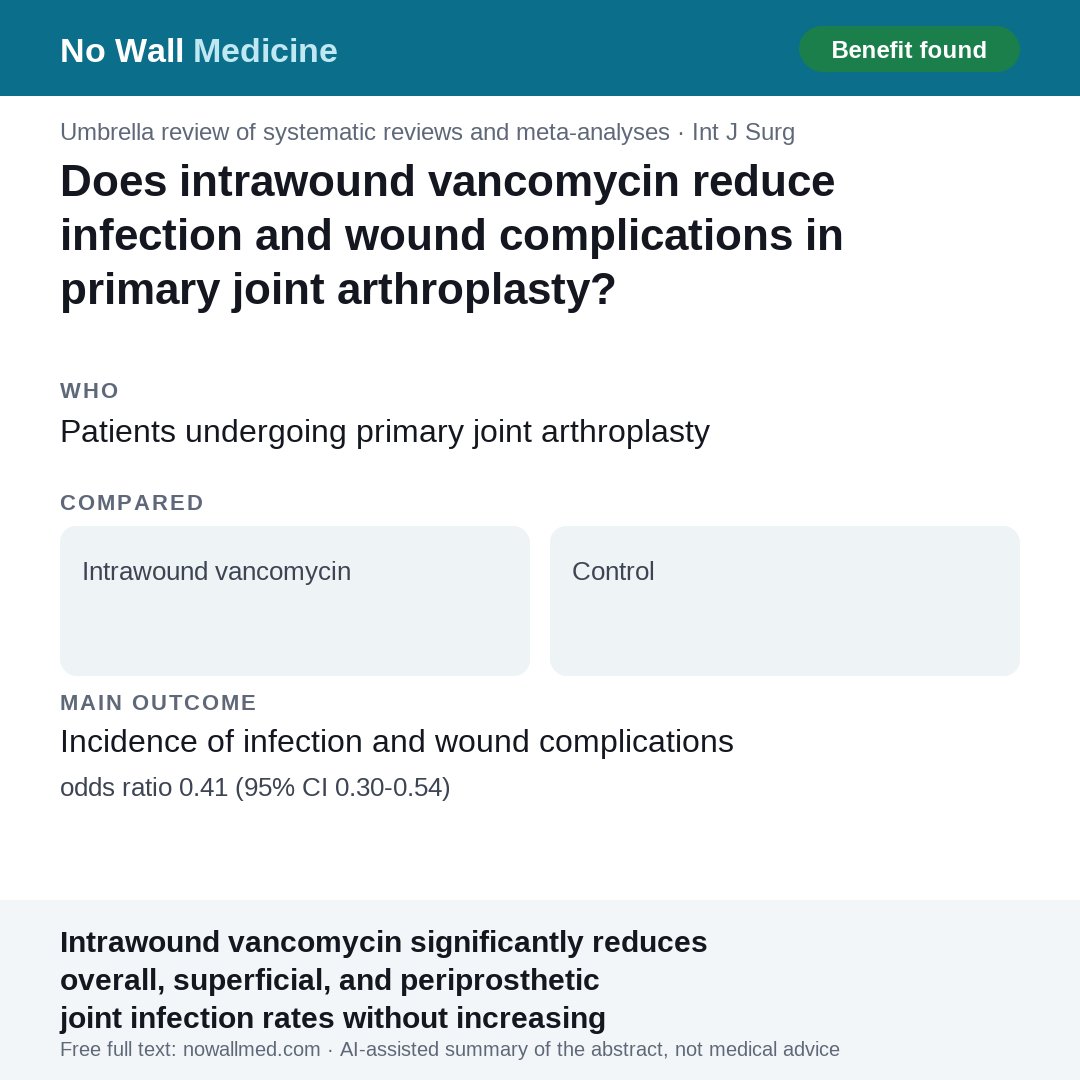
Clinical question: Does intrawound vancomycin reduce infection and wound complications in primary joint arthroplasty?
Why it matters: The effectiveness and safety of placing vancomycin powder directly into surgical wounds for primary joint replacement patients remains a subject of investigation.
Key points
- This umbrella review of five systematic reviews analyzed data from 16 retrospective studies regarding vancomycin powder used during primary joint replacement surgery.
- The use of vancomycin was associated with lower overall infection rates (OR: 0.41; 95% CI: 0.30-0.54, P < 0.001) and lower periprosthetic joint infection rates (OR: 0.38; 95% CI: 0.28-0.52, P < 0.001).
- Vancomycin was not associated with an increased risk of aseptic wound complications (OR: 1.34; 95% CI: 0.88-2.04, P = 0.17) or prolonged wound healing (OR: 1.40; 95% CI: 0.87-2.26, P = 0.17).
Limitation the authors note: The authors state that the included studies had varying quality, so the findings should be interpreted with caution.
Headline and key points written with AI from the paper’s abstract, with every number checked against it. Read the paper before relying on them.
Was this summary helpful?
Subject terms
Cite this article
Zhu Z, Tung TH, Su Y, Li Y, Luo H. Intrawound vancomycin powder for prevention of surgical site infections in primary joint arthroplasty: an umbrella review of systematic reviews and meta-analyses. Int J Surg. 2025. doi:10.1097/JS9.0000000000002316
Spotted a mistake? Suggest a correction
Top studies every Monday
The week’s key trials and guidelines in your specialties, plus any topics you follow. By email, free.
Get the weekly digest