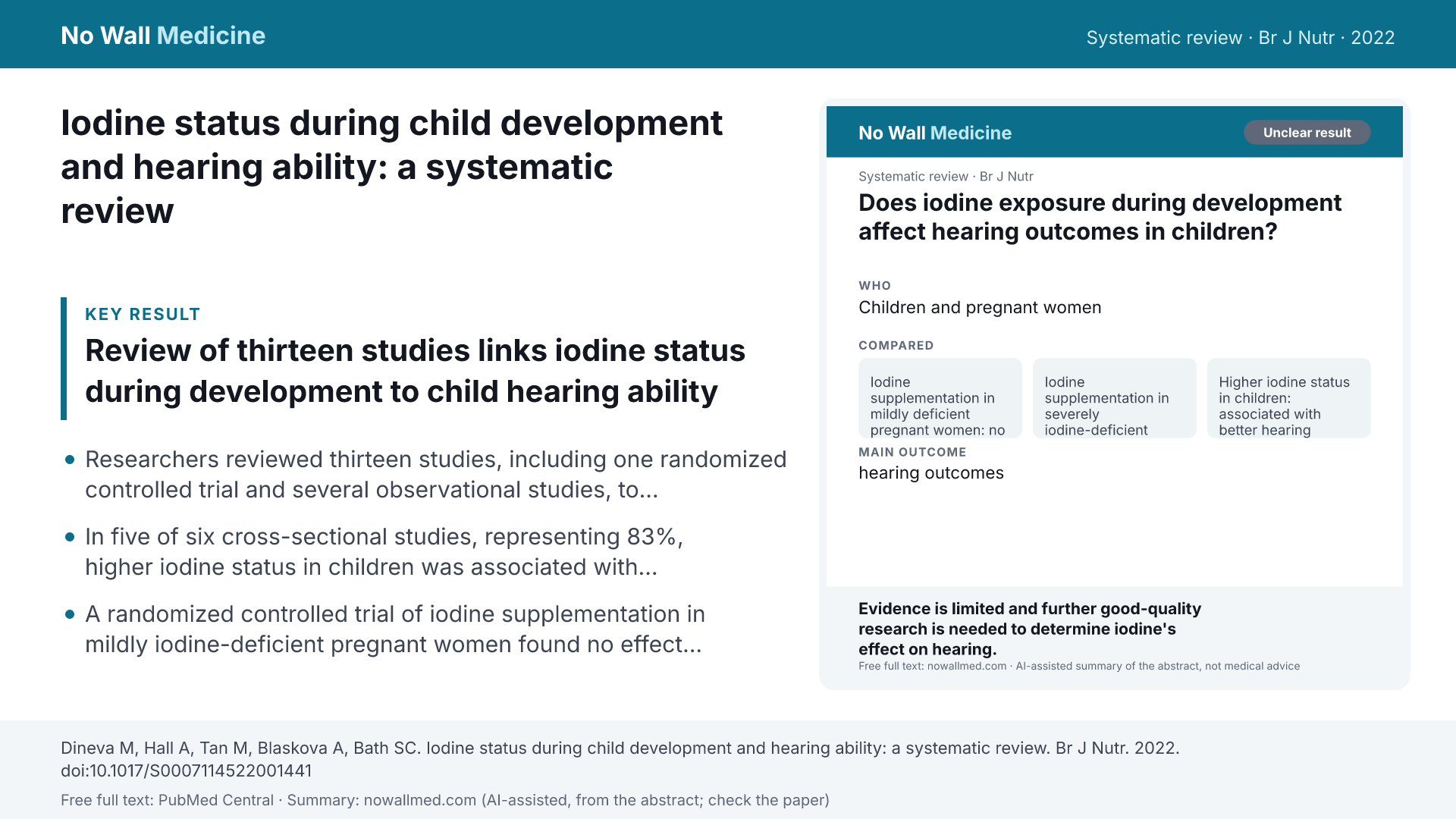
Iodine status during child development and hearing ability: a systematic review
Key result: Review of thirteen studies links iodine status during development to child hearing ability
Key points
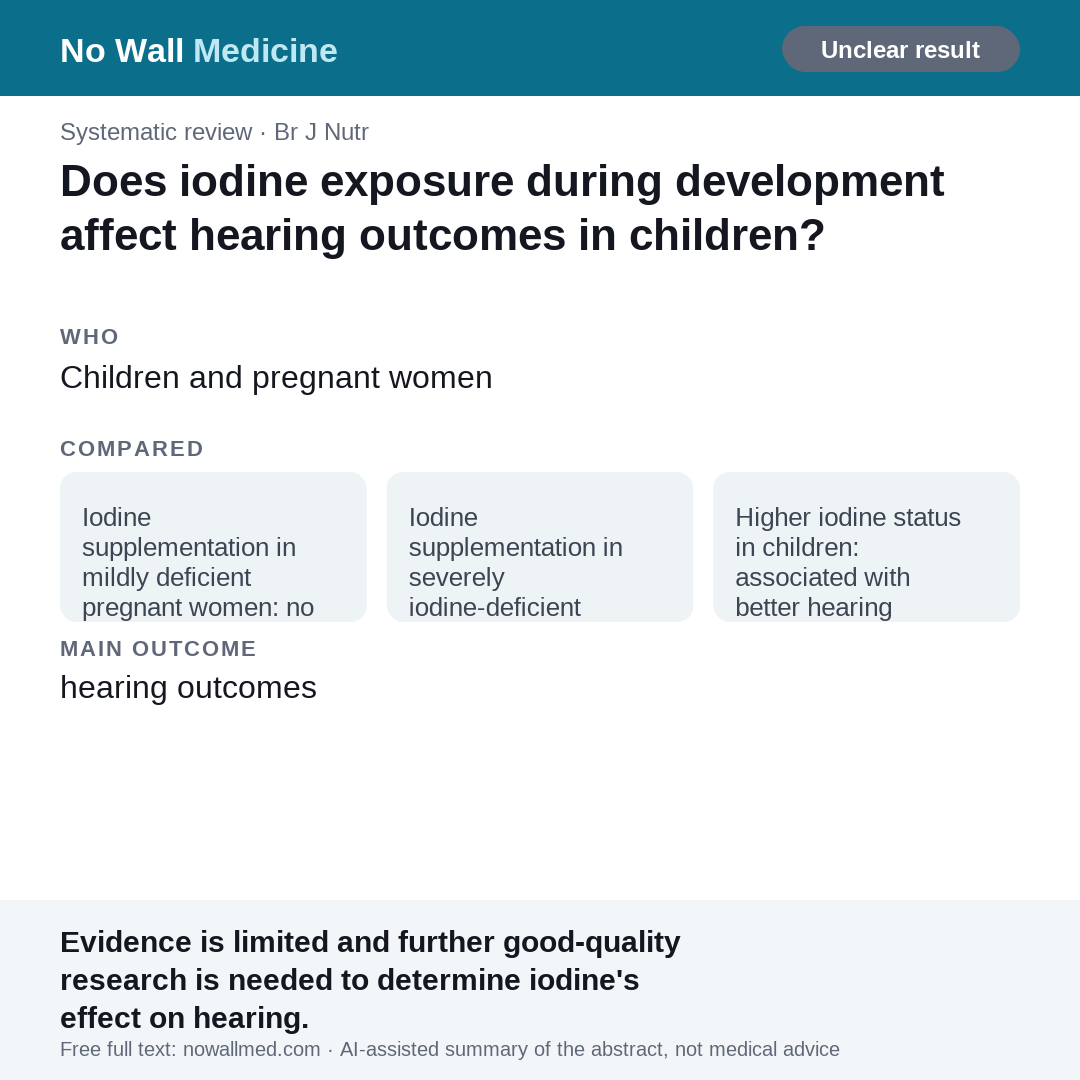
- Researchers reviewed thirteen studies, including one randomized controlled trial and several observational studies, to examine the link between iodine exposure and hearing outcomes.
- In five of six cross-sectional studies, representing 83%, higher iodine status in children was associated with better hearing.
- A randomized controlled trial of iodine supplementation in mildly iodine-deficient pregnant women found no effect on offspring hearing thresholds.
Why it matters: The range of effects that suboptimal iodine intake during auditory development has on the hearing ability of children is less clear.
Limitation the authors note: Only three of the thirteen studies were of low risk of bias or of good quality, which limited the ability to draw firm conclusions.
Discussion prompts
- Would these patients look like yours? Who was left out?
- Is the main outcome one that matters to patients?
- Is the difference large enough to change what you do?
Cite: Dineva M, Hall A, Tan M, Blaskova A, Bath SC. Iodine status during child development and hearing ability: a systematic review. Br J Nutr. 2022. doi:10.1017/S0007114522001441
Free full text: PubMed Central · Summary and visual abstract: nowallmed.com/a/iodine-status-during-child-development-and-hearing-ability-a-ugklg7/ (AI-assisted from the abstract; check the paper before relying on it).